
You bought some Bitcoin last year. Your cousin in Riyadh asks if he can buy Ethereum next week. You check the news, and it’s a mess of warnings from banks, silent regulators, and confusing social media posts. Is it actually illegal to hold crypto in Saudi Arabia? Or is it just unregulated? This isn’t a simple yes or no question. As of late 2024 and moving into 2025, the Kingdom operates in a regulatory gray zone that confuses even seasoned investors.
Here is the blunt truth: there is no specific law that makes holding cryptocurrency a crime for individuals. But there are strict bans on how you can trade it through local banks, and no official protection if your exchange disappears. If you are planning to invest, you need to understand exactly where the lines are drawn before you move any money.
The Current Legal Status: Gray Zone, Not Black and White
Let’s clear up the biggest misconception first. In 2018, a government committee declared virtual currencies "illegal." That headline scared everyone. But what did they actually ban? They banned financial institutions from dealing in them. They didn’t send police to arrest people for owning Bitcoin in their private wallets.
The Capital Market Authority (CMA) and the Saudi Central Bank (SAMA) have maintained a risk-averse stance. They warn that crypto is not legal tender. It is not recognized as currency by the state. However, they have not criminalized individual ownership. Think of it like this: you can own a classic car that isn’t street-legal. You aren’t going to jail for keeping it in your garage, but you can’t drive it on the highway without risking a fine or confiscation.
This distinction matters because it changes how you interact with the market. You cannot walk into a local bank branch and ask to convert your Riyals directly into Bitcoin using standard retail banking channels. Those doors are shut. But peer-to-peer transactions and international exchanges remain accessible, albeit with friction.
Why Banks Say No (But Investors Keep Buying)
If it’s not illegal to hold, why do banks refuse to touch it? The answer lies in two places: Sharia compliance and financial stability. The Sharia principle regarding uncertainty (gharar) makes many traditional scholars wary of highly volatile assets. While a high-ranking religious leader recently issued a fatwa suggesting Bitcoin operations can align with Sharia principles, institutional caution remains high.
Furthermore, SAMA prohibits banks from facilitating crypto trades to prevent systemic risk. They worry about money laundering and the volatility of digital assets impacting the national economy. So, while the Ministry of Finance warns citizens about risks, they don’t enforce penalties on holders.
Despite these hurdles, the market is booming. Data shows that approximately 11.4% of Saudis-around 4 million people-own crypto assets. Transaction values jumped 153% between mid-2023 and mid-2024. Why? Because young Saudis, who make up 63% of the population, are tech-savvy and looking for alternatives to traditional savings accounts that often lose value against inflation.
How to Actually Buy and Hold Crypto in KSA
Since you can’t use your local bank app to buy Bitcoin directly, how do millions of Saudis do it? They use workarounds that require careful navigation.
- International Exchanges: Most Saudis use global platforms like Binance or Kraken. These platforms accept Saudi users, though availability can shift based on regulatory pressure.
- Peer-to-Peer (P2P) Trading: This is popular. You transfer Riyals via local bank transfer to another person, and they release the crypto to your wallet. It’s fast but requires trust.
- Fiat On-Ramps: Some fintech apps allow you to load funds using cards, which then purchase crypto internally. Be careful here; some banks block these specific merchant codes.
A critical warning: Never assume your bank knows what you’re doing. If you frequently transfer large sums to unknown personal accounts (common in P2P), your bank might flag your account for suspicious activity. Always keep records of your transactions.

Taxes: Do You Owe Zakat or Income Tax?
This is where things get interesting financially. Saudi Arabia does not currently levy capital gains tax on individuals selling crypto. If you buy Bitcoin at $20,000 and sell at $60,000, you keep the profit. There is no income tax deduction for that gain for regular residents.
However, businesses are different. If you run a company and hold crypto as an asset, you face a 20% corporate income tax. Additionally, there is a 2.5% Zakat obligation. Since crypto is treated as an asset rather than cash, Zakat applies to its value if it has been held for a lunar year and exceeds the nisab threshold.
For individuals, the lack of explicit tax guidance means you should consult a local tax advisor. The Anti-Money Laundering Law defines "funds" broadly enough to include digital assets, so transparency is key if you plan to bring significant profits back into the formal banking system.
| Feature | Saudi Arabia (KSA) | UAE (Dubai) |
|---|---|---|
| Legal Status for Individuals | Not illegal, but unregulated/gray area | Regulated and licensed |
| Banking Access | Banks prohibited from direct trading | Banks offer crypto services |
| Taxation on Gains | 0% for individuals | 0% for individuals |
| Institutional Adoption | Limited to blockchain pilots | High (VARA regulation) |
| Risk Level | High (No consumer protection) | Medium (Regulatory oversight) |
The Future: Vision 2030 and CBDCs
Don’t expect the current chaos to last forever. Saudi Arabia is actively building infrastructure for the future. The Kingdom joined the mBridge project, a central bank digital currency (CBDC) pilot involving China, Thailand, and the UAE. This signals that the government wants digital money-they just want to control it themselves.
Expect new legislation soon. Analysts predict a comprehensive framework by 2025 or 2026. This law will likely define crypto as a distinct asset class, introduce licensing for exchanges, and clarify tax obligations. Until then, the strategy is "wait and see," but with your eyes open.
The government supports blockchain technology heavily, especially for supply chain and tokenization projects. Goldman Sachs and Rothschild are already exploring tokenization initiatives in the region. This suggests that while retail crypto speculation is frowned upon, institutional blockchain utility is encouraged.
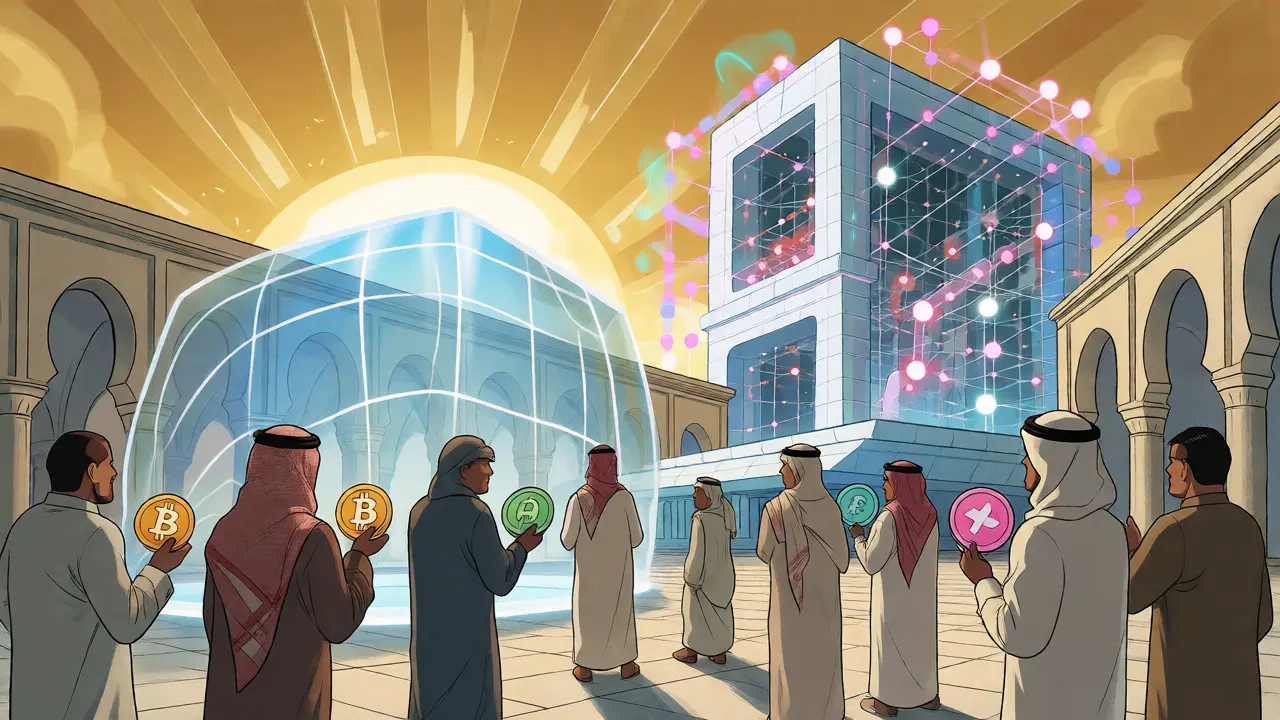
Practical Tips for Saudi Crypto Holders
- Self-Custody is King: Don’t leave large amounts on exchanges. Use hardware wallets. If an exchange gets blocked by regulators, you still own your keys.
- Document Everything: Save screenshots of transfers, emails from exchanges, and contract details. If you ever need to explain wealth sources to authorities, you’ll need proof.
- Avoid Local Marketing Traps: Beware of local startups promising high returns using national symbols. The Ministry of Finance has warned that entities misusing the Kingdom’s name for crypto marketing face legal action.
- Watch for Regulatory Shifts: Follow updates from SAMA and the CMA. A single tweet can change the landscape overnight.
Frequently Asked Questions
Is it illegal to buy Bitcoin in Saudi Arabia?
No, it is not illegal for individuals to buy or hold Bitcoin. However, it is not recognized as legal tender, and banks are prohibited from facilitating direct purchases. Transactions usually happen through international exchanges or peer-to-peer methods.
Do I pay taxes on crypto profits in Saudi Arabia?
Individuals generally do not pay capital gains tax on crypto profits. However, businesses may be subject to corporate income tax and Zakat. It is advisable to consult a tax professional for specific business cases.
Can I use my Saudi bank account to buy crypto?
Directly, no. Most local banks block transactions related to crypto exchanges. Users typically transfer funds to international exchanges via wire transfer or use peer-to-peer platforms that rely on local bank transfers between individuals.
What is the status of Central Bank Digital Currency (CBDC) in KSA?
Saudi Arabia is actively testing a CBDC through the mBridge project with other nations. This indicates a strong interest in digital currency infrastructure, though a public-facing digital Riyal has not yet been fully launched for general retail use.
Are crypto exchanges regulated in Saudi Arabia?
There is currently no specific licensing regime for crypto exchanges operating in Saudi Arabia. Most platforms serving Saudi users are international entities. The regulatory environment is expected to evolve with new laws anticipated in the near future.
The distinction between illegal ownership and unregulated trading is crucial here.
It is not a crime to hold assets in your garage.
You simply cannot drive them on the highway without risk.
This analogy perfectly captures the current regulatory stance.
Individuals should feel empowered but cautious.
Keep your keys safe and your records clear.
The market moves fast regardless of local bans.
We must respect the boundaries set by regulators.
Yet we should also pursue our financial goals.
Education is the best defense against confusion.
Stay informed and stay compliant where possible.
The gray zone offers opportunities for the prepared.
Do not let fear paralyze your decision making.
Understand the rules before you play the game.
Respect the law while building your portfolio.
Excellent breakdown of the nuances involved in Saudi crypto regulations. It is vital for investors to understand that while individual holding is not criminalized, the lack of consumer protection creates significant risks. I strongly recommend utilizing hardware wallets for self-custody to mitigate exchange-related vulnerabilities. Furthermore, keeping meticulous records of all peer-to-peer transactions will save you considerable headaches if banking flags arise. The shift toward institutional blockchain adoption under Vision 2030 suggests a more structured environment is coming. We should view this transition period as an opportunity to educate ourselves thoroughly. Proactive preparation now will yield dividends when comprehensive legislation eventually arrives. Do not neglect the Zakat implications for long-term holdings. Stay disciplined and keep your investment strategy aligned with both Sharia principles and financial prudence.
I completely agree with the assessment that this is a cultural and economic intersection rather than just a legal one because understanding the Sharia compliance aspect is absolutely essential for anyone looking to engage seriously with digital assets in the Kingdom since many Western investors overlook these religious considerations which can lead to misunderstandings or even social friction within local communities. The fact that banks are prohibited from facilitating trades doesn't mean the demand isn't there; it actually highlights how resilient the grassroots adoption has been despite institutional resistance. You see this pattern everywhere in emerging markets where technology outpaces regulation, creating a wild west scenario that rewards the bold but punishes the careless. The comparison with Dubai is particularly telling because it shows that neighboring countries are competing for dominance in the fintech space, and Saudi Arabia cannot afford to fall behind indefinitely. If they want to attract global capital, they need to provide clarity, not just warnings. The silence from regulators is deafening, and frankly, it feels like they are waiting to see who blinks first. But for the average person trying to buy Bitcoin for their retirement, this uncertainty is stressful. We need concrete guidelines, not vague statements about 'risk.' The government needs to step up and define what constitutes a legitimate transaction versus speculation. Until then, every Saudi investor is essentially gambling on regulatory stability. It is a high-stakes game, and I hope the authorities realize that clarity benefits everyone, including the state's tax revenue potential in the future.
Whoa, wait... stop scrolling!!! 🛑✋ This post is literally GOLD!! 💰✨ Seriously, folks, read this twice! 👀📖 The part about P2P trading? Super important!! ⚠️⚠️ Don't get flagged by the bank, okay?? 🏦❌ Keep those receipts!! 🧾✅ Hardware wallets are your best friends, seriously!! 🔐💻 Don't leave coins on exchanges, no way!! 🚫📉 The volatility is real, y'all!! 🎢😵💫 But hey, young Saudis are crushing it!! 🇸🇦🔥 Tech-savvy and ready to go!! 🚀💪 Just stay smart, document everything, and watch those tweets from SAMA!! 🐦👀 You got this!! 💯🙌
One must consider the geopolitical implications of such regulatory ambiguity. The Kingdom is clearly positioning itself to control the narrative of digital finance through its CBDC initiatives. It is not merely about legality; it is about sovereignty over monetary policy. The reluctance of SAMA to embrace decentralized currencies reflects a broader strategic caution common among oil-rich nations. They seek to harness blockchain utility without ceding power to private entities. This approach mirrors trends seen in other authoritarian-leaning economies. Investors must recognize that their assets are subject to political whims. The absence of clear laws is a feature, not a bug, allowing the state flexibility. Do not assume Western-style regulatory frameworks apply here. The mBridge project signals intent to dominate regional settlement layers. Individual holders are essentially test subjects in this grand experiment. Caution is advised. The state always wins in the end.
Yo fam, this is super helpful info!! 🙌 Really glad someone cleared up the confusion about holding vs trading. My cousin was stressing out thinking he'd get arrested for having some ETH in his wallet lol. 😂 Now he knows he's good as long as he keeps it off the bank radar. P2P is definitely the way to go for us in the region. Just gotta be careful with who you trade with though. Trust is key! 🔑 Anyway, big ups to the author for breaking down the Zakat stuff too. That’s something a lot of people forget. Let’s keep stacking sats and staying safe out there! 🚀🇸🇦
It is worth noting that the lack of specific licensing regimes for exchanges creates a vacuum often filled by offshore entities. These platforms may not adhere to the same compliance standards as regulated brokers. Consequently, users bear the full burden of counterparty risk. When selecting an exchange, prioritize those with transparent proof-of-reserves. Additionally, consider the jurisdictional reach of the platform regarding dispute resolution. Most international exchanges operate under terms that limit liability significantly. For individuals in KSA, this means recourse is practically non-existent if issues arise. Diversifying across multiple reputable platforms can mitigate single-point failures. Always verify the withdrawal protocols before committing large sums. Small test transactions are prudent. Remember, self-custody remains the most secure method given the current regulatory opacity. Educate yourself on wallet security best practices. Two-factor authentication is mandatory, never optional. Your financial safety depends on your diligence.
The article presents a sanitized view of reality. Banks don't just 'refuse' to touch crypto; they actively block merchant codes associated with major exchanges. This isn't passive resistance; it's active suppression. The claim that holding is 'not illegal' is technically true but functionally irrelevant if you can't exit fiat easily. The friction costs are massive. Moreover, the comparison to Dubai is misleading. Dubai has VARA. KSA has nothing. Nothing. Zero. The 'gray zone' is a euphemism for 'we have no idea what we're doing yet.' Young Saudis aren't buying because they love tech; they're buying because traditional savings accounts are yielding negative real returns due to inflation adjustments. It's desperation, not enthusiasm. The fatwa mentioned is recent and contested. Many scholars still disagree. Relying on a single fatwa for institutional acceptance is naive. The CBDC pilot is likely to crush retail crypto once launched. Why would the central bank allow competition to its own digital currency? It won't. Expect a crackdown disguised as 'consumer protection' soon. The 11.4% ownership stat is inflated by speculative traders who will wash out. Holders who ignore the regulatory trajectory will get burned. Wake up.
honestly the p2p liquidity depth in riyadh is surprisingly robust despite the regulatory headwinds i mean you can move six figures via local transfer and settle btc in minutes if you know the right whales on binance p2p but yeah the bank flagging issue is real especially if you hit daily limits repeatedly my buddy got his account frozen for three weeks just for moving money to a known trader so yeah keep those screenshots organized in folders labeled by date and amount because the compliance officer at al rajhi does not care about your story he cares about audit trails anyway the zakat calculation on unrealized gains is still debated among fiqh councils so consult a scholar who understands both sharia and accounting standards because standard tax advisors might miss the lunar year nuance entirely
Wait, did you mention the part about the bank freezing accounts? Because my uncle had exactly that happen last month. He was transferring small amounts to different people for P2P buys. Suddenly, his account is locked. They asked for source of income proofs. He didn't have them for crypto sales. It took months to resolve. So, documenting everything isn't just advice; it's survival. Also, is the Zakat really 2.5% on the value? Or just the profit? I heard conflicting things. Need clarity on that specifically for business owners.
interesting take on the gray zone but honestly the real question is why banks are so scared of gharar when they deal in derivatives every day
the hypocrisy is palpable
anyway good summary
would love to see data on actual enforcement actions though
are people getting fined or just warned
feels like empty threats mostly
still useful info for newbies
keep it up
The philosophical underpinning of the 'gray zone' suggests a society in transition. It is not merely a legal status but a reflection of cultural adaptation to rapid technological change. The tension between traditional values and modern financial instruments is palpable. One wonders if the eventual legislation will favor preservation of order or innovation. The choice of metaphor-classic cars-is apt. It implies beauty and value, yet restricts utility. This restriction shapes behavior. People adapt. They find garages. They find highways elsewhere. The resilience of the community is noteworthy. However, the lack of formal recognition leaves individuals vulnerable to arbitrary interpretation. Is justice served by ambiguity? Perhaps. Yet, clarity fosters trust. Without trust, markets falter. The state seeks control. The individual seeks freedom. This dialectic will define the next decade. Observing this dynamic offers insight into broader societal shifts. It is a case study in managed evolution. Patience is required. Wisdom is needed. The outcome remains uncertain.
Love this deep dive! 🕵️♀️📚 The car analogy made me laugh 😂 but it makes total sense. 🚗💨 It’s wild how much is happening in the background. 👀 The stats about young Saudis are mind-blowing. 🤯 63% of the population being tech-savvy explains so much. 📱💡 I’m curious about the CBDC timeline though. 🕒 Will it replace cash entirely? 🤔 Or coexist? 🤝 The UAE comparison is helpful for context. 🌍🇦🇪 Thanks for sharing! 🙏✨
this is great info man really helped me understand why my bank blocked my binance deposit
im gonna start using p2p more carefully now
thanks for the tips on documentation
hope the regs get clearer soon
People need to stop treating this like a free-for-all. Just because it's not illegal doesn't mean it's safe. You are playing with fire. The banks are right to be cautious. Volatility destroys wealth. Speculation is gambling. If you don't understand the underlying asset, you shouldn't own it. Period. Stop listening to hype. Read the fine print. Protect your family's money. Don't be greedy.
While the article provides a decent overview, it lacks critical depth regarding the macroeconomic drivers. The correlation between oil price fluctuations and crypto adoption rates in KSA is statistically significant yet ignored here. Furthermore, the discussion on Sharia compliance is superficial. Gharar is not the only principle; riba (interest) also plays a role in lending/borrowing dynamics within DeFi. Ignoring this oversimplifies the theological debate. The comparison with Dubai is valid but incomplete. VARA is a regulatory sandbox, not a guarantee of success. Institutional pilots do not equate to retail accessibility. The mBridge project is primarily for interbank settlement, not retail use. Conflating these distinct layers is a common error. Investors must differentiate between infrastructure development and asset class legitimacy. Until the CMA issues a definitive framework, any 'strategy' is merely speculation. Expert analysis requires distinguishing between noise and signal. This piece leans towards noise. 🧐📉📈