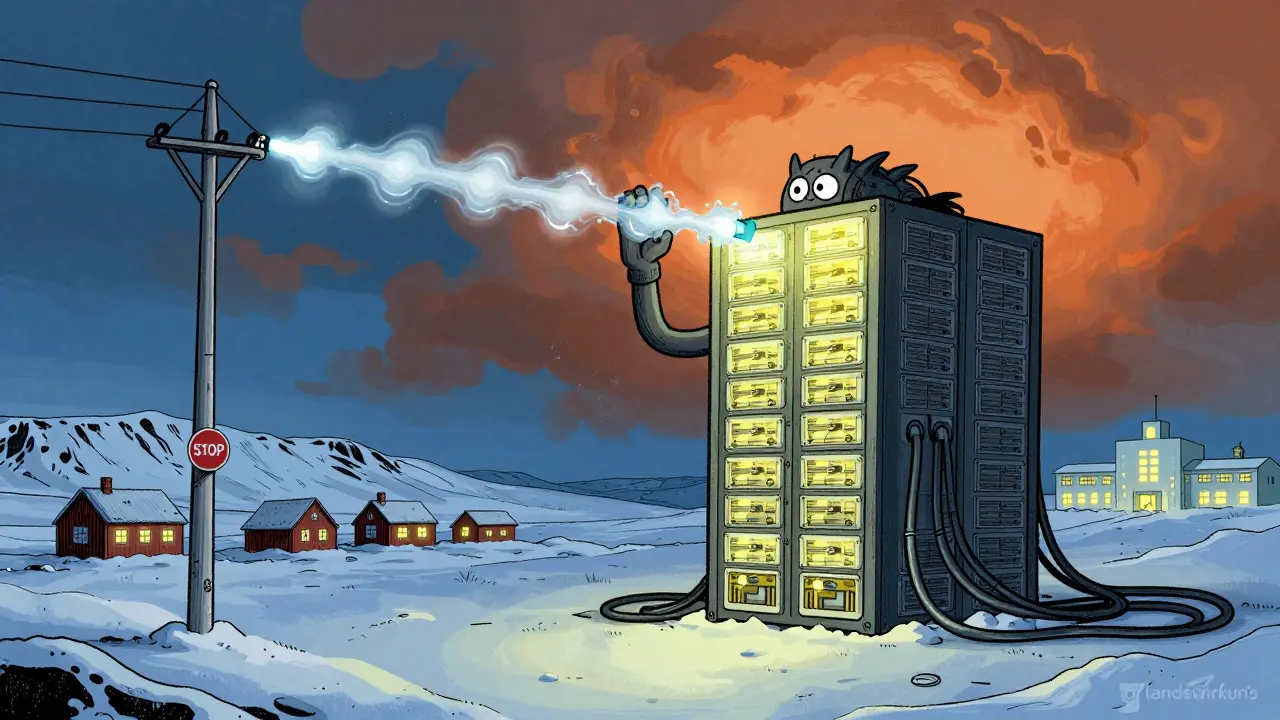
Imagine plugging in a device that drinks more electricity than an entire city. That is essentially what happened in Iceland. For years, this small Nordic island was the promised land for crypto mining operations. Why? Because it offered cheap geothermal energy and freezing air to cool servers naturally. But the party has ended. The national power company, Landsvirkjun, along with the Icelandic government, has slammed the brakes on new mining contracts. If you are looking to set up a mine in Reykjavik or Akureyri today, you will find the doors firmly shut.
This isn't just about saving money. It is about survival. The grid is under pressure. Essential services-from hospitals to streetlights-are competing with massive data centers for every kilowatt-hour. Let's break down exactly how these restrictions work, who is affected, and what this means for the future of blockchain in Iceland.
The Energy Crisis Behind the Ban
To understand why Landsvirkjun stopped signing new deals, you have to look at the numbers. In 2017, cryptocurrency processing accounted for nearly 90% of Iceland's data center power consumption. By 2024, projections showed that mining operations were consuming more energy than the entire human population of Iceland combined. That sounds impossible, but it is true when you consider that a single large mining farm can draw as much power as a small town.
Iceland runs almost entirely on renewable energy-geothermal and hydroelectric. This made it attractive for "green" mining marketing campaigns. However, renewables are not infinite. During winter storms or droughts affecting water levels, the supply tightens. When the grid gets stressed, someone has to lose power. The government decided it shouldn't be schools or hospitals. It should be speculative digital currency farms.
The turning point came in March 2024. Iceland's Prime Minister publicly stated a desire to reduce cryptocurrency mining activities. This wasn't a vague suggestion; it was a policy directive. The goal was clear: protect the national grid from overloading while maintaining the country's commitment to sustainability. The message to miners was blunt: your energy appetite is too big for our table.
Landsvirkjun’s Role: The Gatekeeper of Power
Landsvirkjun is the state-owned electricity company responsible for generating and transmitting power across Iceland. They do not just sell electricity; they manage the national grid's stability. Historically, they signed long-term power purchase agreements (PPAs) with mining companies like Hive Blockchain Technologies, Genesis Mining, and Bitfury Holding.
Here is where the restriction kicks in. Landsvirkjun has effectively paused all new PPAs for cryptocurrency mining. Existing contracts remain valid until their expiration dates, but no new capacity is being allocated to this sector. This is a crucial distinction. The government did not ban mining outright. Instead, they cut off the fuel source for any *new* expansion. Without a power contract from Landsvirkjun or other regional utilities, a mining operation cannot legally start.
This move protects existing industrial jobs. Aluminum smelting and silicon production are huge employers in Iceland. These industries also require massive amounts of electricity. By prioritizing traditional industry over crypto, the government ensures that local manufacturing jobs aren't displaced by foreign-owned server racks. It is a pragmatic economic decision disguised as an environmental one.
Regulatory Framework: No Specific Law, Just Strict Rules
Unlike some countries that passed specific laws banning crypto, Iceland uses its existing financial and energy frameworks to control the industry. The Icelandic Financial Supervisory Authority oversees exchanges and trading platforms. They enforce strict anti-money laundering (AML) policies. If you want to trade Bitcoin in Iceland, you must comply with these rules.
For mining, the regulation is indirect but effective. It revolves around energy permits. To get a permit for high-energy consumption, you need approval from the Ministry for the Environment, Energy and Climate. Since 2024, this ministry has been extremely hesitant to approve new mining projects. They assess the environmental impact and the strain on the grid. Given the current saturation, the answer is almost always no.
This creates a de facto moratorium. Even if a private investor wants to build a mine using solar panels on their roof, scaling up requires grid connection. And the grid operator, guided by government policy, says there is no room left. This approach allows Iceland to maintain a reputation for regulatory clarity while effectively shutting out new entrants.
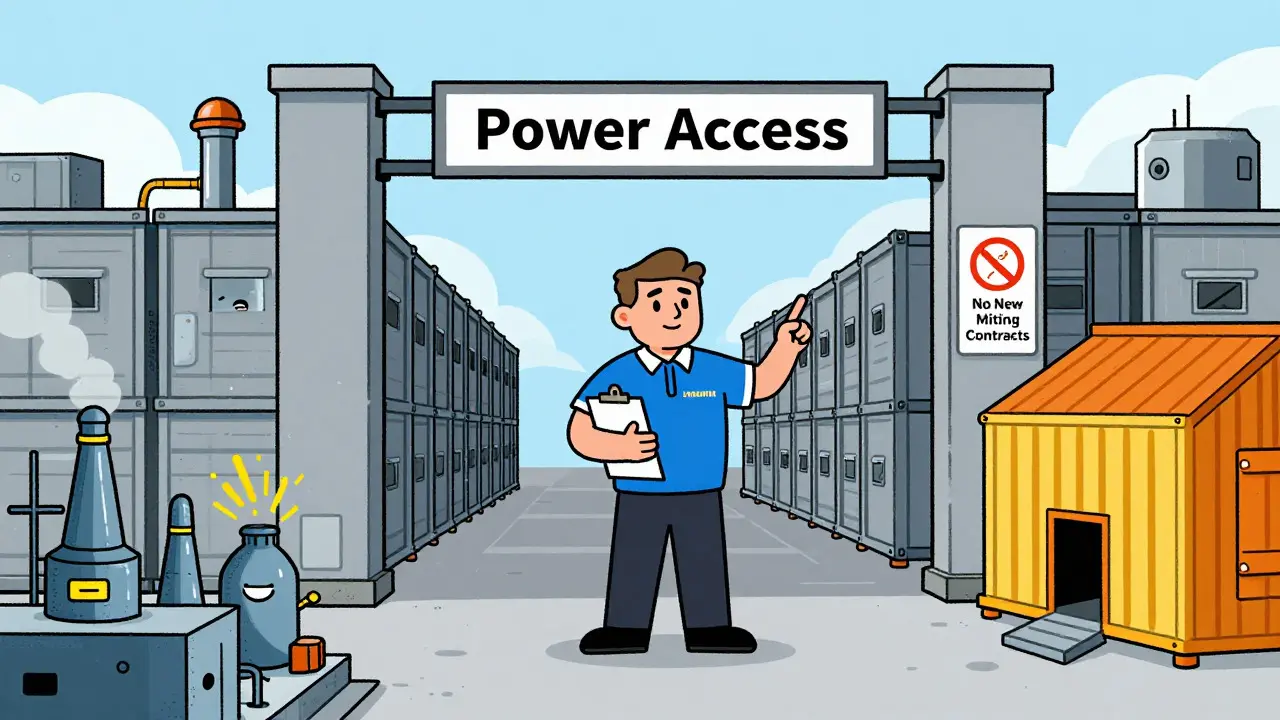
Impact on Major Players: Hive, Genesis, and Bitfury
What happens to the giants already operating in Iceland? Companies like Hive Blockchain Technologies and Genesis Mining have millions invested in infrastructure. They are not simply packing up and leaving overnight. Their existing contracts are honored. However, they face significant challenges.
| Company | Current Status | Primary Challenge |
|---|---|---|
| Hive Blockchain Technologies | Operating under existing PPA | Cannot expand capacity; facing higher maintenance costs due to older equipment |
| Genesis Mining | Reducing footprint | Shifting focus to other jurisdictions with looser energy caps |
| Bitfury Holding | Strategic pivot | Moving toward blockchain software development rather than pure mining |
Many of these companies are now diversifying. Some are moving hardware to places like Texas or Kazakhstan, where energy is cheaper and regulations are friendlier. Others are trying to rebrand. Instead of just mining, they are offering cloud computing services or AI processing, which may have a better chance of getting energy approvals because they provide tangible local economic benefits beyond speculation.
The Shift Toward CBDCs and Institutional Blockchain
If raw mining is out, what is in? Iceland is pivoting toward institutional blockchain technology. The central bank has been exploring Central Bank Digital Currencies (CBDC). A CBDC would allow Iceland to modernize its payment system without the energy waste of proof-of-work mining. This aligns with the government's desire to keep the financial sector innovative but sustainable.
There is also growing interest in enterprise blockchain solutions. Think supply chain tracking for Icelandic fish exports or secure land registries. These applications use minimal energy compared to Bitcoin mining. By encouraging this shift, Iceland hopes to retain the tech talent and investment associated with crypto while shedding the energy burden. It is a smart evolution from a wild west mining hub to a regulated fintech center.
Public Sentiment: Mixed Feelings in the North
How do ordinary Icelanders feel about all this? The reaction is mixed. On one hand, many locals are intrigued by the technology. Iceland has a culture of early adoption, especially after rebuilding its financial system following the 2008 crisis. People see crypto as a tool for financial freedom.
On the other hand, there is genuine worry about power reliability. When lights flicker during a storm, people notice. They don't want their heating cut off so a server farm in another country can make profit. This public pressure forced the government's hand. The restrictions are not just bureaucratic; they reflect the will of the voters who value stable, affordable electricity for daily life.
Future Outlook: What Comes Next?
Will the restrictions ever lift? Unlikely in the short term. The energy demand from mining has proven too volatile for Iceland's relatively small grid. However, the landscape might change if mining technology becomes significantly more efficient. Proof-of-stake networks like Ethereum already use negligible energy. If Bitcoin or other major coins transition to similar models, Iceland might welcome them back. Until then, the era of massive, grid-draining mining farms in Iceland is over.
For investors and miners, the lesson is clear: location matters less than energy security. You can no longer rely on a single jurisdiction's abundant resources forever. Diversification is key. For Iceland, the priority is balancing innovation with sustainability. They have chosen to protect their natural resources and social infrastructure, setting a precedent that other renewable-rich nations might follow.
Is crypto mining illegal in Iceland?
No, crypto mining is not illegal. However, obtaining new power contracts from the national utility, Landsvirkjun, is currently suspended for new mining projects. Existing operations with valid contracts can continue until those contracts expire.
Why did Landsvirkjun stop signing new mining contracts?
Landsvirkjun halted new contracts because mining operations were consuming excessive amounts of electricity, threatening the stability of the national grid and displacing power needed for essential services and traditional industries like aluminum smelting.
Can I still trade cryptocurrency in Iceland?
Yes, trading cryptocurrency is legal. Exchanges must register with the Icelandic Financial Supervisory Authority and comply with anti-money laundering regulations. The restrictions apply specifically to energy-intensive mining operations, not trading or holding assets.
What happened to companies like Hive and Genesis Mining?
These companies continue to operate under their existing power purchase agreements. However, they cannot expand their capacity. Some are reducing their presence or shifting focus to other regions with more available energy resources.
Is Iceland developing its own cryptocurrency?
The Central Bank of Iceland is researching Central Bank Digital Currencies (CBDCs). This is not a public cryptocurrency like Bitcoin, but a digital version of the Icelandic Króna designed for efficient domestic payments and financial inclusion.