
Imagine waking up to find that the money in your pocket is worth half of what it was yesterday. For millions of people in Venezuela, this isn't a hypothetical nightmare; it is their daily reality. With annual inflation hitting 229% as of May 2025 and the local currency, the bolívar, losing over 70% of its value in just a few months, traditional banking has become a trap rather than a safety net. In this environment, cryptocurrency has stopped being a speculative tech trend for many citizens. It has evolved into an essential tool for survival, a way to buy food, pay rent, and keep their savings from evaporating overnight.
The shift toward digital assets in Venezuela is not about getting rich quick. It is about preserving basic purchasing power. As the government struggles with economic mismanagement and international sanctions, ordinary Venezuelans have turned to decentralized financial systems to navigate a broken economy. This article explores how everyday citizens are using tools like Bitcoin and USDT to survive, the specific platforms they rely on, and the unique challenges they face in a country where internet connectivity and electricity are often unreliable.
The Rise of "Binance Dollars" in Daily Life
In Caracas and other major cities, you will rarely hear people talking about "Tether" or "USDT" in casual conversation. Instead, they refer to these stablecoins as "Binance Dollars." This nickname reveals everything about how the market works. Binance is the dominant peer-to-peer (P2P) trading platform used by Venezuelans to exchange local currency for digital assets. Because Binance allows users to trade directly with each other without needing a traditional bank account, it has become the de facto central bank for many households.
The adoption of USDT on the TRC-20 network (Tron blockchain) is particularly widespread because transaction fees are incredibly low-often less than $0.01. This makes it practical for small transactions, such as buying groceries or paying for a taxi. In contrast, older networks like Bitcoin's main chain have high fees that make them unsuitable for daily purchases. Consequently, while Bitcoin serves as a long-term store of value for some, USDT is the workhorse of the Venezuelan informal economy.
| Cryptocurrency | Primary Use Case | Network Preference | Avg. Transaction Fee |
|---|---|---|---|
| USDT (Tether) | Daily transactions, salary payments, remittances | TRC-20 (Tron) | < $0.01 |
| Bitcoin (BTC) | Long-term savings, large value transfers | Lightning Network / Main Chain | $1 - $10+ (varies widely) |
| Petro (State-backed) | None (Discontinued) | N/A | N/A |
This shift has changed how businesses operate. Receipts in stores now frequently display prices in "Binance dollars" alongside bolívars. Merchants use the USDT peer-to-peer rate to set their prices, effectively bypassing the official Central Bank of Venezuela (BCV) rate, which is artificially low and unrealistic. The black market rate, known as "dólar negro," also exists but is less transparent than the digital rates available on apps. By anchoring prices to stablecoins, vendors protect themselves from the rapid devaluation of the bolívar between when they stock their shelves and when customers buy goods.
Peer-to-Peer Networks as Financial Infrastructure
Traditional banks in Venezuela are heavily restricted due to U.S. sanctions and domestic capital controls. Moving money out of the country or even converting it to a stable currency through formal channels is nearly impossible for the average person. This vacuum has been filled by peer-to-peer (P2P) markets. Platforms like Binance and formerly LocalBitcoins allow users to act as both buyers and sellers, creating a liquid market for digital assets.
The process is straightforward but requires trust management. A user wanting to convert bolívars to USDT finds a seller on the app, initiates a trade, and transfers funds via local mobile payment apps or cash meetup. Once the seller confirms receipt, the platform releases the USDT to the buyer's wallet. This system operates 24/7, unlike banks that have limited hours and frequent technical outages.
Remittances play a crucial role in this ecosystem. In 2023, families sent $5.4 billion to Venezuela, with 9% of those funds arriving via cryptocurrency. For relatives abroad, sending USDT is faster and cheaper than using Western Union or bank wires, which involve high fees and delays. Recipients can then sell the USDT on P2P platforms for bolívars to cover immediate needs or hold onto the stablecoins for larger expenses like medical bills or education.

Challenges of Digital Survival
While cryptocurrency offers a lifeline, it is not without significant hurdles. The most pressing issue is infrastructure. Venezuela suffers from chronic power outages and unreliable internet connectivity. If the power goes out during a transaction, or if the internet drops while confirming a payment, users risk losing money or facing failed trades. Many citizens spend hours at cafes or public spaces with better Wi-Fi just to manage their finances.
Security is another major concern. Unlike traditional banks, cryptocurrencies do not offer fraud protection. If a user sends funds to the wrong address or falls victim to a phishing scam, there is no customer service to reverse the transaction. This places a heavy burden on financial literacy. Users must learn to manage private keys, verify addresses, and recognize scams. Community groups on WhatsApp and Telegram have become vital support networks, where experienced users help newcomers navigate these risks.
Furthermore, the regulatory environment remains ambiguous. The Venezuelan government has shown conflicting signals. On one hand, it tolerates the use of dollar-backed stablecoins because it helps stabilize the informal economy. On the other hand, it has cracked down on cryptocurrency mining operations, accusing miners of stealing electricity from the national grid. This uncertainty creates a risky landscape for businesses looking to invest in crypto-related services.
Why Government Solutions Failed
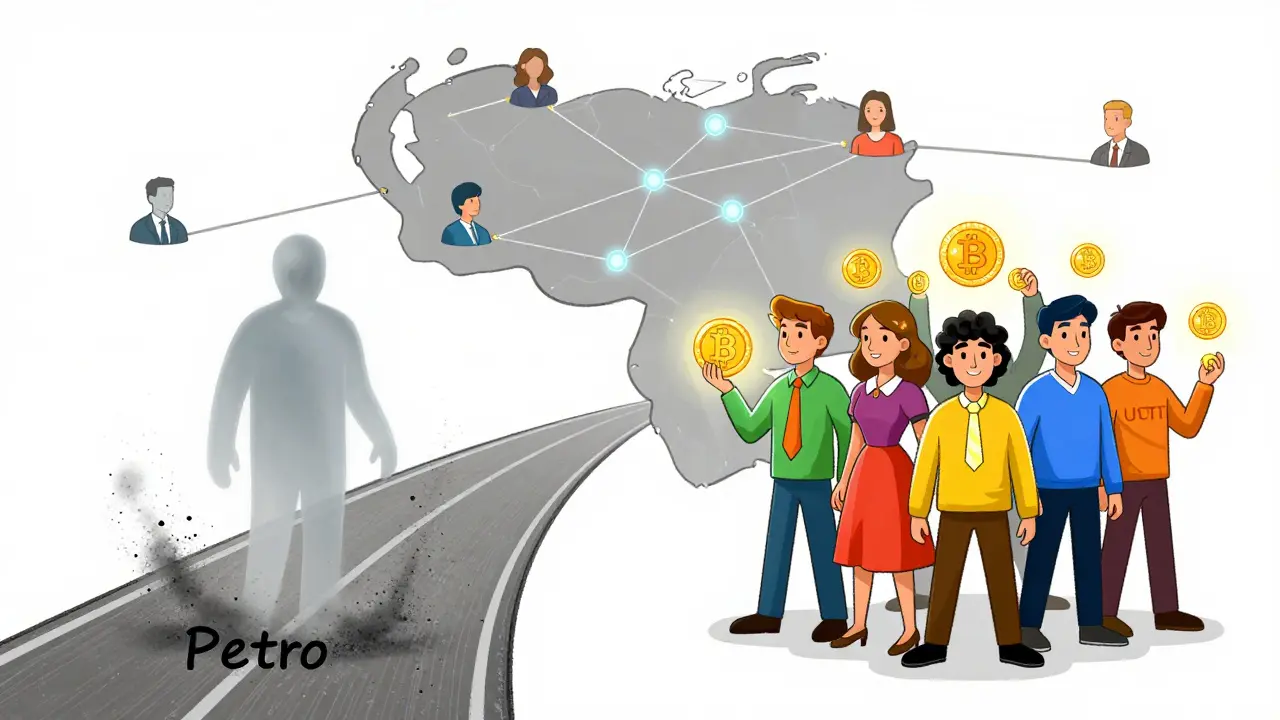
In 2018, the Venezuelan government launched the Petro, a state-backed cryptocurrency intended to circumvent sanctions and boost the economy. However, the Petro failed miserably. It lacked transparency, had no real utility, and suffered from widespread public distrust. By 2024, the project was effectively discontinued. This failure highlights a key lesson: trust cannot be mandated by decree. Citizens rejected the Petro because it did not solve their immediate problems, whereas decentralized options like Bitcoin and USDT offered tangible benefits.
The contrast between the Petro and organic crypto adoption underscores the importance of user choice. People adopted Bitcoin and USDT voluntarily because they provided stability and accessibility. The government's attempt to control the narrative backfired, pushing more citizens toward decentralized solutions. Today, the idea of a state-controlled digital currency holds little appeal compared to the open, borderless nature of global cryptocurrencies.
The Future of Crypto in Venezuela
Looking ahead, cryptocurrency usage in Venezuela is likely to grow rather than shrink. The underlying drivers-hyperinflation, lack of access to traditional banking, and the need for efficient remittances-remain unchanged. Even if political conditions improve, the habit of using digital dollars for savings and transactions has taken root. Younger generations, in particular, view crypto as the default way to handle money.
As infrastructure improves and smartphone penetration increases, we may see more sophisticated uses of blockchain technology. Decentralized finance (DeFi) protocols could offer lending and borrowing opportunities, allowing users to earn interest on their stablecoins. However, until the broader economic situation stabilizes, crypto will remain primarily a tool for preservation and transaction rather than investment.
For now, the story of crypto in Venezuela is one of resilience. It shows how technology can empower individuals in the face of systemic failure. While it does not solve the country's deep-rooted political and economic issues, it provides a critical buffer against poverty and instability. As the world watches, Venezuela serves as a stark example of how necessity drives innovation in financial technology.
Is it legal to use cryptocurrency in Venezuela?
The legal status is ambiguous. The government has not explicitly banned personal use of cryptocurrencies like Bitcoin or USDT, and it tolerates their use in informal markets. However, it has cracked down on mining operations and certain exchanges. Businesses should consult local legal experts before accepting crypto payments, as regulations can change rapidly.
Which cryptocurrency is best for daily transactions in Venezuela?
USDT (Tether) on the TRC-20 network is the most popular choice for daily transactions due to its low fees and price stability. Bitcoin is used more for long-term savings because its higher transaction costs make it impractical for small purchases.
How do Venezuelans convert crypto to cash?
Most conversions happen through peer-to-peer (P2P) platforms like Binance. Users sell their crypto to other individuals who pay via local mobile banking apps or cash meetups. This method bypasses traditional banks and avoids strict capital controls.
What are the risks of using crypto in Venezuela?
Key risks include internet outages, power failures, and security threats like scams or hacking. Since crypto transactions are irreversible, users must be vigilant about verifying addresses and protecting their private keys. Additionally, regulatory changes could impact access to exchanges.
Did the government's Petro cryptocurrency succeed?
No, the Petro failed completely. Launched in 2018, it suffered from low adoption, lack of transparency, and public distrust. It was effectively discontinued by 2024, leaving decentralized cryptocurrencies as the primary digital financial tools for Venezuelans.