You mint your digital art. You sell it for a decent price. Then, six months later, that same piece sells for ten times the original amount on a secondary marketplace. In the traditional art world, you’d see none of that profit. But in the world of NFTs, which are unique digital tokens representing ownership of assets on a blockchain, you should theoretically get a cut. This is the promise of royalties.
Yet, if you’ve been following the space since 2022, you know the story isn’t that simple. The landscape has shifted dramatically. What started as a guaranteed passive income stream has become a complex battle between creators, traders, and marketplaces. So, how do you actually earn those royalties today? And more importantly, can you rely on them?
The Mechanics: How Smart Contracts Enforce Payments
To understand why royalties work-or don’t-you have to look under the hood at the code. At the core of every NFT royalty is a smart contract, which is a self-executing program with the terms of the agreement directly written into lines of code. When you create an NFT, you embed specific instructions into this contract. One of those instructions says: "Every time this token changes hands, send X% of the sale price to Wallet Address Y."
Historically, this was handled via the ERC-721 standard, which is the most common technical specification for non-fungible tokens on the Ethereum blockchain. However, ERC-721 didn’t originally include a native field for royalties. Early platforms like SuperRare and Rarible had to build custom logic into their own marketplace contracts to handle these payments. This created a dependency: the royalty only worked if the sale happened on a platform that respected that specific code.
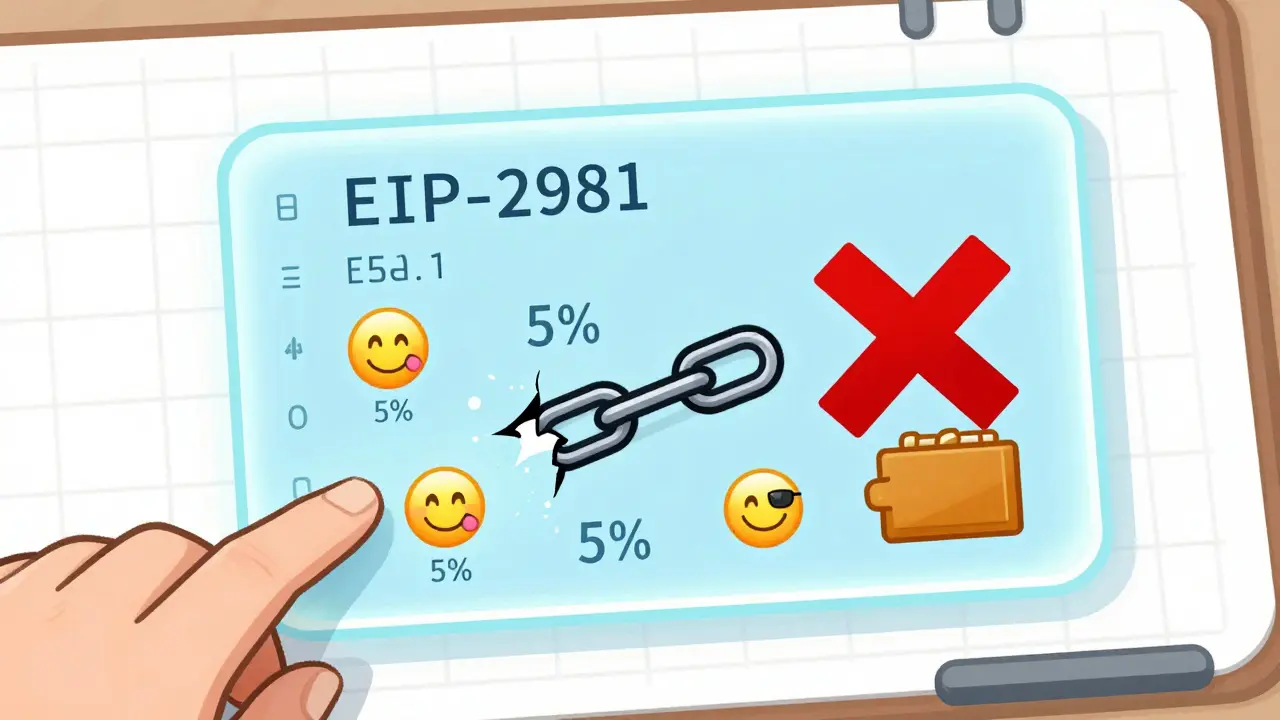
This changed with the introduction of EIP-2981, which is an improvement proposal that standardized royalty information within NFT metadata. Proposed in March 2021 by James Morgan and others, EIP-2981 allowed creators to define royalty rates (like 5%) directly in the token’s data structure. The idea was that any compliant marketplace could read this data and enforce the payment automatically. For percentage-based royalties, which account for over 92% of collections, the math is straightforward: if an NFT sells for 10 ETH with a 5% royalty, the smart contract deducts 0.5 ETH from the seller and sends it to the creator. This happens in seconds, without human intervention.
But here is the catch: EIP-2981 is informational, not enforcement. It tells the marketplace what the royalty *should* be, but it doesn’t force the marketplace to pay it. If a marketplace decides to ignore that data, the smart contract on the blockchain itself cannot stop the trade or seize the funds. This distinction is the root of all current conflicts.
The Marketplace War: Who Enforces and Who Ignores
The biggest factor determining whether you earn royalties is not your code-it’s where the trade happens. By 2023, the major players fractured into two camps: those who support creators and those who prioritize trader volume.
| Marketplace | Royalty Enforcement | Max Rate | Key Policy Shift |
|---|---|---|---|
| OpenSea | Optional / Collection-Based | 10% | Reduced enforcement in July 2022; introduced opt-in system. |
| Blur | None (0%) | N/A | Eliminated royalties entirely in Feb 2023 to attract traders. |
| Magic Eden | Optional / Score-Based | Variable | Introduced 'royalty enforcement scores' in April 2023. |
| Foundation | Strict | 10% | Maintained strict enforcement for curated artists. |
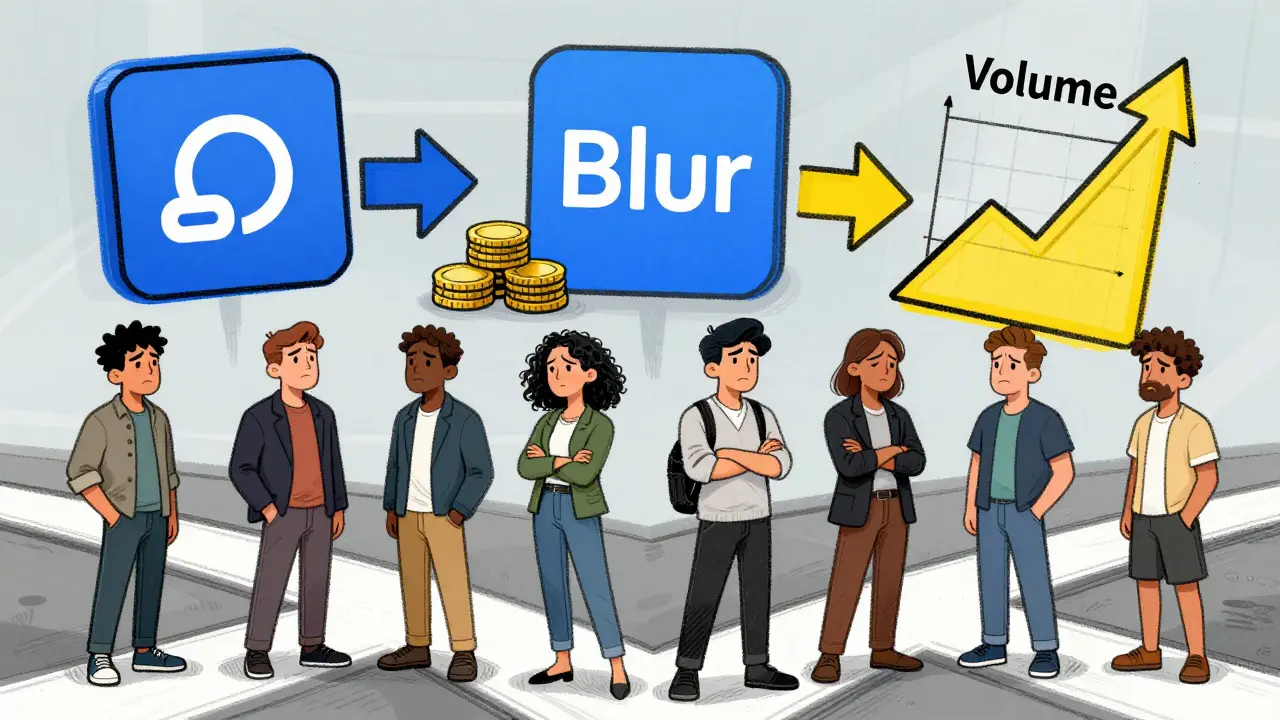
OpenSea, once the dominant force, faced backlash from traders who felt high royalties drove up prices. In response, they moved to a collection-based opt-in system. This means creators must actively enable royalties for their collection, and even then, traders can choose to buy from other sources. Blur took a more aggressive stance. By removing royalties completely, Blur saw its market share explode from 0% to over 50% of Ethereum NFT volume in early 2023. Their argument? Lower costs mean more liquidity. For creators, however, this meant losing significant income streams overnight.
Magic Eden**, primarily focused on the Solana blockchain, tried a middle ground. They implemented 'royalty enforcement scores,' allowing users to see which collections honor royalties. This puts the choice back in the hands of the buyer, but it also highlights the fragmentation of the ecosystem. Meanwhile, curated platforms like Foundation maintained strict 10% enforcement, arguing that their brand value relies on supporting artists. If you are a creator on Foundation, your royalties are safe. If you are on Blur, they are gone.
The Economic Dilemma: Liquidity vs. Revenue
Why would anyone want to kill royalties? The answer lies in market liquidity. Research published in the INFORMS Journal in 2023 documented a surprising trend: higher royalty rates correlate with lower trading volume. Specifically, collections with enforced royalties saw an average liquidity reduction of 15.7%. Traders argue that if they have to pay a 5% fee every time they flip an asset, they are less likely to trade frequently. This reduces the overall activity in the market.
Conversely, SSRN researchers identified a 'delayed gratification effect.' Creators often accept lower primary sale prices because they anticipate future royalty income. However, the same study of 1.2 million transactions revealed a harsh reality: many creators never recoup their initial losses through secondary sales. If the market stalls, or if trades move to royalty-free platforms, that projected income vanishes.
This creates a paradox. High royalties protect individual creator income but can shrink the total market size. Low royalties boost trading volume but leave creators uncompensated for appreciation. Finding the sweet spot is critical. Academic research suggests that optimal royalty rates sit between 3% and 5%. Rates above 10% often discourage trading entirely, while rates below 2% may not provide meaningful passive income.
Legal Gray Areas and the Future of Enforcement
It is crucial to understand that smart contracts are not legal contracts. As noted by legal experts at Fordham IPLJ, NFT royalty terms embedded in code do not necessarily hold up in civil court. Furthermore, platforms like Rarible require creators to grant them royalty-free rights to content, shifting the enforcement burden from authorities to code. This leaves creators vulnerable.
Regulatory uncertainty adds another layer of complexity. The European Union’s Digital Markets Act has hinted at potentially classifying certain NFT royalty structures as 'unfair commercial practices.' In California, legislation like AB-2281 seeks to clarify the legal status of these digital fees. Until laws catch up with technology, enforcement remains a voluntary act by marketplaces.
New solutions are emerging. Projects like Limit Break propose new standards (like ERC721-C) that bundle multiple tokens to reduce gas fees and streamline royalty logic. Harvard researchers have suggested 'staking models' where marketplaces must stake assets to access royalty-compliant platforms, aligning incentives. Additionally, the 'right of reclaim' mechanism proposes that buyers gain ownership but not full control until royalties are paid, creating a technical barrier to evasion.
Practical Steps for Creators in 2026
If you are looking to maximize your earnings from resales, you need a strategy that goes beyond just setting a percentage. Here is how to navigate the current environment:
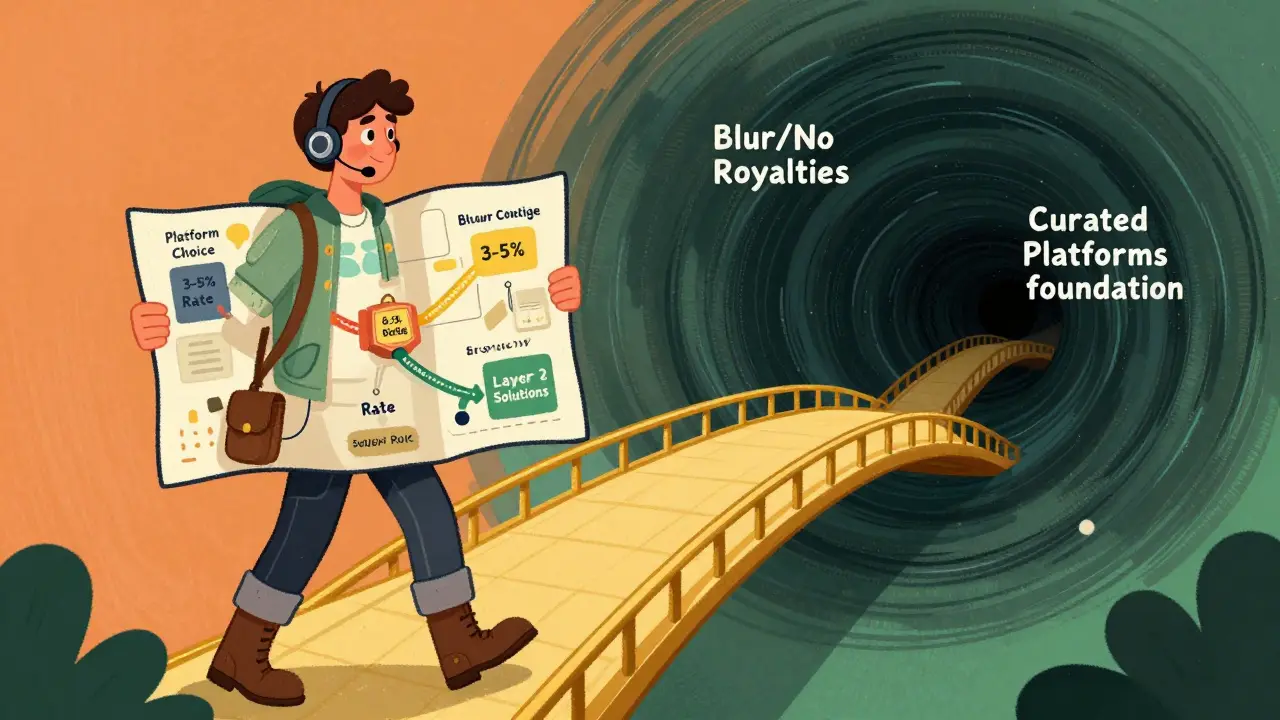
- Choose Your Platform Wisely: If royalties are your primary income source, stick to platforms with strict enforcement like Foundation or curated galleries. Avoid royalty-free aggregators unless you are confident in your primary market sales.
- Use Royalty Registries: Tools like Royalty Registry allow you to register your royalty preferences across multiple chains. While not all platforms use them yet, adoption is growing, and it signals your intent clearly.
- Set Realistic Rates: Aim for 3-5%. Higher rates may look good on paper but can kill your secondary market liquidity. Remember, a 5% royalty on a active market is better than a 10% royalty on a dead one.
- Diversify Revenue: Don’t rely solely on secondary sales. Build community utility, offer exclusive access, or create limited-edition drops. Direct engagement with collectors is more resilient than automated code.
- Monitor Gas Fees: On Ethereum, transaction costs (gas) can eat into small royalty payments. Consider Layer 2 solutions like Polygon or Arbitrum for lower-cost transactions, ensuring your micro-royalties remain profitable.
The era of guaranteed, effortless royalty income is over. Today, earning from resales requires active management, strategic platform selection, and a deep understanding of the economic forces at play. The technology exists to pay you, but the market dynamics determine whether it does.
Do NFT royalties still exist in 2026?
Yes, but enforcement varies significantly by platform. While the underlying technology (smart contracts) still supports royalties, major marketplaces like Blur have eliminated mandatory enforcement to attract traders. Platforms like Foundation and OpenSea (via opt-in systems) still support them, but creators must actively manage where their assets are traded.
What is the best royalty rate for NFTs?
Research suggests an optimal range of 3% to 5%. Rates higher than 10% tend to reduce market liquidity and discourage trading, while rates below 2% may not generate significant passive income. The ideal rate balances creator compensation with trader willingness to participate.
Can I force a marketplace to pay my royalties?
No. Current blockchain standards like EIP-2981 are informational only. They specify what the royalty should be, but they cannot technically prevent a marketplace from ignoring them. Enforcement relies on the marketplace's policy and reputation, not on immutable blockchain law.
How do royalties work on Solana vs. Ethereum?
On Ethereum, royalties are typically defined via EIP-2981 metadata. On Solana, royalties are often handled through the Token Metadata Program. Both face similar enforcement challenges, with marketplaces like Magic Eden implementing optional or score-based systems rather than strict mandates.
Are NFT royalties legally binding?
Not currently. Legal experts note that smart contract code does not equate to a legal contract in most jurisdictions. Regulatory frameworks are still evolving, with some regions exploring whether unchecked royalties constitute unfair commercial practices. Creators should not rely on legal recourse for enforcement.