Cryptocurrency Mixing Simulator
Simulation Settings
How Mixing Works
When you send cryptocurrency to a mixer, it combines your coins with others in a large pool. With each hop (intermediate address), the trail becomes more obscured. Centralized mixers typically have less privacy than decentralized protocols, but both significantly reduce traceability.
Transaction Traceability Simulation
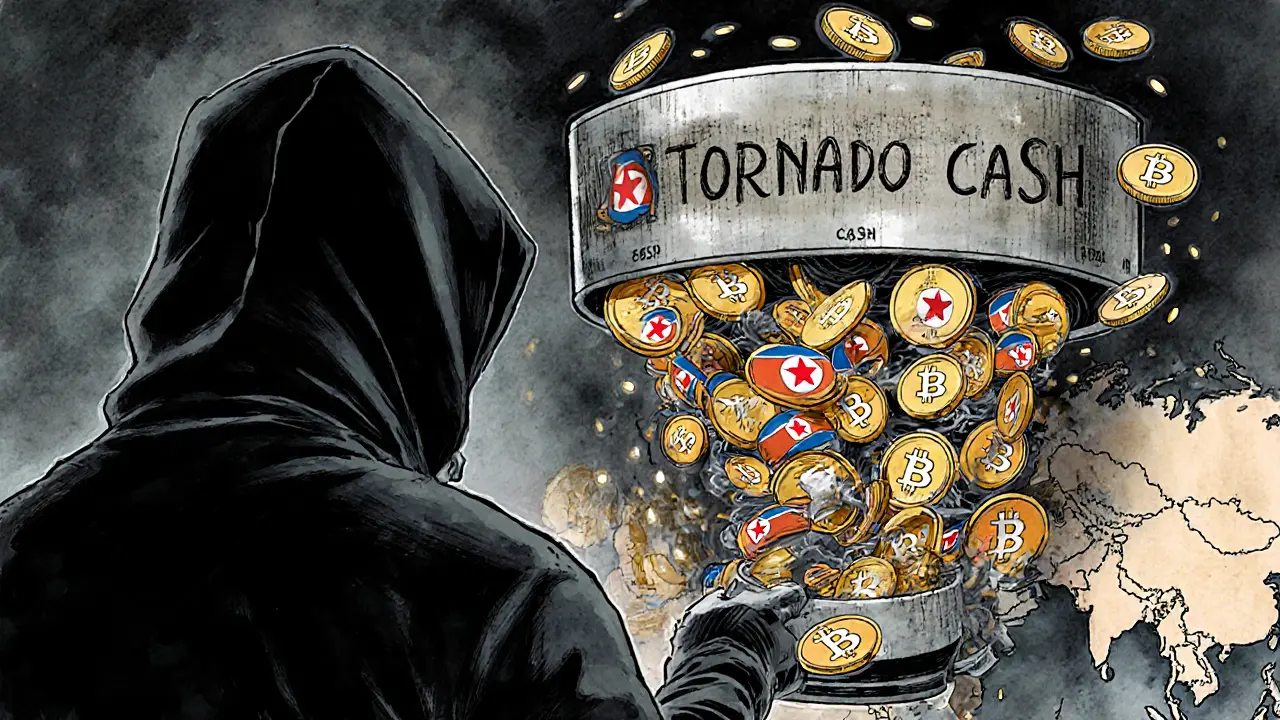
When you send Bitcoin from one wallet to another, the whole world can see it-every step, every address, every timestamp. That’s the beauty of blockchain: transparency. But it’s also the flaw. Because if you’re trying to hide where your money came from, that transparency becomes a liability. That’s where cryptocurrency mixing services come in. And for countries like North Korea, they’re not just a tool-they’re a lifeline.
What Exactly Is a Cryptocurrency Mixer?
A cryptocurrency mixer, sometimes called a tumbler, takes your coins and mixes them with coins from dozens or hundreds of other users. Imagine dropping a $20 bill into a jar full of identical bills. Later, you take one out-but you don’t know if it’s yours. That’s the idea. The mixer doesn’t change the value. It just breaks the link between where the money came from and where it’s going. The process is simple:- You send your Bitcoin (or Ethereum, Monero, etc.) to the mixer’s address.
- The mixer pools your coins with others’-sometimes thousands of transactions at once.
- It shuffles them using algorithms, time delays, and multiple intermediate addresses.
- You get back the same amount, but from a brand-new address that has no traceable connection to your original wallet.
Centralized vs. Decentralized Mixers: Which Do North Korea’s Hackers Use?
There are two main types of mixers: centralized and decentralized. Centralized mixers are run by companies. You send your coins to them, they hold them briefly, then send back cleaned coins. These are easier to use, often with simple web interfaces. But they’re also dangerous. If the operator is dishonest-or gets hacked-you lose everything. Worse, many centralized mixers keep logs. Even if they claim to be “no-logs,” law enforcement has repeatedly proven that assumption wrong. In 2022, the U.S. Department of Justice shut down Blender.io, one of the largest centralized mixers, and indicted four Russian nationals for allegedly laundering over $300 million in stolen crypto-including funds linked to the Lazarus Group, North Korea’s elite hacking unit. Decentralized mixers don’t rely on a company. They use smart contracts on blockchains like Ethereum. Protocols like Tornado Cash and CoinJoin allow users to pool coins directly on-chain without trusting a middleman. No one holds your funds. No one keeps your data. The mixing happens automatically through cryptography. North Korea’s hackers have shifted heavily toward decentralized mixers since Blender.io went dark. Why? Because you can’t shut down a smart contract. You can’t arrest a piece of code. And you can’t force a decentralized protocol to reveal who sent what-unless you crack zero-knowledge proofs, which even top cryptographers haven’t done yet.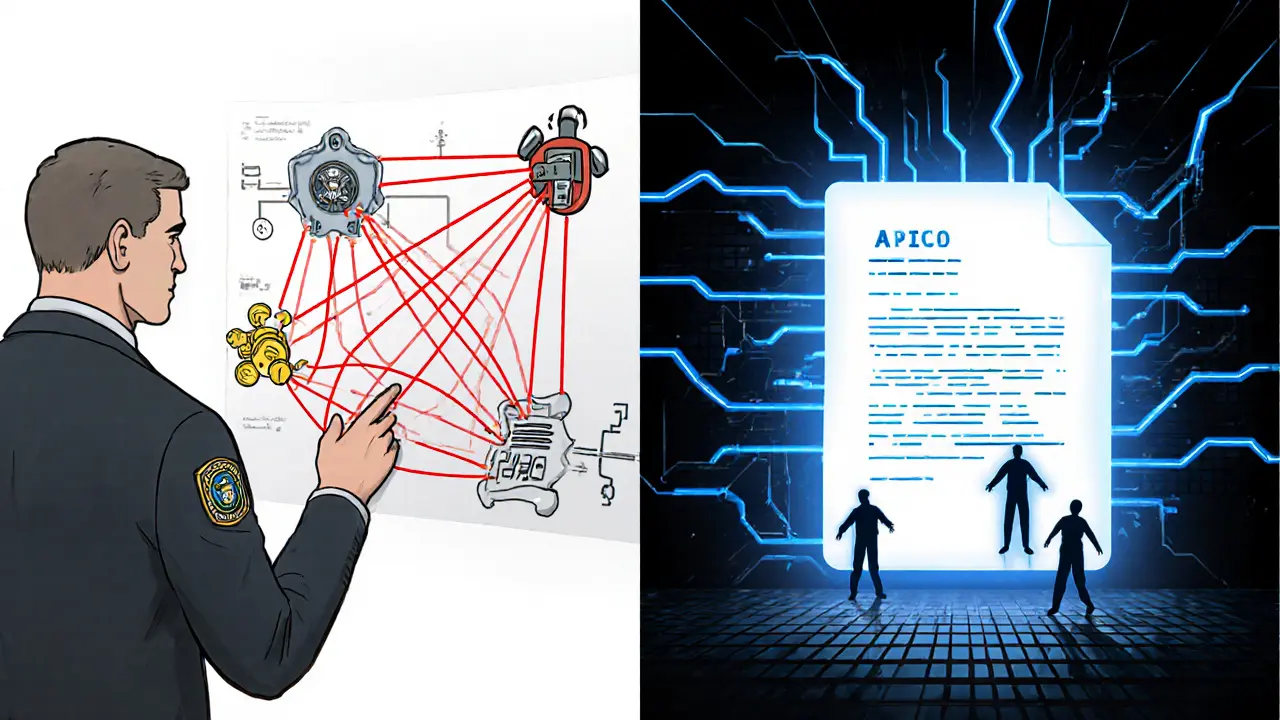
How North Korea Uses Mixers to Fund Its Nuclear Program
North Korea doesn’t have a stable economy. Sanctions have crippled its ability to earn foreign currency legally. So it turns to cybercrime. The Lazarus Group-a state-sponsored hacking team-has stolen over $3 billion in cryptocurrency since 2017, according to Chainalysis. They target exchanges, DeFi protocols, and crypto bridges. They steal Bitcoin, Ethereum, Tether. Then they need to turn it into cash they can use to buy weapons, fuel, and rare earth minerals. That’s where mixers come in. Here’s how it works in practice:- Lazarus hacks a crypto exchange in South Korea and drains $50 million in USDT.
- They send that money through Tornado Cash, splitting it into 500 smaller transactions across 200 different addresses.
- From there, they use cross-chain bridges to move the coins into Monero, which is inherently private.
- Finally, they cash out through peer-to-peer traders in Southeast Asia or Africa-often using fake identities and shell companies.
Why Regulators Keep Failing to Stop It
Governments have tried everything. The U.S. sanctioned Tornado Cash in August 2022. The EU followed. The UK froze wallets. But the mixers kept running. Why? Because decentralized protocols don’t have CEOs. No offices. No servers you can raid. The code lives on the blockchain. Anyone can use it. And if one version gets blocked, another pops up in days. Even centralized mixers are hard to kill. When Blender.io was shut down, its operators simply rebranded as Sinbad.io-same team, same code, same users. It took another year and a half before Sinbad was also taken down. The real problem? Mixers aren’t illegal everywhere. In places like Switzerland, Singapore, and even parts of Latin America, there’s no law against privacy tools-even if they’re used for crime. And many users claim they just want to protect their financial privacy from hackers or oppressive regimes. That’s the loophole North Korea exploits. They don’t need everyone to use mixers. They just need a few thousand users to make the system work. And with millions of crypto users worldwide, that’s easy to find.
The Real Risk: You Don’t Need to Be a Criminal to Get Caught
Here’s something most people don’t realize: if you’ve ever used a mixer-even once-you might be on a government watchlist. The U.S. Treasury’s Office of Foreign Assets Control (OFAC) maintains a list of blockchain addresses linked to sanctioned entities. If your wallet ever received coins that passed through a mixer tied to North Korea, your account could be flagged-even if you had no idea where the money came from. In 2024, a German crypto investor received $12,000 in Bitcoin from a friend. The friend had bought it legally on Coinbase. But that Bitcoin had once passed through Tornado Cash months earlier. The bank froze the account. The investor spent six months fighting to prove he wasn’t involved in laundering. He never got his money back. This isn’t rare. Over 12,000 wallets have been flagged globally for “indirect exposure” to sanctioned mixers. Many belong to ordinary people who never even knew what a tumbler was.What’s Next? The Arms Race Between Privacy and Control
The battle isn’t over. Researchers are developing new tools to trace mixed coins-even through decentralized protocols. Some use AI to spot patterns in transaction timing, address clustering, and gas fee behavior. Others are building blockchain analytics platforms that can detect when coins enter and exit mixers with 85%+ accuracy. But North Korea isn’t sitting still. They’re investing in custom-built mixers, integrating them with privacy coins like Zcash and Dash, and even experimenting with AI-driven address generation to avoid clustering detection. Meanwhile, regulators are pushing for global bans on all mixing services. The EU is drafting a law that would make it illegal to develop, operate, or even use a mixer. The U.S. is considering criminal penalties for anyone who interacts with a sanctioned mixer-even accidentally. But here’s the catch: if you ban mixers, you don’t just stop criminals. You also stop journalists in authoritarian countries, dissidents, whistleblowers, and everyday people who just want to keep their finances private. There’s no easy answer. The same tool that lets North Korea fund its nukes also protects someone in Iran from a government that tracks their spending. And that’s why this fight won’t end with laws or sanctions. It’ll end when someone finds a way to make blockchain truly private without breaking trust.Until then, North Korea keeps stealing. Keeps mixing. Keeps spending. And the world keeps chasing ghosts on a public ledger.
theyre just using this to scare you so they can track every coin ever and turn crypto into paypal with more steps
Oh wow a mixer is bad because bad people use it? Next you'll tell me hammers are evil because terrorists use them to smash windows. The fact you think privacy tools should be banned because criminals might use them proves you've never read a single libertarian manifesto. Or basic logic. Or history. Or anything really.
Can we just talk about how horrifying it is that a nation-state is outsmarting Western regulators with code? That this is happening on a public ledger? That we're all just... watching? Like it's a Netflix documentary and not the collapse of financial sovereignty? I'm literally shaking. Someone call the UN. Or a therapist. Or both.
it's wild how we're treating privacy tech like it's a weapon when it's really just a tool. the real issue isn't the mixer, it's that we built a system where your financial history is public by default. if you want to stop north korea from laundering, fix the incentives. don't punish the people who just want to keep their bank statements private from advertisers and stalkers.
so you're telling me the government is watching me because i used a mixer once? and i didn't even know what it was? lmao this is the dumbest thing i've ever heard
we need to stop being scared of tech and start being smart about it. privacy isn't the enemy. lazarus is. and if we keep punishing innocent users instead of going after the hackers? we're just helping them win. get creative. build better tools. track the flow. don't ban the tool. hunt the user.
im just glad i never touched a mixer. but i feel bad for all the regular folks who got flagged just because their friend used a service they didnt even know existed. crypto is supposed to be open but this feels like getting arrested for something you didnt do because your phone was near the crime scene
It is a profound irony that the very technology designed to decentralize trust has become the instrument through which centralized control is being reasserted - albeit under the banner of security. The moral hazard lies not in the mixer, but in the assumption that compliance equates to justice. We are not safeguarding society; we are constructing a panopticon in the name of preventing crime.
why dont we just make all mixers illegal globally? if its used for crime then ban it. why should innocent people suffer because north korea is evil? its like saying dont ban guns because some people use them for self defense
the question isnt whether mixers should exist. its whether we want a world where your money has a history you cant erase. if you believe in property rights then you believe in financial privacy. if you believe in state power then you believe in financial surveillance. pick a side. the blockchain just holds up the mirror.
hey just wanted to say if you ever used a mixer and got flagged dont feel alone. i know someone who got their account frozen for 8 months over a $200 transfer. they had no idea. the system is broken. we need better education and better tools not more bans
you know what this reminds me of when the government tried to ban encryption in the 90s and then the internet exploded and now we have end to end encrypted everything and no one can stop it and now theyre doing the same thing with mixers and honestly its just the same story over and over again people want privacy and governments want control and the tech always wins because its faster and smarter and its not like we can just turn off the internet or delete the blockchain right
THEY KNOW EVERYTHING. THEYVE BEEN WATCHING SINCE THE FIRST BITCOIN WAS MINED. THE MIXERS ARE A TRAP. THEY WANT YOU TO USE THEM SO THEY CAN TRACK YOU BETTER. THE REAL MONEY ISN'T IN THE COINS. ITS IN THE DATA. THEY DONT WANT TO STOP LAZARUS. THEY WANT TO CONTROL WHO GETS TO BE PRIVACY-ENABLED. THIS ISN'T ABOUT CRIME. THIS IS ABOUT POWER.
There exists a fundamental tension between fungibility and accountability in digital asset systems. When coins are rendered non-traceable, the integrity of the chain’s audit trail is compromised - not because of malice, but because of the inherent design of privacy-preserving protocols. The state’s response, while heavy-handed, is not irrational. The challenge lies in reconciling individual privacy rights with systemic financial integrity. This is not a technical problem. It is a philosophical one. And philosophy does not yield to legislation - it outlasts it.