
You log into your favorite cryptocurrency exchange from a restricted country. You’ve connected to a premium Virtual Private Network a service that encrypts internet traffic and masks the user's IP address with one from another location, selected a server in a friendly jurisdiction, and clicked 'Connect.' But instead of seeing your portfolio, you see an error message: "Access Restricted" or "Suspicious Activity Detected." Your account might even get flagged for manual review.
This isn't bad luck. It’s the result of a sophisticated, multi-layered war between privacy tools and financial compliance engines. In 2026, major centralized exchanges don’t just look at your IP address anymore. They use a combination of network analysis, behavioral biometrics, and machine learning to peel back the layers of anonymity you think you have.
The Shift from Simple IP Blocking to Behavioral Analysis
A few years ago, blocking a VPN was as simple as maintaining a blacklist of known IP addresses unique numerical labels assigned to devices on a computer network belonging to popular providers like NordVPN or ExpressVPN. If your connection came from one of those ranges, you were blocked. Today, that method is obsolete for top-tier platforms.
Exchanges now employ multi-layered VPN detection systems. This means they verify your identity through several independent vectors simultaneously. If your IP says you’re in London, but your browser language is set to Russian, your time zone offset doesn’t match UK daylight saving rules, and your mouse movement patterns resemble a bot rather than a human, the system flags you. It’s not about hiding your location; it’s about consistency across dozens of data points.
Core Detection Technologies Used by Exchanges
To understand how to navigate these restrictions-or why you got banned-you need to know what technologies are actually running behind the scenes. Here are the primary methods used by giants like Binance, Coinbase, and Kraken.
- Deep Packet Inspection (DPI): Even when your traffic is encrypted, the metadata-the size, timing, and sequence of packets-often reveals it’s going through a tunnel. DPI analyzes these patterns to identify characteristic signatures of VPN protocols like OpenVPN or WireGuard, distinguishing them from standard HTTPS web traffic.
- DNS Leak Detection: Your Domain Name System queries can betray your true location. If you claim to be in New York via your IP, but your DNS requests are resolving through a server in Moscow, the exchange’s security team will notice this mismatch immediately.
- Browser Fingerprinting: Exchanges collect data on your screen resolution, installed fonts, battery status, and hardware concurrency. If this fingerprint contradicts the geographic profile associated with your KYC (Know Your Customer) documents, it raises a red flag.
- Time Zone and Behavioral Analysis: Algorithms monitor when you trade. If your account is registered in Germany but shows active trading volume exclusively during Asian market hours, the system may suspect proxy usage or account sharing.
Centralized vs. Decentralized: The Evasion Landscape
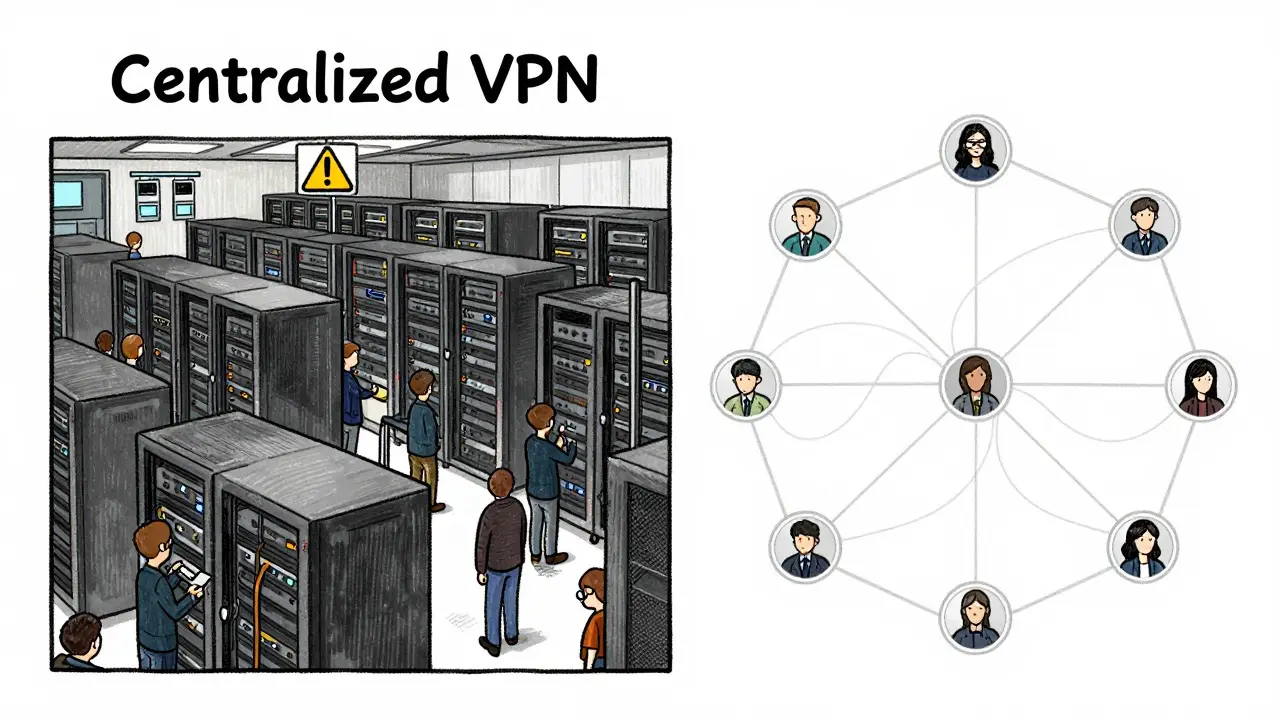
The effectiveness of these detection methods varies wildly depending on which type of service you use. Centralized VPN providers operate on proprietary infrastructure with concentrated IP ranges. Because thousands of users share the same exit nodes, these IPs become easily identifiable "hotspots" for exchanges.
In contrast, decentralized networks offer a different challenge. Services utilizing mixnet architectures, such as NymVPN, route traffic through multiple community-run nodes. This obfuscates the origin and destination of data packets, making traditional DPI and IP blacklisting far less effective. However, even these solutions aren't foolproof against advanced behavioral analytics.
| Feature | Centralized VPN (e.g., NordVPN) | Decentralized Mixnet (e.g., Nym) | Free/Public Wi-Fi |
|---|---|---|---|
| Detection Risk | High (Known IP Ranges) | Low-Medium (Dynamic Nodes) | Very High (Public Blacklists) |
| Speed/Latency | Moderate | Variable (Often Slower) | Poor |
| Cost | $3-$15/month | Free to Low Cost | Free |
| KYC Conflict Potential | High if IP doesn't match ID | Medium | Critical |

The Role of Machine Learning in Compliance
The real game-changer in 2026 is the integration of artificial intelligence into compliance workflows. Exchanges no longer rely solely on static rules. Instead, they use ML models trained on millions of transaction records to identify anomalies.
These models analyze typing cadence, mouse trajectory smoothness, and even the speed at which you scroll through terms of service agreements. If a new device logs in from a different continent, the system might require additional verification steps, such as a live video selfie or document re-upload. This isn't just technical detection; it's psychological profiling designed to ensure the person trading is the person who verified their identity.
Risks of Bypassing Restrictions
Why do exchanges go to such lengths? Regulatory pressure. Governments in regions like China, Russia, and Turkey impose strict limits on crypto access. Exchanges risk massive fines or shutdowns if they fail to enforce geo-blocking. For the user, the stakes are equally high.
If detected, consequences range from temporary session blocks to permanent account freezes. In severe cases, funds may be held pending extended legal review. Moreover, using a VPN to bypass sanctions can inadvertently violate Anti-Money Laundering (AML) laws in your home jurisdiction, complicating tax reporting and future banking relationships.
Practical Steps for Users in Restricted Regions
If you reside in a region with heavy crypto restrictions, here is how to minimize friction without triggering automated bans:
- Consistency is Key: Ensure your browser settings, time zone, and language match the location of your VPN server. Mismatches are the fastest way to trigger a flag.
- Avoid Free Services: Free VPNs use shared, heavily monitored IPs that are almost always blacklisted by financial institutions.
- Use Dedicated IPs: Some premium VPN providers offer static residential IPs. These look like regular home connections rather than data center servers, reducing suspicion.
- Consider Decentralized Exchanges (DEXs): Platforms like Uniswap or PancakeSwap operate without central authority and generally do not enforce KYC or geo-blocking, though they come with higher user responsibility regarding security.
- Monitor Account Health: If you receive unexpected verification requests, respond promptly with accurate information consistent with your claimed location.
The Future: DeFi and the End of Centralized Control?
As centralized exchanges tighten their grip, many users are migrating toward Decentralized Finance (DeFi). Since DEXs run on smart contracts rather than corporate servers, there is no central entity to block your IP. However, regulators are adapting. We are seeing early moves to track wallet addresses linked to restricted jurisdictions, suggesting that while network-level detection may fade, on-chain surveillance will intensify.
The arms race continues. As exchanges deploy more advanced AI-driven behavioral biometrics, privacy advocates push for stronger encryption and decentralized routing. For now, transparency and consistency remain your best defenses against accidental de-platforming.
Can crypto exchanges really detect if I am using a VPN?
Yes, major exchanges like Binance and Coinbase use multi-layered detection including IP blacklisting, Deep Packet Inspection, and behavioral analysis to identify VPN usage with high accuracy.
What happens if a crypto exchange detects my VPN?
Consequences vary but often include temporary login blocks, mandatory additional KYC verification, or in severe cases, permanent account suspension and frozen assets pending legal review.
Are free VPNs safe for accessing crypto exchanges?
Generally no. Free VPNs use public, shared IP addresses that are frequently blacklisted by financial institutions due to high abuse rates and poor security standards.
Do decentralized exchanges (DEXs) detect VPNs?
Most DEXs do not perform IP-based geo-blocking because they lack a central server structure. However, some front-end interfaces may implement basic IP checks, and on-chain analytics firms may still track wallet origins.
How does Deep Packet Inspection work against encrypted VPN traffic?
While DPI cannot read the content of encrypted data, it analyzes packet sizes, timing intervals, and flow patterns. These metadata characteristics often differ significantly between standard web browsing and VPN tunneling protocols.