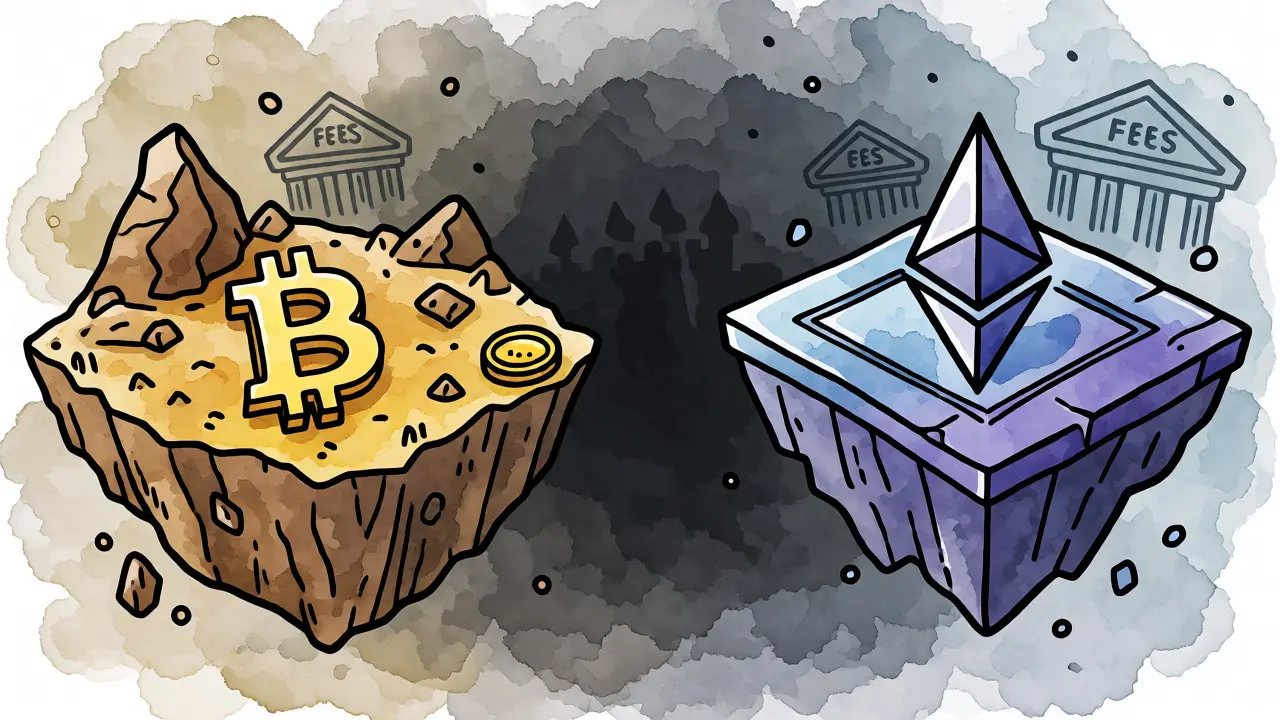
Imagine you have a pile of gold coins locked in a vault in New Zealand. You want to use that value to buy a coffee in London. In the traditional world, you'd exchange currency, pay fees, and wait for settlements. In the crypto world, if Bitcoin and Ethereum were completely isolated islands, your BTC would be useless on an Ethereum-based DeFi platform without selling it first. This is the problem blockchain interoperability solves. It’s not just about moving money; it’s about letting different digital ledgers talk to each other so they can share data, assets, and logic.
For years, blockchains operated as silos. If you wanted to move assets from one chain to another, you usually had to go through a centralized exchange-essentially trusting a third party with your keys. But the industry has moved past this. Today, we have sophisticated protocols that allow chains to communicate directly, trustlessly, and securely. Whether you are a developer building a dApp or an investor trying to understand why your bridge transaction failed, understanding how these systems connect is crucial. Let's break down exactly how blockchains shake hands across the digital void.
The Core Problem: Why Isolated Chains Fail
At their heart, most blockchains are designed to be self-contained. They verify their own transactions and maintain their own state. The security model relies on validators or miners agreeing on a single truth within that specific network. When you try to move value outside that boundary, you hit a wall. How does Chain B know that Chain A actually sent the funds? And how does Chain A know Chain B didn't double-spend?
Without interoperability, the utility of any single blockchain is limited by its native ecosystem. Bitcoin has immense security but limited programmability. Solana offers speed but different consensus mechanisms. If they can't talk, users suffer. They face fragmented liquidity, poor user experiences, and high friction. Interoperability transforms these isolated digital islands into a connected web. It allows a smart contract on Ethereum to trigger an action on Cosmos, or lets you use Bitcoin collateral to mint stablecoins on Polygon. This isn't just convenient; it's essential for scaling the entire decentralized economy.
How the Inter-Blockchain Communication (IBC) Protocol Works
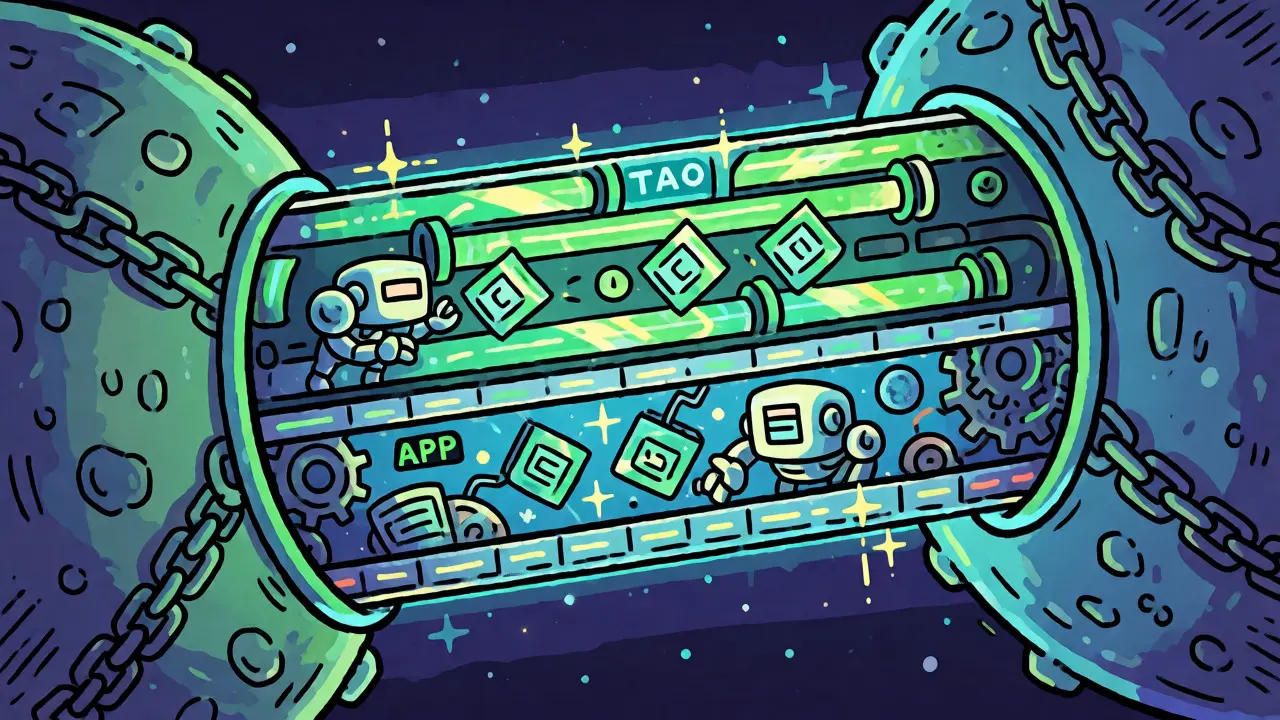
One of the most robust solutions for direct communication comes from the Cosmos ecosystem, known as the Inter-Blockchain Communication (IBC) protocol. Unlike simple bridges that might rely on a few trusted signers, IBC is built on a two-layer architecture designed for maximum security and flexibility.
The first layer is the TAO layer (Transport, Authentication, and Ordering). Think of this as the postal service infrastructure. It establishes secure connections between chains and verifies that the data coming from the other side hasn't been tampered with. It doesn't care what the message says; it just ensures it arrived intact and in order.
The second layer is the APP layer. This is where the actual meaning lives. It specifies how data is packaged and interpreted. For example, one application might want to send a token transfer, while another wants to execute a smart contract call. The APP layer handles the formatting so both sides understand the instruction.
The magic happens through Light Clients. Instead of trusting a central server, each blockchain runs a mini-version of the other chain inside its own code. This light client tracks the header history of the counterparty chain. When Chain A sends a packet to Chain B, Chain B uses its light client to verify that Chain A actually finalized that block. No middleman needed. The process follows a strict handshake:
- OpenInit: Chain A initiates contact, sending its info.
- OpenTry: Chain B checks Chain A's data via its light client and responds.
- OpenACK: Chain A confirms Chain B's status.
- OpenConfirm: The connection is live.
Once connected, packets travel from a source zone to a hub, which relays them to the destination zone. Hubs act as routers, streamlining traffic between dozens of individual zones. This structure prevents congestion and keeps the network efficient.
Chainlink’s Approach: The Cross-Chain Interoperability Protocol (CCIP)
While IBC dominates the Cosmos ecosystem, the broader multi-chain world often looks to Chainlink for standardization. Their solution, the Cross-Chain Interoperability Protocol (CCIP), aims to be a universal standard for connecting any major blockchain, including Ethereum, Avalanche, and Solana.
CCIP differs from IBC because it leans heavily on oracle networks. Since many chains don't run light clients for every other chain, CCIP uses a decentralized network of node operators to verify events off-chain and report them on-chain. This approach prioritizes ease of integration and broad compatibility over the pure cryptographic proofs used in IBC.
Security is the biggest concern here. Historically, cross-chain bridges have been massive targets for hackers, with billions lost in exploits. CCIP addresses this with a "security-first" mindset. It includes a Risk Management Network that monitors for malicious activity in real-time. If something looks suspicious, the system can pause transfers automatically. It also uses the Off-Chain Reporting (OCR) protocol, which has already secured hundreds of billions of dollars in value across various mainnets.
For developers, CCIP offers three ways to handle transfers:
- Direct User Interaction: Users call a function directly to send tokens.
- Sender Contracts: Apps manage fees and messages programmatically.
- Programmable Token Bridges: Complex logic executes during the transfer.
This flexibility makes CCIP attractive for enterprises and large-scale DeFi applications that need reliable, audited connections rather than experimental peer-to-peer links.
Comparing Interoperability Solutions
Choosing between these methods depends on your needs. Do you need absolute cryptographic trustlessness, or do you prefer a faster, more compatible setup? Here is a breakdown of the key differences.
| Feature | IBC Protocol | CCIP (Chainlink) | Traditional Bridges |
|---|---|---|---|
| Verification Method | On-chain Light Clients | Decentralized Oracle Networks | Trusted Signers / Multi-sig |
| Primary Ecosystem | Cosmos SDK chains | Ethereum, L2s, Alt-L1s | Varies widely |
| Security Model | Cryptographic Proof | Economic Security + Oracles | Trust Assumptions |
| Data Capability | Tokens & Arbitrary Messages | Tokens & Arbitrary Data | Mostly Tokens |
| Complexity | High (requires light clients) | Moderate (oracle integration) | Low (simple lock/mint) |
Notice that Traditional Bridges are still common because they are easy to build, but they carry higher risk. If the signer group gets compromised, all funds are gone. IBC and CCIP reduce this attack surface by distributing trust among thousands of nodes or using math instead of people.
Why This Matters for Users and Developers
You might wonder, "Why should I care about the plumbing?" Because it directly impacts your wallet balance and experience. Interoperability unlocks four major benefits:
- Innovation: Developers can combine features. Imagine using Bitcoin's security with Ethereum's smart contracts in a single app.
- Efficiency: You stop paying double fees. No more selling ETH on Binance to buy SOL. You just bridge it.
- Scalability: Networks get less congested when users can spread their activity across multiple chains.
- Simplicity: One wallet interface can manage assets across ten different networks seamlessly.
Consider a practical scenario. You hold 0.5 BTC. In the old world, you'd sell it for USDT, withdraw to Ethereum, swap for DAI, and deposit into Aave. That's four transactions and significant slippage. With modern interoperability, you could potentially use wrapped BTC directly on a Layer 2 network to borrow against it, all while keeping your original asset exposure. The complexity moves from the user to the protocol layer.

Common Pitfalls and Security Risks
It's not all smooth sailing. Cross-chain communication introduces new vectors for attack. The most famous incident was the Ronin Bridge hack, where attackers stole $624 million by compromising validator keys. This highlighted the weakness of centralized bridges.
Another issue is finality delays. Different chains finalize blocks at different speeds. Bitcoin takes ~10 minutes; Ethereum takes ~12 seconds. If a bridge assumes immediate finality, it might release funds before the source chain has truly confirmed the transaction. Good protocols account for this by waiting for sufficient confirmations or using light clients that track finality proofs.
Also, watch out for liquidity fragmentation. Just because a bridge exists doesn't mean there's enough liquidity on the other side. If you try to bridge a large amount of a niche token, you might face high slippage or long wait times if the pool is empty.
The Future of Connected Ledgers
We are moving toward a future where the underlying chain becomes invisible to the average user. You won't think, "I'm sending this on Cosmos." You'll just think, "I'm paying my friend." The technology will handle the routing.
Expect to see more universal standards emerge. Projects like LayerZero are experimenting with omnichain messaging, allowing any chain to talk to any other chain without needing a dedicated bridge for every pair. This mesh network approach reduces the number of potential failure points.
As we head deeper into 2026, the focus is shifting from "can we connect?" to "how fast and cheap can we connect?" Optimizations in zero-knowledge proofs are starting to allow for instant verification of cross-chain states, which could eliminate the waiting periods we currently endure. The goal is a unified digital economy where value flows as freely as information on the internet.
What is the difference between a bridge and a protocol like IBC?
A traditional bridge typically locks assets on one chain and mints equivalent tokens on another, often relying on a small set of trusted validators. IBC (Inter-Blockchain Communication) is a standardized protocol that uses light clients to verify the state of the counterparty chain cryptographically. IBC allows for arbitrary message passing, not just token transfers, making it more versatile and secure for complex applications.
Is cross-chain communication safe?
It is safer than it used to be, but risks remain. Older bridges with centralized custody are vulnerable to hacks. Modern protocols like CCIP and IBC distribute trust among many nodes or use mathematical proofs, significantly reducing the attack surface. However, smart contract bugs and economic attacks are still possible, so always check the audit history of the specific bridge or protocol you are using.
Can I send any type of data across chains?
Yes, advanced protocols support arbitrary messaging. This means you can send smart contract calls, price feeds, or custom data structures, not just tokens. However, the receiving chain must have a module or smart contract capable of interpreting that specific data format. Simple bridges may only support token transfers.
Why do cross-chain transactions take longer than normal ones?
Cross-chain transactions involve multiple steps: locking funds on the source chain, verifying the event on the destination chain, and executing the transfer. Verification often requires waiting for block finality on the source chain to prevent double-spending. Additionally, relayers who transport the data may batch transactions to save costs, adding slight delays.
Do I need separate wallets for each blockchain?
Technically, yes, because private keys are chain-specific. However, interoperability tools and unified interfaces are changing this. Some wallets now abstract away the complexity, allowing you to manage assets across multiple chains from one dashboard. You still control the keys per chain, but the user experience feels seamless.
Look, I get that we're trying to be optimistic about this stuff, but let's not pretend the security model is perfect. You mention CCIP uses a decentralized oracle network, but 'decentralized' is a buzzword people throw around until they actually audit the node operators. If those nodes are running on centralized cloud providers like AWS or Azure, you've just swapped one single point of failure for a slightly larger cluster of them. That's not trustless; that's just distributed trust assumptions. And don't even get me started on light clients-if the client implementation has a bug in its Merkle proof verification, the whole chain consensus breaks down. We saw this with some early Cosmos forks. People need to stop treating these protocols as magic boxes and start reading the actual source code before putting millions in liquidity pools.
Because apparently reading documentation is too hard for most people.
Sarcasm doesn't fix bad architecture, John. If the docs are unclear, that's a barrier to entry that hurts adoption more than any technical flaw. But my point stands: verify, don't trust.
dude chill out it works fine i bridged like 5k last week no issues at all
stop overthinking everything its crypto not rocket science
I find it deeply troubling how casually the community dismisses the philosophical implications of interoperability. We are not merely moving tokens; we are attempting to create a unified semantic layer across fundamentally different economic systems. When you say "it works fine," you ignore the existential risk of value leakage between chains with disparate inflationary models. It is akin to mixing water from two different rivers without considering the sediment they carry. The Ronin hack was not just a technical failure; it was a moral failure of governance. Until we address the ethical framework of cross-chain state verification, we are merely building castles on sand. One must consider the long-term sociological impact of fragmented liquidity before celebrating short-term transaction speeds.
This is so true! We really need to focus on being responsible users. It’s not just about speed, it’s about doing things the right way. If everyone took a moment to understand the risks instead of just YOLOing their savings into a bridge, we wouldn’t have these constant horror stories. It feels like people forget that behind every protocol is a human decision-making process. Let’s keep our heads up and stay vigilant!
Hello there! I appreciate the detailed breakdown of the TAO and APP layers. It is quite helpful for those of us who are new to the Cosmos ecosystem.
I did want to add that while IBC is secure, the user experience can still be a bit clunky if you aren't using a wallet that supports IBC natively. Sometimes you have to go through a hub first, which adds latency. For developers, though, the ability to send arbitrary messages is a game changer. It allows for much more complex DeFi strategies that weren't possible when we were limited to simple token swaps. Keep up the good work explaining these concepts clearly!
omg yes!! i totally agree about the ux part. i tried to use ibc last month and almost gave up cause i didnt know which hub to pick lol. but once u figure it out its kinda cool? like its magic money moving around. also ty for mentioning ccip, i always confuse the two. super helpful post!!
I’ve been following the evolution of these protocols closely, and I think the comparison table is spot on. However, I feel like the article glosses over the cost aspect. While interoperability reduces friction, the gas fees for executing smart contract calls across chains can still be prohibitive for smaller users. For instance, triggering a cross-chain action might require paying fees on both the source and destination chains, plus the relayer fee. This creates a tiered system where only whales can truly benefit from seamless interoperability. Do you think LayerZero’s approach of shared security will eventually drive these costs down enough for the average retail investor?
Your observation regarding the cost barriers is astute and well-founded. Indeed, the current economic model of cross-chain messaging often disadvantages smaller participants due to fixed overheads associated with relayer incentives and multi-chain execution costs. As noted in recent industry analyses, the amortization of these costs depends heavily on transaction volume and the efficiency of the underlying settlement layers. It is plausible that advancements in zero-knowledge proofs could mitigate these expenses by reducing the data availability requirements on the destination chain. Nevertheless, until such optimizations are fully implemented, the disparity in accessibility remains a significant structural challenge within the interoperable landscape.
i like how this post respects the complexity of the topic without being condescending. it’s rare to see an explainer that trusts the reader to handle the nuance of light clients vs oracles. usually these articles just say “bridges are risky” and move on. this actually walks through *why* they are risky and what the alternatives look like. good balance.
Listen here. Everyone keeps talking about Ethereum and Solana but nobody talks about the real problem. The real problem is that Indian developers are stuck building on expensive L1s because the tooling for cheaper chains is trash. Interoperability means nothing if your dev environment is broken. I wasted three days debugging a bridge integration last week because the docs were outdated. Fix the tools first, then talk about the philosophy of gold coins in New Zealand. We need practical solutions, not academic essays.
Oh, I absolutely adore the spirit of innovation described here! It fills my heart with such boundless optimism to see humanity reaching for the stars of digital connectivity. Imagine a world where value flows as freely as sunlight, unencumbered by the archaic walls of isolated ledgers! It is truly a beautiful tapestry of technological progress, weaving together the disparate threads of our global economy into a cohesive, shimmering fabric of possibility. Let us celebrate this triumph of engineering!
oh please. another day, another article pretending blockchain is going to save the world. i remember when people said email would replace mail. now we have spam. now we have cross-chain spam. i’m tired. i’m so tired of hearing about ‘interoperability’ when half the time it just means ‘more ways to lose your money.’ why do i even bother reading these things? it’s just noise. endless, meaningless noise.
Hey guys! Love the energy in this thread! Seriously, it’s awesome to see people debating the merits of IBC vs CCIP. I’ve been trying to get into the Cosmos ecosystem myself and it’s definitely a learning curve, but the community support is incredible. If anyone needs help setting up their first validator, hit me up! We’re all in this together, building the future one block at a time. Keep pushing forward!
How quaint. Truly, how delightfully naive. To suggest that 'light clients' solve the trust issue is to misunderstand the very nature of Byzantine Fault Tolerance in heterogeneous networks. One must consider the political economy of relayers! Who pays them? Who audits them? The article presents a sanitized view of a messy reality. Furthermore, comparing IBC to traditional bridges is like comparing a Ferrari to a horse cart-technically both transport goods, but the operational risks are incomparable. I suppose for the layperson, this simplification is comforting, but for those of us who actually read the whitepapers, it borders on insult. Do try to maintain some intellectual rigor next time, won't you?
It sounds really complicated, but I guess it makes sense that different chains need translators. Like how people speak different languages. I hope it gets easier for normal folks soon.
I appreciate the respectful tone of this discussion. It is important to acknowledge that while experts debate the nuances, beginners are looking for clear guidance. Perhaps a visual diagram of the handshake process would help clarify the OpenInit/OpenTry steps for those less familiar with networking concepts. No pressure, just a gentle suggestion for future iterations.
You are absolutely right to highlight the UX friction! Developers often forget that users don't care about 'hubs' or 'relayers'-they care about not losing their money. We need to push for abstracted interfaces that hide this complexity entirely. If we want mass adoption, we cannot expect users to understand the difference between a lock/mint mechanism and a burn/mint mechanism. Let's keep advocating for better tools and clearer documentation. You’ve got this!