
Buying or selling a home used to mean weeks of waiting. Paperwork piled up. Title companies dug through decades of records. Banks took days just to confirm a wire transfer. You’d sign, wait, sign again, and wait some more. The whole process? 30 to 60 days on average in the U.S. But what if you could cut that down to under 72 hours? That’s not science fiction. It’s happening right now - thanks to blockchain.
What’s Slowing Down Real Estate Transactions?
Traditional real estate deals are built on layers of manual checks. A simple home sale involves at least seven different parties: the buyer, seller, real estate agent, lender, title company, escrow agent, and county recorder. Each one needs to verify something - income, ownership, lien status, signatures, funds. And each step happens one after another, not at the same time.
Here’s how it breaks down:
- Title search: 7-10 days to confirm no one else owns the property or has claims against it.
- Mortgage approval: 15-21 days for lenders to review documents, order appraisals, and finalize terms.
- Escrow and closing: 5-7 days to coordinate signatures, fund transfers, and record deeds.
That’s 30+ days just to move money and papers. And if one document is wrong? You start over. Delays aren’t rare - they’re the norm.
How Blockchain Changes Everything
Blockchain doesn’t just digitize paperwork. It removes the middlemen entirely by using two powerful tools: smart contracts and immutable ledgers.
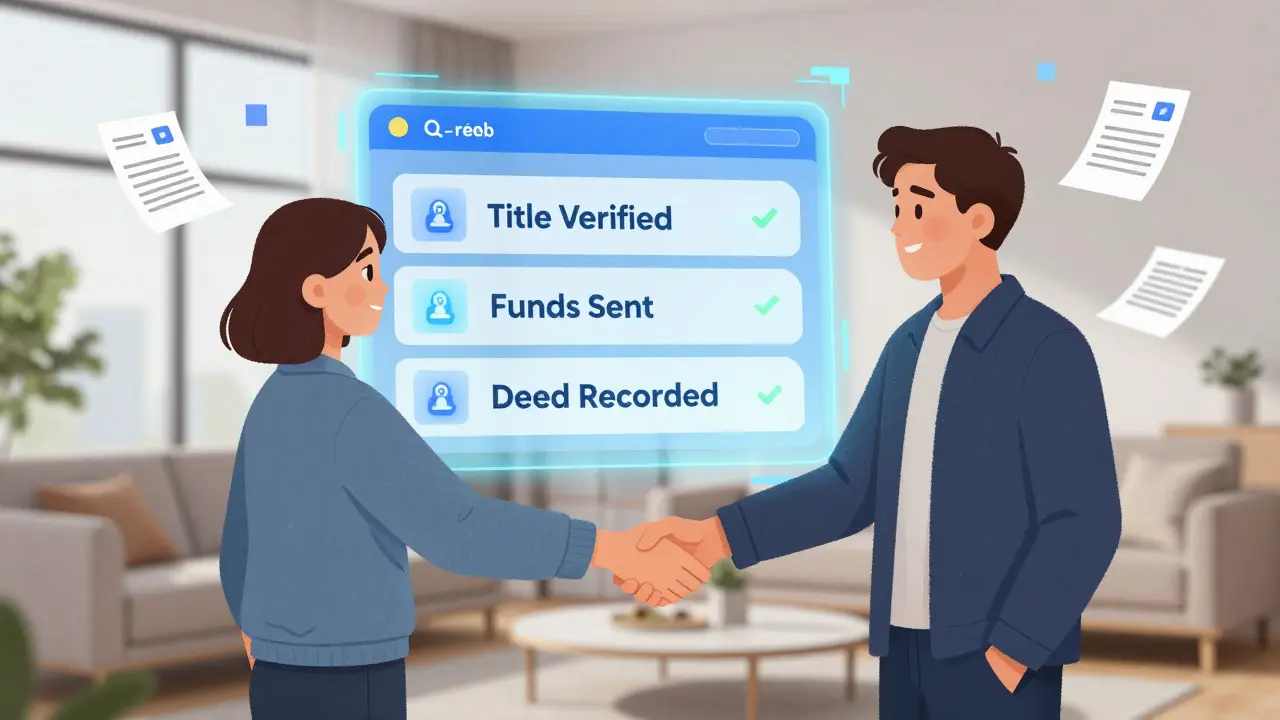
A smart contract is a self-executing program. You set the rules - “Release funds when title is verified” - and the system does the rest. No human needs to click “approve.” No email chain. No faxed forms. The contract checks conditions automatically.
The ledger? It’s a shared, tamper-proof record stored across hundreds of computers. Once a property’s ownership is recorded on the blockchain, it can’t be altered. No one can forge a deed. No one can lose a document. Every change is time-stamped and visible to authorized parties.
This means:
- Title searches happen in minutes, not weeks. The blockchain holds the full history of ownership since the property was first recorded.
- Funds transfer happens instantly. Instead of waiting for a bank to clear a wire, money moves directly from buyer to seller using cryptocurrency or a digital token backed by real currency.
- Signatures are verified digitally with blockchain IDs - no notary trips needed.
Companies like Propy and ShelterZoom have already used this to close deals in under 3 days. In Vermont, one transaction finished in 72 hours - while the state’s average was 35 days.
The Real Speed Gains: Numbers That Matter
Let’s compare what blockchain actually delivers:
| Step | Traditional Time | Blockchain Time | Time Saved |
|---|---|---|---|
| Title Verification | 7-10 days | Under 4 hours | 95% |
| Funds Transfer | 3-5 days | Under 1 hour | 98% |
| Document Signing | 2-3 days | Under 15 minutes | 99% |
| Recording Deed | 5-7 days | Instant (if county accepts) | Up to 90% |
| Total Closing Time | 30-60 days | 2-7 days | 80-90% |
That’s not theory. It’s real. JLL, one of the world’s largest commercial real estate firms, closed a $3.5 million property deal in 96 hours using blockchain. The buyer didn’t wait for bank confirmations. The title company didn’t need to call three agencies. Everything was verified automatically.
Sweden’s national land registry, Lantmateriet, ran a pilot and saw title transfers complete 90% faster. In Texas, a buyer on Reddit reported closing in 4 days - the county average was 32.
Why Isn’t Everyone Using It Yet?
It’s not magic. There are still roadblocks.
First, laws haven’t caught up. In 22 U.S. states, deeds still require a wet ink signature. Even if the blockchain proves ownership, the county recorder might refuse to accept it. That’s why some blockchain closings get stuck - not because the tech failed, but because the system behind it didn’t change.
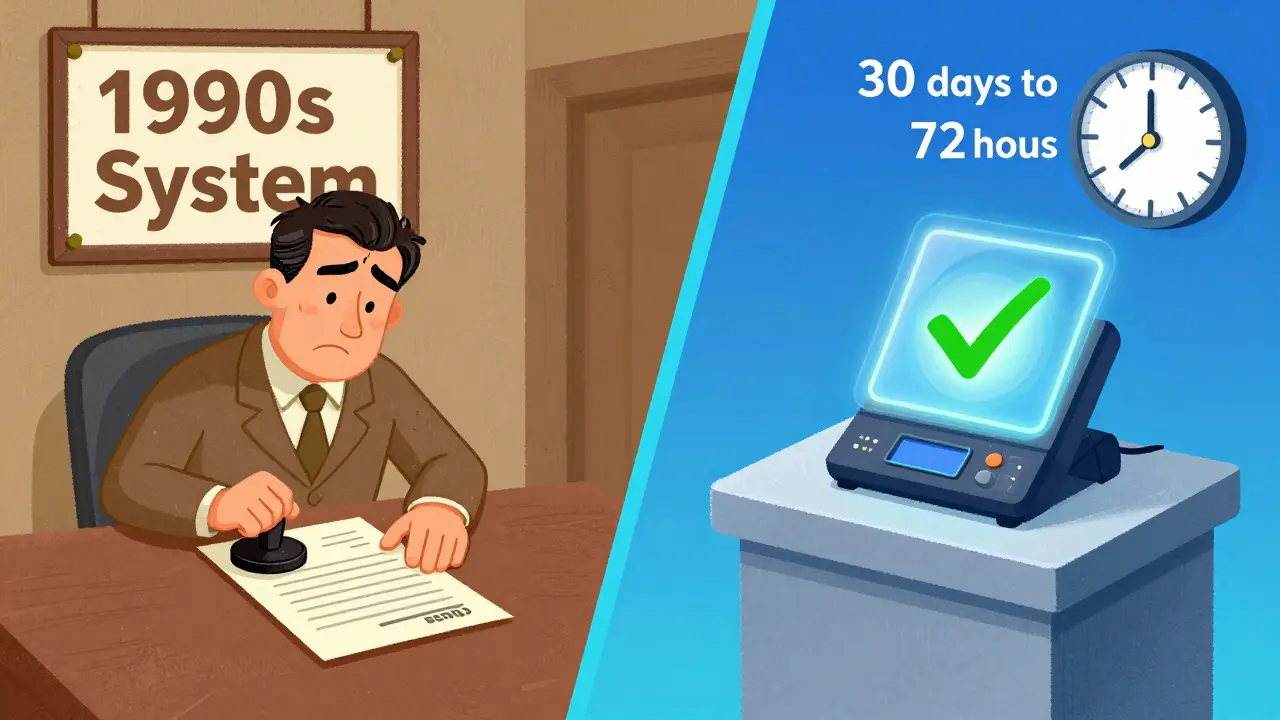
Second, legacy systems don’t talk. Most title companies still use 1990s software. Banks rely on Fedwire. The blockchain needs to connect to those systems - and that’s not easy. Integration takes 6-9 months and costs hundreds of thousands of dollars.
Third, people don’t know how to use it. A National Association of Realtors study found agents need 80-120 hours of training just to handle blockchain transactions. Most still trust paper files because they’ve used them for decades.
And then there’s the trust issue. Some buyers worry: “What if the blockchain gets hacked?” But here’s the truth - blockchain is harder to hack than a county clerk’s filing cabinet. A single document can be stolen. A digital ledger spread across 10,000 computers? Not so easy.
Where It’s Working Best Right Now
Blockchain isn’t replacing every home sale. But it’s dominating in three areas:
- Commercial real estate: Big deals worth millions. Investors don’t want to wait months for funding. JLL, CBRE, and Blackstone are already using blockchain for cross-border purchases. A deal between a German buyer and a U.S. seller used to take 87 days. Now? 7 days.
- International sales: When money crosses borders, wires take 5-10 days. Blockchain settles in minutes. No currency conversion delays. No intermediary banks.
- States with digital deed laws: 49 U.S. states recognize electronic signatures under the ESIGN Act. Counties like South Burlington, Vermont, have fully adopted blockchain - and now process transactions 87% faster than paper.
The biggest leap forward? Integration with central bank digital currencies (CBDCs). The Federal Reserve’s Project Hamilton showed that if a buyer uses a digital dollar, title transfer and payment can happen in under 15 seconds. No waiting. No wires. Just a confirmed transaction.
What’s Next? The Road to 24-Hour Closings
The Real Estate Standards Organization has a goal: sub-24 hour closings by 2026. That’s not hype. It’s on track.
Propy’s latest platform update cut average closing time to 58 hours. BSV Blockchain’s network can now process 50,000 transactions per second - enough to handle every home sale in the U.S. in under an hour. The tech is ready.
The only thing left is the system. Recording offices need to update their software. Title insurers need to stop requiring paper backups. Banks need to accept blockchain as legal proof of payment.
When that happens, the 30-day home sale will look as outdated as a typewriter.
Can You Use This Today?
If you’re a buyer or seller, you can try it - but only in certain places. Look for:
- Real estate agents who mention blockchain or Propy
- Counties with digital recording systems (check your local recorder’s website)
- States that allow e-signatures for deeds (all but 22 U.S. states)
Don’t expect it everywhere. But if you’re buying in a tech-forward area - Austin, Miami, Denver, or Vermont - ask your agent: “Can we do this on blockchain?” You might be surprised by the answer.
Can blockchain really close a real estate deal in 72 hours?
Yes. Companies like Propy have closed home sales in under 72 hours in states like Vermont and Texas. Traditional closings in those areas typically take 30-35 days. The speed comes from automated title verification, instant digital signatures, and blockchain-based fund transfers that don’t rely on banks or escrow agents.
Do I need cryptocurrency to use blockchain for real estate?
No. Most blockchain real estate platforms use digital tokens that represent real U.S. dollars or other fiat currencies. The blockchain just moves the money faster - you still pay with your bank account, not Bitcoin. Some platforms do allow crypto payments, but it’s optional.
Why aren’t all counties accepting blockchain deeds?
Many county recorder offices still require physical documents with wet signatures. Even if the blockchain proves ownership, the law in 22 U.S. states demands paper filings. Until those laws change, blockchain can’t fully replace traditional recording - though it can still speed up 80% of the process.
Is blockchain real estate safe?
It’s more secure than paper. A blockchain ledger is distributed across thousands of computers - so no single hack can erase records. Each transaction is time-stamped and encrypted. Your identity is verified through a digital passcode, not a social security number. Fraud becomes nearly impossible because every change is permanently recorded.
What’s the biggest barrier to widespread adoption?
The biggest barrier isn’t technology - it’s regulation and legacy systems. Title companies, banks, and county offices still operate on paper-based workflows from the 1980s. Integrating blockchain requires major upgrades, training, and legal changes. Until those systems evolve, blockchain adoption will remain limited to forward-thinking markets.