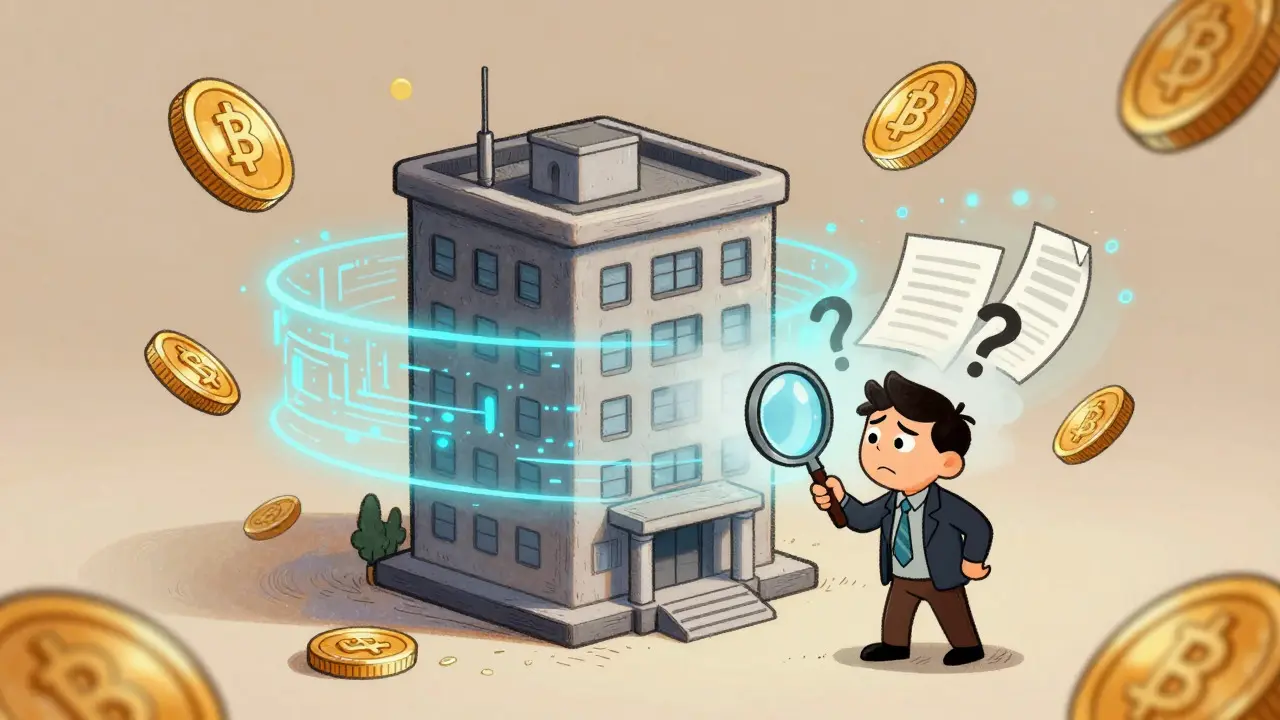
Most people searching for GMCoin are trying to figure out if this obscure token is a hidden gem or a trap. The short answer? It’s a high-risk, low-liquidity asset that claims to be the world's first "tokenized company," but lacks the transparency and trading volume to support that bold title. If you're considering buying GMCOIN, you need to understand exactly what it is, how it operates on the Tron network, and why its market presence is so fragile.
Let's break down the facts. GMCoin isn't like Bitcoin or Ethereum. It doesn’t power a global payment system or a massive DeFi ecosystem. Instead, it was launched by a specific Bulgarian firm with a unique, albeit controversial, business model. Before you spend a single dollar, let's look at the data, the technology, and the real-world user experiences that define this coin today.
What Exactly Is GMCoin?
GMCoin is a cryptocurrency token issued by GM Informatics JSC, a Bulgarian joint-stock company, which claims to be the first 'tokenized company' in the world. The project went live in 2019 after several testnet phases. Unlike standard utility tokens that give you access to a software service, or governance tokens that let you vote on protocol changes, GMCOIN is designed to represent the operational structure of GM Informatics itself.
The core concept here is "Decentralized Business" (DeBu). The idea is that the value of the token should theoretically correlate with the performance of the actual company behind it. In other words, if GM Informatics makes money, GMCOIN holders benefit. This is a radical departure from most crypto assets, which rely heavily on speculation and network effects rather than direct corporate earnings. However, this claim rests entirely on the word of the issuing company, as there is no independent third-party verification linking the token's price directly to audited financial statements.
Technical Architecture: Tron Blockchain Integration
Technically, GMCOIN operates exclusively on the Tron blockchain as a TRC-20 token. This is a significant detail because Tron is known for high throughput and low transaction fees, supporting roughly 2,000 transactions per second. By choosing Tron over Ethereum, the developers aimed for efficiency, avoiding the gas fee issues that plague ERC-20 tokens during periods of high network congestion.
However, being on Tron doesn't automatically make a token scalable in practice. Since GMCOIN has minimal daily usage, it hasn't been stress-tested under heavy load. Its scalability is limited by its own adoption rate, not the underlying chain. Furthermore, there is no evidence of cross-chain bridges or multi-chain deployments. If you hold GMCOIN, you are locked into the Tron ecosystem. You can't easily move it to Ethereum or Solana without going through complex bridging processes that carry their own risks.
| Attribute | Detail |
|---|---|
| Blockchain | Tron (TRC-20) |
| Issuer | GM Informatics JSC |
| Circulating Supply | ~41.18 Million Tokens |
| Market Cap Rank | #1,719 (Approx.) |
| Daily Volume | $6,780 - $11,182 USD |
| Primary Use Case | Tokenized Corporate Ownership |
Market Performance and Liquidity Reality Check
Here is where the dream meets reality. GMCOIN trades on very few exchanges, primarily smaller platforms like XT.com and Bitrue. As of late 2023 data, the 24-hour trading volume hovers between $6,780 and $11,182. To put that in perspective, Bitcoin moves billions of dollars in seconds. For GMCOIN, moving even a small amount of capital can significantly impact the price due to thin order books.
This extreme illiquidity creates a dangerous environment for traders. If you buy 500 GMCOIN tokens, selling them might result in "slippage," meaning you get a worse price than expected because there aren't enough buyers at your desired price point. One user reported losing 35% of their position value just by trying to sell on Uniswap due to these thin liquidity pools. The All-Time High was around $0.80 in late 2021, but the price has since dropped by over 90%. While many altcoins have seen similar drops, GMCOIN's lack of recovery suggests weak organic demand.
The "Tokenized Company" Model: Innovation or Red Flag?
The biggest selling point of GMCOIN is its status as a "tokenized company." Proponents argue this is the future of finance, merging traditional corporate structures with blockchain transparency. Critics, however, see major legal and structural vulnerabilities.
Dr. Elena Petrova, a blockchain researcher at Sofia University, noted that tokenizing an entire company without clear regulatory compliance creates "significant legal vulnerabilities," especially regarding securities laws. In the US, the SEC has aggressively pursued projects that treat tokens as unregistered securities. If GMCOIN is legally considered equity in GM Informatics, holding it could subject investors to different tax and legal obligations than holding a standard commodity-like crypto asset.
Furthermore, the transparency promised by blockchain is missing in practice. Despite the claim that the token represents the company's operations, GM Informatics does not publish regular, audited financial reports linked to the token's performance. On Trustpilot, the company holds a rating of just 2.1/5, with common complaints about "lack of transparency" and "unresponsive customer support." Without verified data, the "tokenized company" label remains more of a marketing slogan than a proven financial instrument.
User Experience and Community Sentiment
What do actual users say? The sentiment is largely skeptical. On Reddit, particularly in r/CryptoCurrency, threads about GMCOIN often highlight the difficulty of exiting positions. A user named 'CryptoSkepticBG' pointed out that the project provides "zero financial statements or audited reports," calling it a classic red flag.
The community size is also telling. The official Telegram channel has fewer than 1,500 members, with very low daily activity. Compare this to major projects that have hundreds of thousands of active community members. Low engagement means less organic growth, fewer developers contributing to the ecosystem, and higher risk of the project becoming abandoned.
- Positive Points: Innovative concept, low transaction fees via Tron, unique niche positioning.
- Negative Points: Extremely low liquidity, poor documentation, inactive development team, legal ambiguity, high slippage risks.

Risk Assessment: Should You Buy GMCOIN?
If you are looking for a safe investment, GMCOIN is likely not the right choice. Analysts from CryptoQuant categorize it as "Tier 4" (highest risk), citing negligible liquidity and lack of development activity. They estimate an 87% probability of the token becoming worthless within 24 months if current trends continue.
However, if you are a high-risk tolerance investor who believes in the long-term potential of business tokenization, you might consider a tiny position. Experienced traders recommend keeping exposure under $100 to minimize the impact of slippage and total loss. Always use limit orders with wide price buffers when trading such illiquid assets.
Keep in mind that the last significant GitHub commit for related repositories dates back to February 2021. The official website hasn't been substantially updated since 2020. In the fast-moving world of crypto, two years of silence is a long time. Unless new milestones are announced and verified, the project remains in a state of stagnation.
Frequently Asked Questions
Is GMCoin a good investment in 2026?
GMCoin is considered a high-risk investment due to its extremely low liquidity, minimal trading volume, and lack of recent development activity. While it has a unique concept as a 'tokenized company,' it lacks the transparency and regulatory clarity found in more established assets. Most analysts advise caution and suggest only allocating a small percentage of a portfolio to such high-risk micro-cap tokens.
Which blockchain does GMCOIN run on?
GMCOIN runs on the Tron blockchain as a TRC-20 token. This allows for faster and cheaper transactions compared to Ethereum-based tokens, but it limits the coin's compatibility to wallets and exchanges that support the Tron network.
What is the main problem with GMCOIN's liquidity?
The main problem is that daily trading volume is very low, often under $12,000. This means that buying or selling large amounts of GMCOIN can cause significant price swings (slippage). Investors may find it difficult to exit their positions quickly without accepting a lower price than the current market rate.
Who created GMCoin?
GMCoin was created by GM Informatics JSC, a Bulgarian joint-stock company. They launched the token in 2019 with the goal of becoming the first fully tokenized operating company in the world.
Is GMCOIN regulated by the SEC?
There is no explicit final ruling from the SEC specifically naming GMCOIN, but the token faces regulatory uncertainty. Because it claims to represent ownership in a company, it could potentially be classified as a security under US law, similar to other tokenized equity projects that have faced legal challenges.
Oh, the audacity of a Bulgarian firm to think they can outsmart Wall Street with a TRC-20 token. It’s not just a red flag; it’s a full-blown circus tent on fire. The idea that this is a "tokenized company" is the kind of pretentious nonsense only someone who has never actually read a balance sheet would believe. They are playing in the sandbox while the real giants build skyscrapers.
I have to say, Sean, you really know how to kill the vibe! 😂 But seriously, I’ve been digging into these obscure tokens lately because I love the energy of finding hidden gems before everyone else does, and honestly? This one feels like a trap, but in a fun way? Like, if you treat it as a lottery ticket rather than an investment, maybe there’s something there? I mean, the concept of owning a piece of a real business through crypto is super cool in theory, right? It’s just that the execution here is... well, let's be real, it’s messy. But hey, isn’t that what makes crypto exciting? The chaos!
Ellie, stop with the optimism for a second. You’re talking about a coin with $6k daily volume like it’s the next Bitcoin. That’s not "chaos," that’s a liquidity vacuum. If you buy 500 units, you’re not investing, you’re gambling on whether anyone else is stupid enough to buy from you at a price that doesn’t crash the order book. It’s not a gem, it’s a paperweight.
It’s interesting how we all react so differently to the same data, isn’t it? 🤔 While some see a trap, others see potential. I think the key lies in understanding the intent behind the asset. If it’s purely speculative, then yes, the risk is high. But if we view it through the lens of experimental finance, perhaps it’s a case study in decentralization. Just something to ponder. ✨
Pondering? Don't be cute. This is a scam dressed up in academic language. The "tokenized company" model is just a legal loophole waiting to happen. If GM Informatics goes bankrupt, where do your rights go? To a smart contract? Please. It’s a classic Ponzi scheme with extra steps. The only thing decentralized here is the responsibility for your own losses.
You people always underestimate the power of innovation coming from outside the US bubble 😊 Look at India, look at the emerging markets, we are building the future while you guys are still arguing about SEC regulations. This Bulgarian project might be small, but it shows that blockchain adoption is global. Why do Americans always think everything has to be regulated by the government to be valid? Let the market decide! 🚀
it is so arrogant of you to assume that just because it is not american it must be good or innovative. i have seen many such projects fail because they lack basic governance. the fact that they are bulgarian does not make them immune to fraud. it is just another example of how people chase shiny objects without looking at the fundamentals. very disappointing really 😐
We need to remember that every investor has a duty to themselves to understand what they are buying. Blaming the issuer or the country of origin is easy, but taking personal responsibility for due diligence is harder. If you didn't check the audit reports, was it really a surprise when the transparency was lacking? We must hold ourselves accountable for our financial choices.
The true nature of value is subjective. If a community believes in a token, it has value. If they don't, it's dust. This debate proves nothing except that humans are irrational animals driven by fear and greed. The blockchain is just a mirror reflecting our collective madness.
Subjective value requires a market. A market requires liquidity. There is no market here. The token is illiquid. Therefore, its value is effectively zero unless you can exit. The philosophy is sound, but the application is broken.
Ah, Ian, always so precise. So dry. But you missed the point, didn't you? It's not about the math, it's about the narrative. And right now, the narrative is "abandoned project." Unless someone buys it back with marketing dollars, it's dead. Just saying. 💅
Let me tell you a story. I bought a bag of this stuff in 2021 because a guy on Twitter said it was the "Apple of Blockchain." Now I'm sitting on a digital rock that weighs more than my soul. The slippage is so bad that selling it is like trying to move a mountain with a spoon. Who knew that "tokenized company" meant "tokenized regret"? The drama is real, folks. The drama is eternal. And the bags? They are heavy. Very, very heavy. If you haven't bought it yet, congratulations. You're safe. For now. Enjoy the silence of your wallet. It's peaceful. Too peaceful. Almost suspiciously so. But hey, at least you're not stuck holding the bag. Literally. In the metaphorical sense. Which is worse. Definitely worse.