You check your portfolio. Your heart sinks. The token you bought last week for a quick flip is now worth less than the gas fee it cost to buy. This isn't just bad luck; it’s a rug pull, a scam where developers abandon a project and abscond with investors' funds. In 2024 alone, U.S. citizens lost $9.3 billion to these schemes. It feels like whack-a-mole, but the game is changing. We are moving from an era of blind trust to one of algorithmic vigilance.
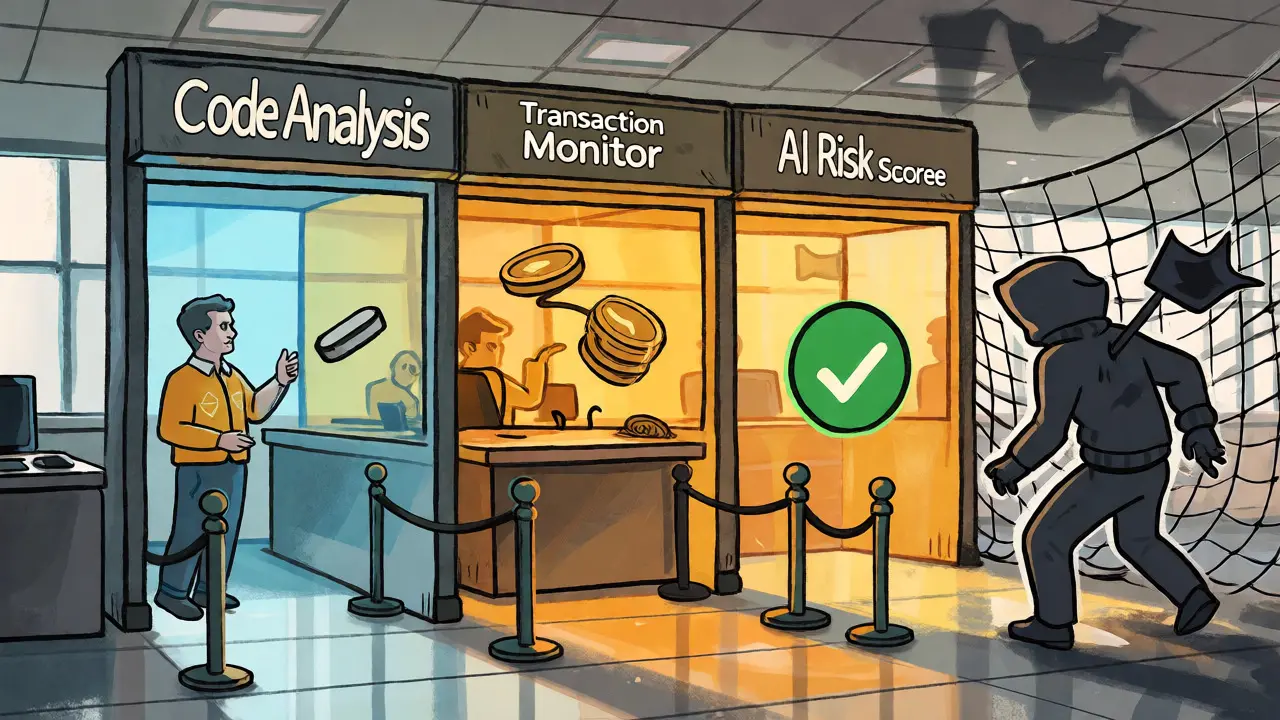
The future of safety in crypto isn't about finding a magic bullet. It’s about building a layered defense system. Think of it like airport security: you have metal detectors, behavioral analysts, and background checks working together. Similarly, new tools combine code analysis, transaction monitoring, and AI-driven risk scoring to catch scammers before they drain the liquidity pool.
The Evolution of Scam Detection Technology
Old methods relied on simple pattern matching. If a contract had a certain function name, flag it. But scammers got smarter, hiding malicious code behind complex logic or spreading their actions across multiple transactions. Enter RPHunter, a novel detection technique that integrates both code structure and transaction behavior. Published in 2025, this system represents a significant leap forward. Unlike previous tools that looked at either code or transactions in isolation, RPHunter analyzes the interplay between them.
How does it work? It builds two graphs. First, a Semantic Risk Code Graph (SRCG) maps out the dangerous parts of the smart contract. Second, a Token Flow Behavior Graph (TFBG) tracks how tokens move through the network. By using graph neural networks to fuse these two data sources, RPHunter achieved a precision of 95.3% in identifying rug pulls. That’s not just academic; when deployed in the wild, it correctly flagged over 4,800 suspicious tokens. This dual-layer approach catches the "soft" rug pulls-where devs slowly bleed a project dry-that often slip past simpler filters.
Automated Audits and Real-Time Scores
Not everyone has the time to read Solidity code. Most investors need a quick signal. Platforms like Token Sniffer, an AI-driven service that analyzes smart contracts across multiple blockchains, fill this gap. They provide a safety score from 0 to 100. A score above 80 usually means the contract is clean, while anything below 50 screams danger. These tools check for honeypots (contracts that let you buy but not sell), excessive minting powers, and locked liquidity status.
But technical audits aren’t enough. You also need context. Token Metrics, a platform offering AI-powered intelligence for trading and investing, takes this further by assigning an Investor Grade. This grade weighs security factors like audit status and team credibility alongside market potential. It helps you distinguish between a risky but legitimate new protocol and a scam disguised as one. Similarly, GoPlus Security, a tool that detects malicious addresses and dApp vulnerabilities, scans the broader ecosystem, ensuring that the wallet you’re connecting to isn’t known for draining funds.
| Tool Name | Primary Focus | Detection Method | Best For |
|---|---|---|---|
| RPHunter | Advanced Pattern Recognition | Code + Transaction Graph Fusion | Identifying complex hard and soft rug pulls |
| Token Sniffer | Smart Contract Audit | Static Code Analysis & Liquidity Checks | Quick pre-purchase safety scores |
| Token Metrics | Holistic Project Evaluation | AI-Driven Market & Security Grading | Long-term investment due diligence |
| Elliptic | Behavioral Analytics | Cross-chain Wallet Tracking | Institutional compliance and scammer identification |
Behavioral Monitoring and On-Chain Forensics
Scammers don’t operate in a vacuum. They leave digital footprints. Elliptic, a blockchain analytics company specializing in compliance and fraud prevention, has enhanced its tools to automatically detect scammer wallets based on behavior. Instead of waiting for a report, the system flags wallets that exhibit typical scam patterns, such as rapid fund movement across different chains or interaction with known blacklisted addresses. This cross-chain visibility is crucial because sophisticated operators often use bridges to obscure the trail, moving stolen assets from Ethereum to Solana or Polygon in seconds.
For the individual investor, monitoring developer wallets offers early warnings. If you see large transfers from a dev wallet to a centralized exchange, it’s often a precursor to a dump. Tools that alert you to these movements give you a chance to exit before the price collapses. This transparency is the double-edged sword of blockchain: it exposes the truth, but only if you know where to look.
Regulatory Frameworks and Community Intelligence
Technology can only do so much. Without accountability, scammers will always find new loopholes. Regulatory bodies are starting to step up. The California Department of Financial Protection and Innovation, for example, maintains a Crypto Scam Tracker. While jurisdiction-specific, these databases help users avoid platforms already known to victimize others. The challenge remains global coordination. Since crypto borders are fluid, real-time sharing of scam data across countries is essential. Imagine a world where a rug pull detected in New Zealand instantly flags the associated addresses in Singapore and London.
Meanwhile, community-driven mechanisms are gaining traction. Decentralized reputation systems allow users to flag suspicious projects. Algorithms then weight these reports based on the reporter’s history. If a user consistently identifies valid threats, their future warnings carry more weight. This collective intelligence creates a network effect, making it harder for new scams to fly under the radar.
The Human Element: Discipline Over FOMO
No algorithm can save you from yourself. The most sophisticated tool fails if you ignore the red flags because of Fear Of Missing Out (FOMO). Future protections must integrate education directly into the user experience. Wallets might soon display risk assessments directly on the swap screen, forcing a pause before confirmation. But ultimately, the best defense is disciplined research. Check if the liquidity is locked. Verify the team’s identity. Look for active GitHub commits. If a project promises 1000x returns with no clear utility, be skeptical.
The arms race between fraudsters and defenders continues. As scams become industrialized, leveraging bots and coordinated buying to fake volume, our defenses must evolve too. We are moving toward a future where machine learning models adapt to new scam patterns without manual updates, creating dynamic shields that grow stronger with every attempted attack. By combining advanced tech like RPHunter with human caution, we can make the crypto space significantly safer for everyone.
What is the difference between a hard and soft rug pull?
A hard rug pull is sudden and drastic, where developers remove all liquidity at once, causing the token price to crash immediately. A soft rug pull happens gradually; the team may stop development, reduce marketing, or slowly sell off their holdings over weeks or months, giving investors a false sense of security until the value evaporates.
Can smart contract audits guarantee a project is safe?
No. An audit confirms that the code functions as written and doesn't contain obvious bugs or backdoors. However, it cannot predict human intent. Developers can write clean code but still choose to withdraw liquidity or abandon the project. Audits are a necessary layer of defense, but not a complete solution.
How does RPHunter differ from traditional detection methods?
Traditional methods often analyze code structure or transaction statistics separately. RPHunter integrates both by constructing a Semantic Risk Code Graph and a Token Flow Behavior Graph. It uses graph neural networks to fuse these insights, allowing it to detect complex rug pull patterns that involve both malicious code features and suspicious transaction behaviors simultaneously.
Why is liquidity locking important for preventing rug pulls?
Liquidity locking ensures that the funds backing the token's value in a decentralized exchange pool cannot be withdrawn by the developers for a set period. If liquidity is unlocked, developers can pull all the funds at any time, leaving holders with worthless tokens. Locked liquidity provides a temporary guarantee against immediate hard rug pulls.
Are regulatory trackers effective against global crypto scams?
They are useful but limited. Trackers like the California Department of Financial Protection and Innovation's list help identify known bad actors within specific jurisdictions. However, since crypto operates globally and anonymously, scammers can easily shift operations to unregulated regions. Effectiveness increases significantly when these databases share data internationally in real-time.