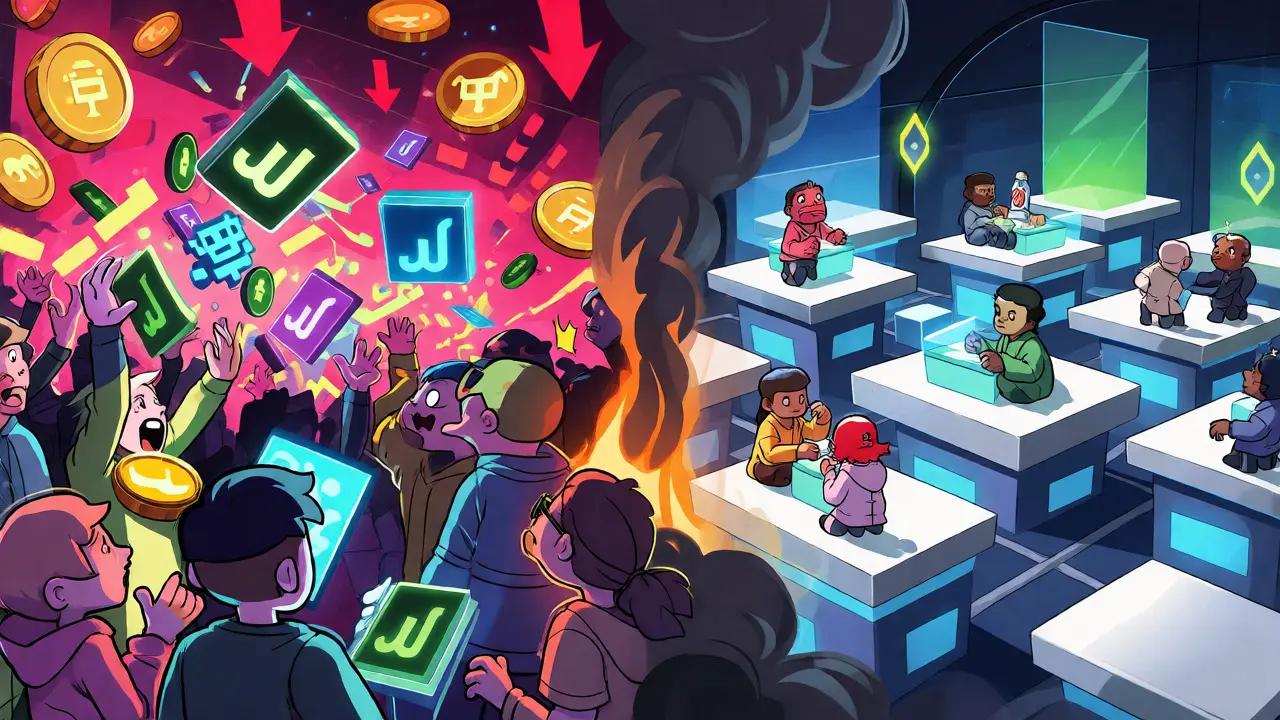
You probably remember the NFT boom of 2021. It was a time of pixelated monkeys selling for millions, gas fees that cost more than your lunch, and a general sense that we were all losing our minds over JPEGs. But if you think that era defined what NFT marketplaces are today, you’re looking at a snapshot from five years ago. By October 2026, the landscape has shifted dramatically. The hype cycle has burned off the speculative froth, leaving behind a robust technological infrastructure that is quietly revolutionizing how we own and trade digital assets.
So, where does this leave us? If you’re a developer, an investor, or just someone curious about where blockchain tech is heading, understanding the NFT marketplace technology stack is crucial. We aren’t just talking about buying art anymore. We’re talking about intelligent assets that think, financial instruments that yield returns, and bridges connecting physical property to digital ledgers. Let’s break down what’s actually powering these platforms right now and what’s coming next.
The Maturation of Market Dynamics
First, let’s look at the numbers, because they tell a story of stabilization rather than collapse. In the first half of 2025, NFT sales hit $2.82 billion. That might sound like a drop compared to the peak, but here’s the kicker: transaction counts rose by nearly 80%. What does that mean in plain English? It means people aren’t just flipping assets for quick gains. They’re holding them. The market has matured from a casino into a legitimate asset class.
This shift impacts how marketplaces are built. Platforms no longer need to handle massive spikes of speculative traffic followed by dead silence. Instead, they support consistent, high-volume activity driven by genuine utility. This stability allows developers to focus on complex features rather than just scaling servers to handle panic buys. The era of "buy high, sell higher" is fading, replaced by "buy for use, hold for value."
Artificial Intelligence Meets Blockchain Ownership
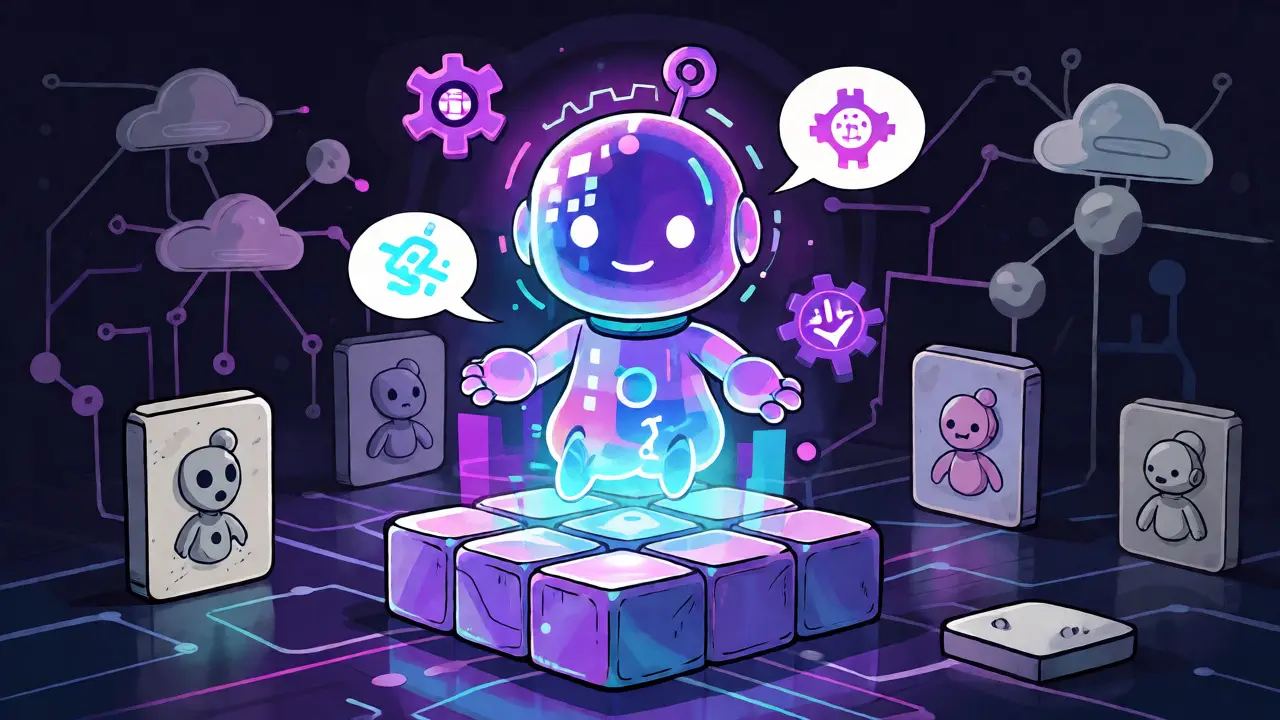
If there’s one trend defining 2026, it’s the collision of AI and NFTs. About 30% of new projects launched this year integrate artificial intelligence functionality. But this isn’t just about using Midjourney to generate pretty pictures. We’re seeing the rise of Intelligent NFTs (iNFTs), governed by standards like ERC-7857 introduced by 0G Lab earlier this year.
Think of traditional NFTs as static files-like a PDF of a contract. An iNFT is more like a living employee. These tokens can evolve visually, change behavior based on user interaction, and even generate new content autonomously. For example, imagine a gaming avatar that learns your playstyle and adapts its abilities, with that evolution recorded immutably on the blockchain. When you sell that avatar, the buyer gets the learned behaviors, not just the base model.
Intelligent NFTs (iNFTs) are digital assets that combine blockchain provenance with AI adaptability, allowing tokens to evolve and interact autonomously. Unlike standard non-fungible tokens, which remain static after minting, iNFTs utilize secure re-encryption protocols to transfer sensitive AI data between owners without exposing private information.
This capability opens doors for enterprises too. Brands can deploy adaptive avatars that respond to customer queries, creating dynamic licensing systems where the asset itself generates value through interaction. The technology stack supporting this requires sophisticated smart contracts that can interface with off-chain AI models while maintaining on-chain security.
DeFi Integration and Financial Utility
Gone are the days when an NFT sat idle in your wallet. Today’s marketplaces are deeply integrated with Decentralized Finance (DeFi) protocols. This convergence turns collectibles into productive financial instruments. You can now stake your NFTs to earn yields, lend them out against collateral, or split ownership among multiple investors.
Fractional ownership is a game-changer here. Smart contracts allow users to buy shares in high-value assets, such as a rare piece of digital art or a tokenized vintage wine bottle. This democratizes access to premium assets that were previously out of reach for most individuals. It also creates liquidity for items that would otherwise sit unsold due to their high price tag.
- Staking: Lock up your NFT to earn rewards in the platform’s native token.
- Lending: Use your NFT as collateral to borrow stablecoins, retaining ownership while accessing cash flow.
- Fractionalization: Split a single asset into thousands of tradable shares, enabling micro-investments.
These features require marketplaces to support complex interactions beyond simple buy/sell orders. The underlying code must manage interest rates, liquidation thresholds, and royalty distributions automatically. It’s less about displaying images and more about managing financial positions.
Real-World Asset Tokenization Expands the Horizon
Perhaps the most significant expansion for NFT marketplace technology is the integration of Real-World Assets (RWAs). This involves tokenizing physical commodities like real estate, fine art, and luxury goods. By representing these items as NFTs, marketplaces bridge the gap between traditional finance and blockchain efficiency.
For instance, a commercial building in Auckland can be divided into NFT shares. Investors worldwide can buy fractions of the property, receive rental income via smart contracts, and trade their shares instantly. This process demands rigorous legal frameworks and custody solutions to ensure the digital token truly represents legal ownership or profit-sharing rights.
| Feature | Traditional Ownership | Tokenized NFT Ownership |
|---|---|---|
| Liquidity | Low; months to sell | High; instant trading possible |
| Accessibility | High barrier to entry | Low barrier; fractional buying |
| Transparency | Opaque; manual records | Immutable; public ledger |
| Settlement Time | T+2 or longer | Instant or near-instant |
The technology enabling this includes verification mechanisms that link off-chain legal documents to on-chain metadata. Oracles play a critical role here, feeding real-world data into smart contracts to trigger actions like dividend payments or maintenance alerts.
Multi-Chain Interoperability as a Standard
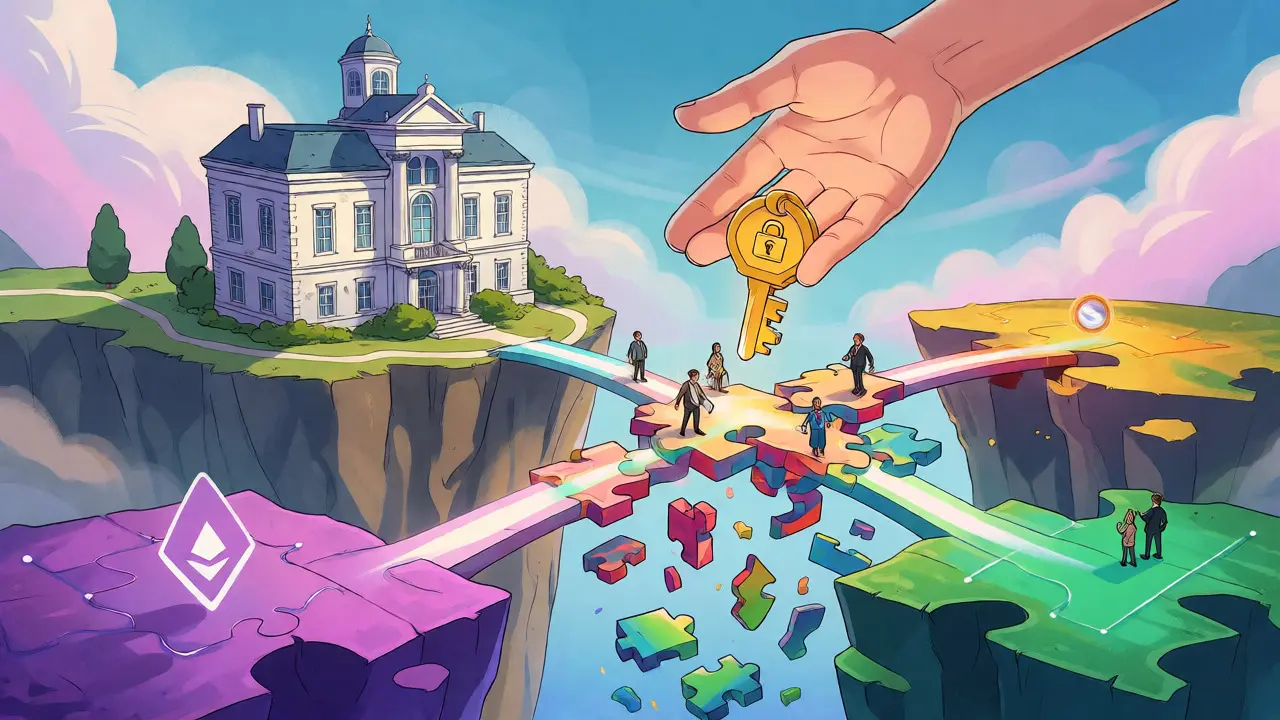
A few years ago, choosing a blockchain meant locking yourself into an ecosystem. Ethereum had the users, Solana had the speed, and Polygon had the low fees. Today, leading marketplaces are chain-agnostic. Users don’t care which network their asset lives on; they want seamless experiences.
Cross-chain bridges have become invisible to the average user. You can list an asset on Ethereum and have it visible on Solana without manually bridging tokens every time. This interoperability reduces friction and expands the potential audience for any given collection. Developers now build modular architectures that abstract away the complexity of multiple networks, presenting a unified interface regardless of the underlying chain.
This technical advancement relies on standardized messaging protocols and secure bridge contracts. The goal is to make blockchain selection irrelevant to the end-user experience, focusing instead on the asset’s utility and community.
Utility Over Speculation: The New Value Proposition
The primary driver of marketplace innovation has shifted from speculative trading to functional utility. Gaming remains a huge sector, but the definition of "gaming NFT" has evolved. Players now expect assets to provide actual gameplay advantages or cosmetic customization across multiple titles. Interoperability between games is becoming a reality, thanks to shared standards and cross-platform wallets.
Beyond gaming, utility NFTs serve as access credentials. Holding a specific token might grant entry to exclusive events, communities, or premium software features. These memberships are programmable; smart contracts can expire access, transfer privileges, or reward engagement. This transforms NFTs from passive collectibles into active keys unlocking services.
Marketplaces responding to this demand offer tools for creators to define these utilities easily. No-code interfaces allow artists and brands to attach benefits to tokens without writing complex Solidity code. This accessibility fuels adoption among non-technical users who value convenience over speculation.
Key Takeaways for Stakeholders
- Focus on Utility: Projects offering tangible benefits (access, gaming, yield) outperform pure speculation plays.
- Embrace AI: Intelligent NFTs represent the next frontier of interactive digital assets.
- Go Multi-Chain: Single-chain limitations are disappearing; interoperability is essential for growth.
- Explore RWAs: Tokenizing real-world assets unlocks massive addressable markets beyond digital art.
- Prioritize Liquidity: Fractional ownership and DeFi integration enhance asset attractiveness.
What makes Intelligent NFTs different from regular NFTs?
Regular NFTs are static representations of ownership for a fixed file. Intelligent NFTs (iNFTs) incorporate AI agents that allow the asset to learn, adapt, and evolve over time. They can modify their visual appearance or behavior based on user interactions, and this state change is recorded on the blockchain, making them dynamic rather than static assets.
How does fractional ownership work in NFT marketplaces?
Fractional ownership uses smart contracts to divide a single high-value NFT into multiple smaller tokens. Each small token represents a percentage share of the original asset. Owners can trade these shares independently on secondary markets, providing liquidity and allowing users to invest in expensive assets with minimal capital.
Are NFT marketplaces still relevant after the 2021 crash?
Yes, but their purpose has changed. While speculative trading volumes have decreased, transaction counts have increased, indicating healthier, sustained usage. Marketplaces now serve as infrastructure for utility-driven applications like gaming, membership access, and real-world asset trading, moving beyond the initial hype cycle to become established digital ecosystems.
What is the role of AI in future NFT marketplaces?
AI enhances NFTs by adding interactivity and autonomy. Through standards like ERC-7857, AI agents can be owned as NFTs, allowing assets to generate content, adapt to user preferences, and maintain privacy during transfers. This creates "living" assets that provide ongoing value rather than just static ownership proof.
Can I own real estate through an NFT marketplace?
Yes, through Real-World Asset (RWA) tokenization. Physical properties can be represented as NFTs, often divided into fractional shares. This allows global investors to buy portions of real estate, receive rental income via smart contracts, and trade their shares instantly, though legal frameworks vary by jurisdiction.