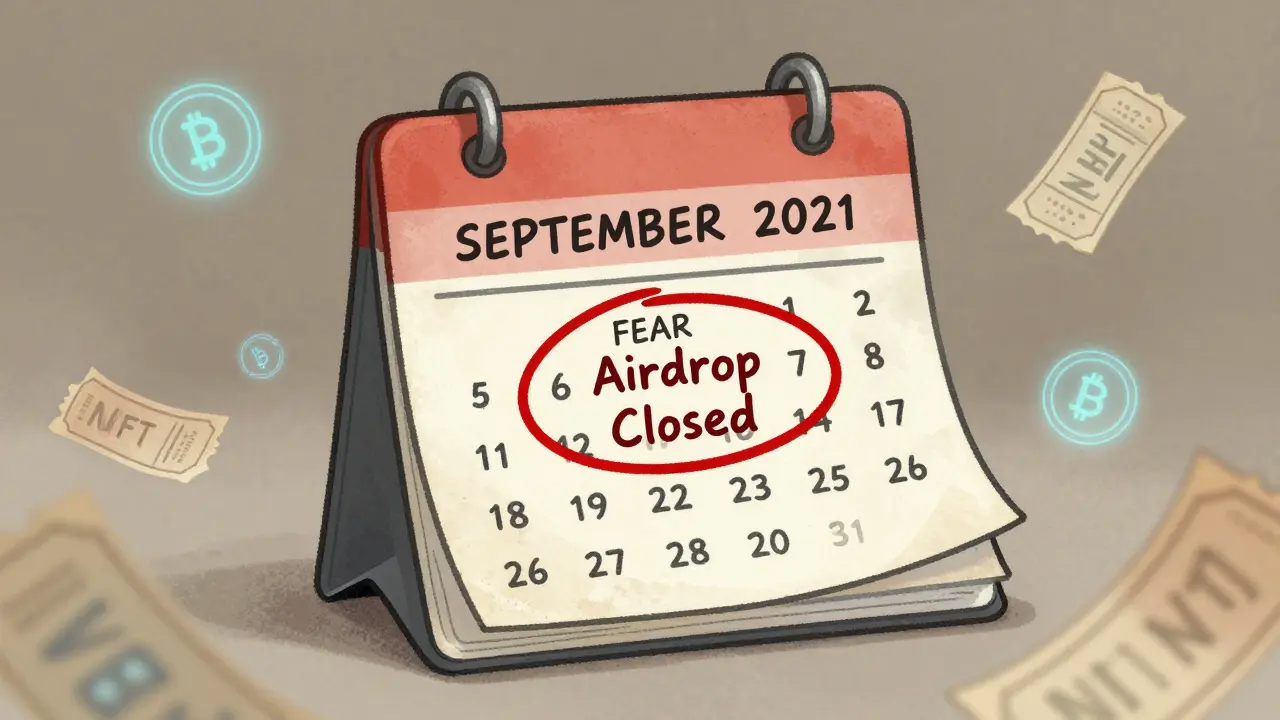
You might be scrolling through old crypto forums or checking your wallet history, wondering if you missed out on the FEAR token airdrop. It’s a common question for anyone who was active in the early days of the Play-to-Earn (P2E) boom. The short answer is that the primary distribution window closed years ago. If you are looking to claim free tokens right now, you will likely hit a dead end. However, understanding what happened with FEAR gives you a clear picture of how gaming crypto projects have evolved since 2021.
The Original FEAR Airdrop: How It Worked
To understand why you can’t claim it today, we need to look back at how the FEAR token distribution actually played out. The project didn’t launch with a complex blockchain interaction. Instead, they partnered with CoinMarketCap, one of the most trusted data aggregators in the industry. This partnership was crucial because it allowed them to tap into a massive audience without requiring users to navigate risky smart contracts immediately.
The distribution happened in two main phases during late 2021:
- Phase 1: They distributed 2,000 Play2Earn NFT Airdrop tickets. Each ticket was worth 25 FEAR tokens. This was a smaller, targeted drop to build initial hype among serious gamers.
- Phase 2: They expanded to a broader audience, distributing 20,000 $FEAR tokens to over 500 winners. This phase relied heavily on social media engagement.
The barrier to entry was low by today’s standards. You didn’t need to bridge assets across chains or provide liquidity. You just needed an active Twitter and Telegram account. Users logged into their CoinMarketCap accounts, clicked “Join This Airdrop,” and waited for the allocation. It was a classic marketing move from the 2021 bull market-prioritizing user acquisition over technical complexity.
Why You Can’t Claim FEAR Tokens in 2026
If you are reading this in May 2026, the official airdrop is long gone. The campaign concluded on September 24, 2021. There are no ongoing snapshots, no point systems, and no new eligibility criteria being rolled out. Several factors explain why this door has remained shut for so long.
First, the project’s visibility has faded significantly. In the crowded world of crypto gaming, staying relevant is hard. While giants like Axie Infinity and The Sandbox managed to build sustained ecosystems, FEAR struggled to maintain its community momentum. Without active development updates or major partnerships, the incentive to run another airdrop disappears. Why give away tokens when there isn’t a robust economy to support their value?
Second, the regulatory landscape has changed. In 2021, airdrops were largely unregulated wild west territory. By 2026, projects face stricter compliance requirements, including Know Your Customer (KYC) procedures and geographic restrictions. Running a simple social-media-based airdrop like FEAR did back then would now expose the team to significant legal risks. Most modern projects avoid these pitfalls by using sophisticated wallet snapshot systems instead.

How Crypto Airdrops Have Evolved Since FEAR
Comparing FEAR’s 2021 strategy to what’s happening in 2026 highlights just how much the industry has matured. Back then, liking a tweet and joining a Telegram group was enough to get free crypto. Today, that approach is considered “airdrop farming” and is actively discouraged by serious projects.
Modern airdrops, such as those from EigenLayer or LayerZero, require verifiable blockchain activity. They use mechanisms like restaking, where you lock up assets to secure networks, earning points based on your contribution to network security. Projects like Scroll Network focus on multi-network activity, ensuring users are genuinely interacting with the technology rather than just chasing free money.
| Feature | FEAR Token (2021) | Modern Airdrops (e.g., EigenLayer, Scroll) |
|---|---|---|
| Eligibility Criteria | Social media follows (Twitter/Telegram) | On-chain activity, restaking, liquidity provision |
| Distribution Platform | CoinMarketCap interface | Direct smart contract interactions / Wallet snapshots |
| Technical Barrier | Low (Click-to-claim) | High (Requires wallet management, gas fees) |
| Anti-Farming Measures | Minimal | Soulbound Tokens, Sybil resistance algorithms |
| Regulatory Compliance | None (Pre-regulation era) | KYC, Geographic restrictions often required |
This shift means that while FEAR’s airdrop was easy to join, it offered little long-term value compared to the substantial rewards seen in current DeFi protocols. The ease of entry led to many bots claiming tokens, which diluted the value for genuine users. Today’s systems are designed to reward actual usage, making them more sustainable but also more difficult to participate in.
FEAR Token Price Analysis: Is It Still Worth Holding?
If you somehow received FEAR tokens back in 2021 and still hold them, you’re probably wondering about their current value. Let’s look at the numbers. As of mid-2026, the market price for FEAR hovers around $0.0084. This is a relatively stable but low-volatility asset.
Price predictions for the near future suggest modest stability rather than explosive growth. Forecasts indicate an average trading range between $0.0066 and $0.0084, with potential highs touching $0.0092. Extended projections through 2028 estimate a high of $0.0112, representing a potential 16% return on investment from current levels. While not terrible, this performance pales in comparison to the gains seen in leading Layer 2 solutions or major DeFi platforms.
The lack of significant price appreciation reflects the project’s reduced market presence. Without active development or new features driving demand, the token remains stagnant. For investors looking for high-growth opportunities in the gaming sector, FEAR currently offers limited upside. It serves more as a historical artifact of the 2021 P2E boom than a viable investment vehicle for 2026.
What Should You Do Instead?
If you were hoping to get free tokens through the FEAR airdrop, you’ll need to pivot your strategy. The era of simple social-media giveaways is largely over. Here are three actionable steps to find legitimate opportunities in the current market:
- Focus on Active Protocols: Look for projects that are currently building. Engage with testnets for new Layer 2 networks or DeFi protocols that haven’t launched their token yet. These projects often reward early adopters with points that convert to tokens later.
- Understand Restaking: Learn how protocols like EigenLayer work. By locking up your ETH or other assets to secure additional services, you can earn yields and potentially qualify for future airdrops. This requires more capital but offers higher potential returns.
- Beware of Scams: Because FEAR is an older project, scammers may create fake websites claiming to offer “late claims” or “bonus distributions.” Never connect your wallet to unofficial links. Always verify information through official channels like the project’s verified Twitter or Discord.
The crypto space moves fast. What worked in 2021 doesn’t work in 2026. By shifting your focus to active, compliant projects with clear roadmaps, you position yourself better for the next wave of innovation.
Can I still claim the FEAR token airdrop in 2026?
No, the FEAR token airdrop concluded on September 24, 2021. There are no ongoing distributions, and the project has not announced any new airdrop campaigns. Any website claiming otherwise is likely a scam.
How much was the FEAR airdrop worth?
At the time of distribution in 2021, values varied based on market conditions. The initial phase included NFT tickets worth 25 FEAR each, followed by a larger distribution of 20,000 tokens to 500+ winners. Current prices hover around $0.0084 per token.
Why did the FEAR airdrop end?
The airdrop was a marketing campaign tied to the project’s launch phase. Once the initial user acquisition goals were met and the token began trading on exchanges, the distribution ended. Additionally, changing regulatory environments have made such simple social-media-based airdrops less common.
Is FEAR token a good investment in 2026?
FEAR shows modest stability with low volatility, but limited growth potential. Projections suggest a maximum ROI of around 16% by 2028. For aggressive growth, investors typically prefer active DeFi or Layer 2 projects with strong development teams and user bases.
What are the best alternatives to FEAR for airdrop hunters?
Look for projects involving restaking (like EigenLayer), Layer 2 scaling solutions (like Scroll or LayerZero), and new DeFi protocols offering point systems. These require more technical effort but offer significantly higher potential rewards than legacy social-media airdrops.
lol another dead coin post. nobody cares about fear token anymore its just dust in my wallet now
The article is painfully obvious but necessary for the clueless herd. You think you are smart chasing these 'legacy' airdrops? You are not. The market has evolved because projects like FEAR failed to deliver actual utility, and anyone still holding them is simply donating their capital to early insiders who dumped years ago. It is a lesson in humility that most of you refuse to learn.
Oh wow, ground breaking journalism here. Did someone really need an entire blog post to tell us that a 2021 meme coin is worthless in 2026? I am absolutely exhausted by the sheer laziness of this content farm approach. The author probably copy-pasted this from three other articles and changed the dates. It is dramatic how little effort was put into actually analyzing why the project failed beyond 'regulations changed'. Regulations didn't kill it, incompetence did. And yet here we are, pretending this is valuable information. Spare me the theatrics.
I actually remember when this launched! It was such a chaotic time in crypto. I joined the telegram just for fun and got some tokens. Looking back it was wild how easy it was compared to today. Thanks for the reminder though, sometimes we forget how much things have changed.
Great breakdown of the timeline! 📅 It really shows how fast the industry moves. For those looking for alternatives, checking out restaking protocols like EigenLayer is definitely the way to go right now. The barriers to entry are higher but the rewards are much more sustainable. Keep learning and stay safe out there! 🚀💎
It is quite amusing to observe the plebeian fascination with such a pedestrian asset. The FEAR token was never a serious investment vehicle; it was a marketing gimmick designed to attract the lowest common denominator. To suggest that one should pivot to Layer 2 solutions is akin to suggesting a child trade their sticker collection for shares in a Fortune 500 company. The intellectual gap between the two cannot be overstated. One engages in sophisticated DeFi strategies; the other clicks buttons on CoinMarketCap. Do not confuse participation with proficiency.
boring read. everyone knows this already. stop wasting my time with old news
i found this really helpful because i was wondering if i missed something and it turns out i didnt but its okay because i learned about restaking which sounds interesting even though i dont fully understand it yet so maybe i will look into eigenlayer or whatever that is and see if i can get some points instead of just hoping for free money like before which seems silly now anyway thanks for the info
This is very informative article. I appreciate the clarity regarding the eligibility criteria. Many people still believe they can claim old airdrops and this helps clear up confusion. Thank you for sharing this knowledge with the community.
typical crypto scam history lesson. glad im not involved in this garbage
You are all missing the point entirely. The issue isn't that the airdrop ended, it's that the entire narrative of 'free money' was a trap from day one. These projects were designed to extract liquidity from retail investors under the guise of generosity. By focusing on the mechanics of the distribution, you ignore the predatory nature of the business model. It is not about 'evolution'; it is about refinement of exploitation. Wake up.
They want you to think it was just regulations. It was never about KYC. It was about the centralization of power. The 'snapshot' systems are just honeypots to track your wallet activity for future rug pulls. They are building a database of every address that interacted with these contracts. When the next crash comes, they will know exactly who to target. Trust no one. The blockchain does not lie, but the developers do.
Hey guys! 👋 Just wanted to add that if you're new to this, don't worry about missing out on FEAR. There are plenty of new opportunities. Make sure you double-check any links before connecting your wallet though! Safety first always 🔒✨
I agree with the sentiment here. It is better to focus on active projects. I have been trying to learn more about Layer 2s and it is challenging but rewarding. Thanks for the resources.
I mean, technically you could argue that the social media engagement strategy was brilliant for brand awareness even if the token value tanked. So maybe it wasn't a total failure? Just saying.