
Most people searching for an Ēnosys crypto exchange review are looking for a simple trading platform. But here is the twist: Ēnosys isn't just a place to swap coins. It is a full-blown Web3 software house that built a self-contained universe of decentralized finance (DeFi) tools on top of the Flare Network. If you are expecting a user-friendly interface like Coinbase or Binance, you might feel overwhelmed. But if you are chasing high yields and deep interoperability without leaving one ecosystem, this might be your next favorite playground.
What Is Ēnosys? Not Just a DEX
Ēnosys is a comprehensive Web3 software house and DeFi ecosystem provider built primarily on the Flare Network. Founded in 2021 by a team of engineers with academic backgrounds, it launched its mainnet alongside an experimental version on the Songbird Canary Network. Unlike single-function Decentralized Exchanges (DEXs), Ēnosys offers a suite of interconnected protocols including swapping, lending, yield farming, and NFT management.
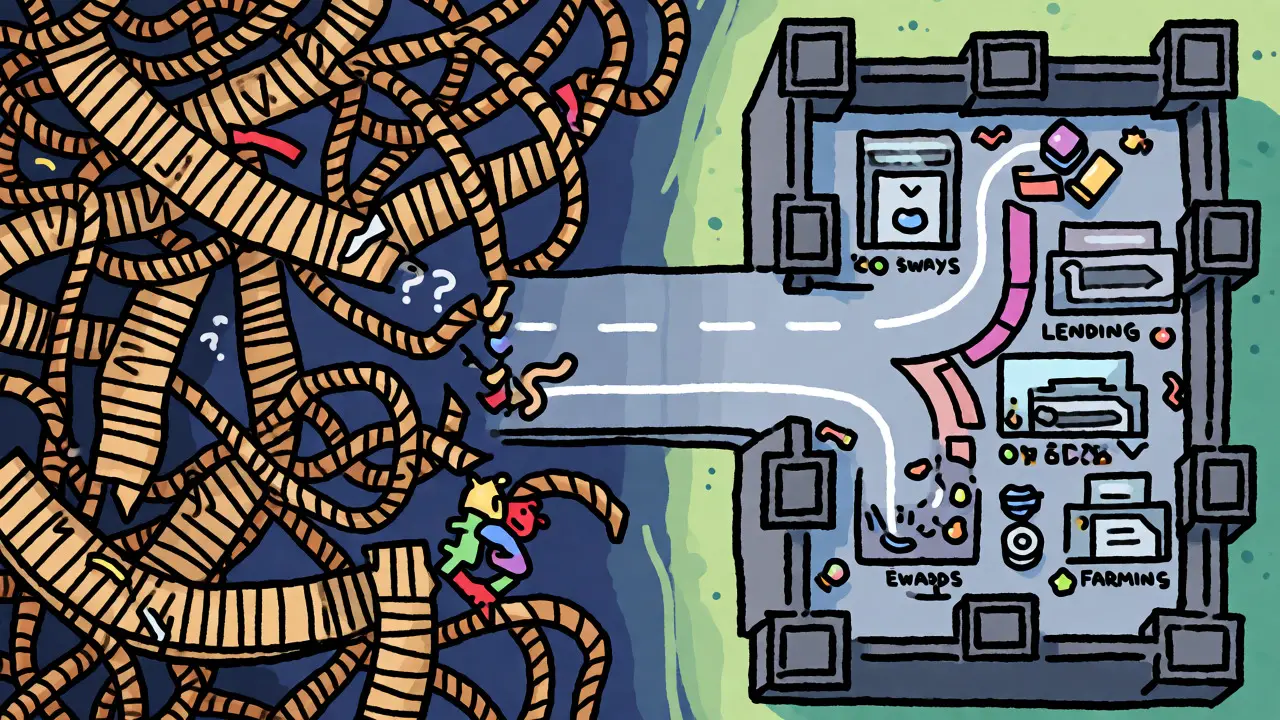
The core idea is synergy. In most DeFi setups, you move assets between different platforms, paying fees and risking security at each step. Ēnosys keeps everything under one roof. Your liquidity pool tokens can become collateral for loans. Your governance tokens can earn yield from protocol fees. It creates a closed loop where activity in one area boosts value in another.
The Core Protocols: How the Ecosystem Works
To understand why users stick around, you need to look at the four pillars of their DeFi Suite. Each part talks to the others, creating a network effect that single-protocol exchanges lack.
- DEX V2 & V3: The heart of the operation. DEX V2 uses an Automated Market Maker (AMM) model for standard swaps. The newer DEX V3 introduces concentrated liquidity market making. This allows liquidity providers to set specific price ranges for their capital, potentially boosting capital efficiency by up to 400% compared to traditional AMMs.
- Loans: A collateralized debt position (CDP) protocol. You deposit assets as collateral to borrow stablecoins or other tokens interest-free (though gas fees apply). Because it is integrated with the DEX, liquidations are handled within the same smart contract environment.
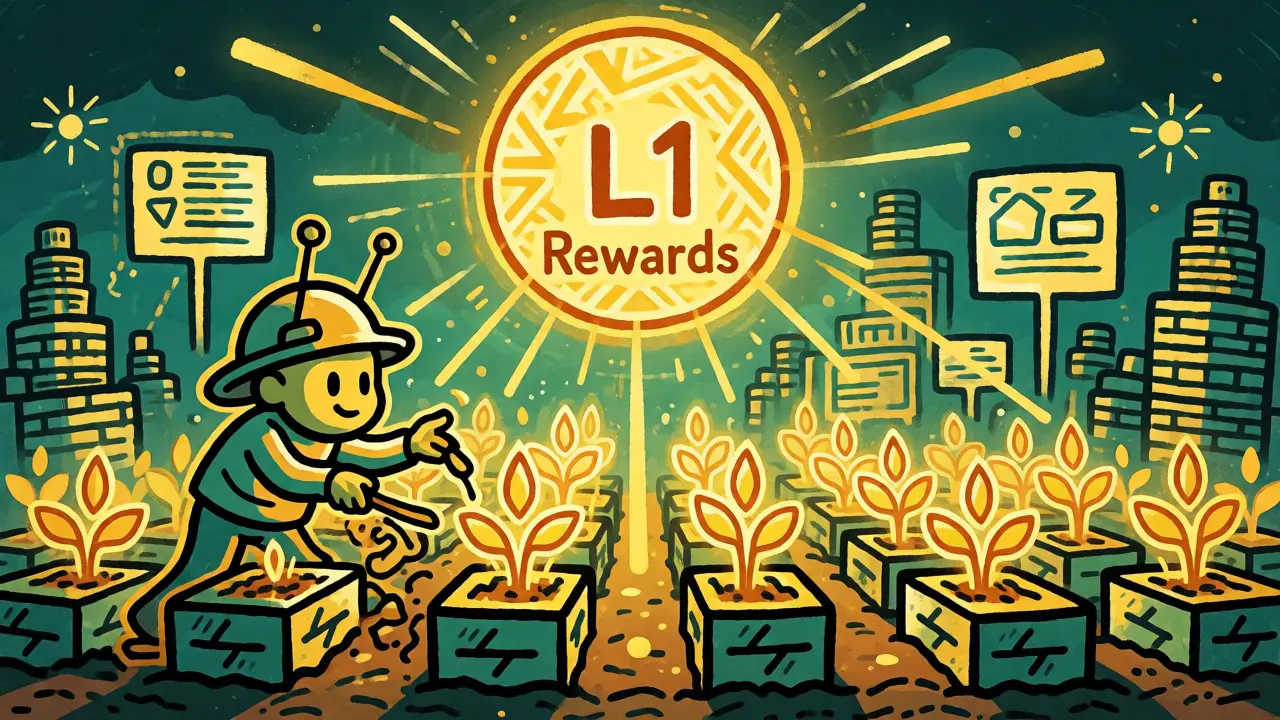
- Farms: Non-custodial yield farming. Here is the kicker: farms integrate Layer 1 (L1) rewards from the Flare Network. This means you earn standard DeFi APY plus additional rewards directly from the blockchain layer, often pushing total yields 15-25% higher than similar farms on Ethereum L2s.
- Bridge: A cross-chain asset bridge supporting seven major networks, including Ethereum, BNB Chain, and Polygon. This solves the isolation problem many altcoin ecosystems face.
Key Features That Set Ēnosys Apart
Why choose this over Uniswap or PancakeSwap? The answer lies in two specific technologies: L1 Rewards and the State Connector.
Flare Network is an EVM-compatible Layer 1 blockchain designed to connect external data to smart contracts. Ēnosys leverages this heavily. Most DeFi platforms rely on third-party oracles like Chainlink for price feeds. Flare’s State Connector allows secure, trustless communication between blockchains and external data sources. For traders, this means faster and more reliable price updates during volatile markets.
Then there is APYCloud, which is a central yield aggregator that distributes a portion of all protocol fees to governance participants. This mechanism aims to solve the "vampire attack" problem common in DeFi, where competitors lure away liquidity with temporary high yields. By tying rewards to long-term protocol health rather than short-term incentives, APYCloud encourages stability.
Pros and Cons: The Honest Breakdown
No platform is perfect. Here is what real users and analysts are saying about the trade-offs.
| Feature | Ēnosys | Standard DEX (e.g., Uniswap) |
|---|---|---|
| Asset Selection | Limited (~127 pairs on V3) | Extensive (1,800+ pairs) |
| Learning Curve | Steep (8-10 hours onboarding) | Moderate |
| Yield Potential | High (L1 + Protocol Fees) | Variable (Protocol Fees only) |
| Cross-Chain Support | Native Bridge (7 chains) | Dependent on third-party bridges |
| Mobile Experience | Clunky/Limited features | Generally optimized |
The Good: Users report consistent APYs of 18-22% on FLR/ETH pools due to the L1 reward integration. The security is robust, having undergone 17 independent audits by firms like Quantstamp and OpenZeppelin. Community support is active, with Discord members resolving issues quickly.
The Bad: The interface is not beginner-friendly. Reddit threads highlight that new users spend significant time figuring out the dual-token governance system (HLN and APS). Mobile users complain about a lack of feature parity with the desktop version. Also, because the ecosystem is smaller, slippage can occur during extreme volatility when liquidity thins out.
Tokenomics: HLN and APS
Understanding the money flow is critical. Ēnosys uses a dual-token model.
- HLN (Helios): The primary governance token. 70% of the supply is allocated to community purposes, aiming for a sustainable distribution model. Holding HLN gives you voting rights on protocol upgrades and fee distributions.
- APS (Apollon): Often used for utility within specific sub-protocols or staking mechanisms.
A study by the University of Zurich’s Blockchain Center noted that this 70% community allocation is more sustainable than 89% of analyzed DeFi protocols. However, critics point out that the dual-token structure can confuse newcomers regarding which token drives value.
Who Should Use Ēnosys?
This platform is not for everyone. If you are a casual trader who wants to buy Bitcoin with a credit card and forget about it, skip this. Ēnosys is for the DeFi power user.
You should consider Ēnosys if:
- You already hold Flare (FLR) tokens and want to put them to work beyond simple staking.
- You are comfortable with complex financial instruments like concentrated liquidity and CDPs.
- You want to avoid bridging assets across multiple fragmented platforms.
- You are willing to tolerate a rougher UI for higher potential returns.
Institutional interest is growing, with 12% of new users in late 2025 being institutional wallets. They are drawn to the compliance-first approach of the Flare Network and the transparent audit history.
Final Verdict: Worth the Effort?
As of November 2026, Ēnosys holds about 0.18% of the total DeFi TVL ($257 million). While small compared to giants, its growth rate of 37% quarterly suggests strong momentum. The recent launch of DEX V3 has attracted $42 million in new liquidity, proving that the technical upgrade resonated with users.
The risk is concentration. Ēnosys lives and dies by the success of the Flare Network. If Flare fails to achieve mainstream adoption, Ēnosys loses its unique edge. But if Flare succeeds, early adopters of this ecosystem could see significant gains.
If you have 8-10 hours to spare on learning the ropes and some capital to deploy in a high-yield, high-interoperability environment, Ēnosys offers a compelling alternative to the saturated Ethereum and Solana DeFi landscapes.
Is Ēnosys a centralized or decentralized exchange?
Ēnosys is a decentralized exchange (DEX) ecosystem. It operates on smart contracts on the Flare Network. Users retain custody of their funds through non-custodial protocols, meaning you connect via a Web3 wallet like MetaMask or Trust Wallet rather than depositing funds into a company-controlled account.
What makes the yields on Ēnosys higher than other DEXs?
The primary driver is the integration of Layer 1 (L1) rewards from the Flare Network. While standard DEXs only pay out transaction fees and emissions from their own treasury, Ēnosys farms distribute additional rewards generated by the underlying blockchain consensus mechanism. This stackable reward structure can increase total APY by 15-25% compared to similar pools on other networks.
How difficult is it to use the Ēnosys Bridge?
The bridge supports seven major networks, including Ethereum and BNB Chain. While functional, users report occasional delays during network congestion, sometimes taking 45 minutes or more. It requires basic knowledge of cross-chain transactions, such as ensuring you have native gas tokens on both the source and destination chains before initiating a transfer.
Does Ēnosys require KYC verification?
For pure DeFi interactions like swapping, lending, or farming, no KYC is required. However, if you use partner fiat on-ramps to buy crypto with a bank card or credit card, those specific partners will enforce KYC regulations. The core protocol remains permissionless and non-custodial.
What are the risks of using Ēnosys?
Key risks include smart contract vulnerabilities (mitigated by 17 audits but never eliminated), liquidity risk due to a smaller number of trading pairs compared to major DEXs, and ecosystem dependency. Since Ēnosys is tightly coupled with the Flare Network, poor performance or adoption failure of Flare would significantly impact Ēnosys' utility and token value.