
When you own cryptocurrency, you don’t actually hold coins in a digital wallet like you hold cash in your pocket. What you hold is a private key-a secret code that proves you own the funds on the blockchain. Lose that key, and your money is gone forever. No customer service, no reset button, no bank to call. That’s why encryption key management isn’t just a technical detail-it’s the difference between financial freedom and total loss.
Why Key Management Matters More Than the Wallet
The phrase "Not your keys, not your coins" became popular in 2013, and it’s still the most important rule in crypto. If you store your Bitcoin on an exchange like Coinbase or Binance, you’re trusting someone else to keep your keys safe. But history shows that’s risky. In 2014, Mt. Gox lost 850,000 BTC due to poor key handling. In 2022, FTX collapsed, and $8 billion in customer funds vanished because the exchange didn’t separate client keys from its own. Exchanges control about 87% of all Bitcoin, according to Chainalysis, but they’re also the most common target for hackers. Your real security starts when you control your own keys. That means using a hardware wallet like a Ledger Nano X or Trezor Model T. These devices store your private keys offline, away from internet-connected devices that can be hacked. But even the best hardware won’t save you if you don’t manage the keys properly.The Seven Stages of a Secure Key Lifecycle
Managing encryption keys isn’t a one-time setup. It’s a process with seven critical stages:- Generation - Keys must be created using high-quality randomness. Poor random number generators led to the 2019 MyEtherWallet breach, where attackers recovered $150,000 in crypto because keys were predictable.
- Storage - Never store keys on your phone, computer, or cloud. Use a hardware security module (HSM) or a metal backup like Cryptosteel. Software wallets are convenient but vulnerable.
- Access - Use multi-factor authentication. For institutions, keys should be usable for transactions but never directly viewable. Dr. Ulrike Meyer from CISPA says this is non-negotiable.
- Usage - Every time you sign a transaction, you’re using your key. Limit how often keys are exposed. Use multi-signature setups to require multiple approvals.
- Rotation - Change keys periodically, especially after an employee leaves or a device is compromised. Fireblocks documented a $3.2 million loss when a hedge fund didn’t rotate keys after an employee quit.
- Backup - Your seed phrase (usually 12 or 24 words) is your backup. Write it on metal, not paper. Store it in a fireproof safe. Vault12’s 2023 survey found 42% of users lost crypto because they lost or miswrote their seed phrase.
- Deletion - When a key is no longer needed, destroy it securely. Don’t just delete a file. Use a trusted tool that overwrites the data.
Three Ways to Manage Keys - And Which One You Should Use
There are three main approaches to key management, each with trade-offs:| Method | Security Level | Accessibility | Cost | Best For |
|---|---|---|---|---|
| Custodial (Exchanges) | Low | High | $0-$50/year | Beginners, small amounts |
| Self-Custody (Hardware Wallets) | High | Medium | $50-$200 one-time | Individuals, long-term holders |
| Institutional (MPC / Multi-Sig) | Very High | Low | $150,000-$300,000/year | Companies, funds, institutions |
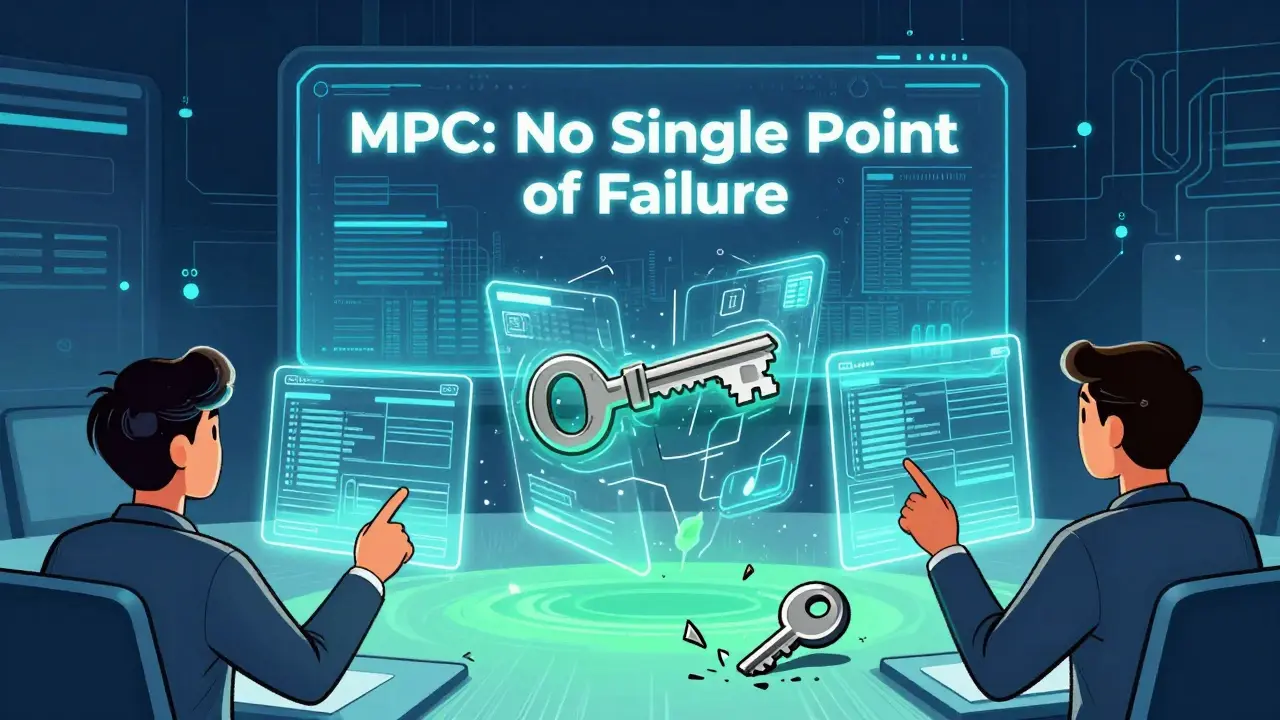
Custodial services are easy but dangerous. If the exchange gets hacked or shuts down, your coins disappear. Self-custody gives you full control but requires discipline. You must back up your seed phrase correctly and never share it. Institutional solutions use Multi-Party Computation (MPC) to split keys across multiple devices so no single person can steal everything. Fireblocks and Copper use this for banks and hedge funds. It’s expensive, but it’s the only way to securely manage millions in crypto.
The Human Problem: Why Most Losses Are Not Technical
You might think hackers are the biggest threat. But 20% of all crypto losses from 2022 to 2023 came from human error, not code flaws, according to Chainalysis. Here’s what actually goes wrong:- People write down their seed phrase on paper and lose it.
- They forget their passphrase (a second password that modifies the seed phrase).
- They send crypto to the wrong address because they didn’t double-check.
- They use the same seed phrase across multiple wallets.
- They store their backup in the cloud or on a phone.
A user on Reddit lost $250,000 when their Ledger device broke. But because they’d practiced restoring their wallet from the seed phrase months earlier, they got everything back. That’s the difference between panic and preparedness.
On Trustpilot, 28% of Trezor reviews mention recovery issues. One user lost $18,000 because they didn’t know the difference between a seed phrase and a BIP39 passphrase. That’s not a software flaw-it’s a knowledge gap.
What Institutions Do Differently
Individuals can get by with a hardware wallet and a metal backup. Institutions can’t. They need:- Multi-signature (M-of-N) - Requiring 3 out of 5 team members to approve a transaction. Kraken has used this since 2016 to protect $19.3 billion without a single breach.
- Multi-Party Computation (MPC) - No single key exists. The signature is built collaboratively across devices. ZenGo’s 2023 study showed a 40% drop in compromise risk compared to traditional multi-sig.
- Employee offboarding protocols - When someone leaves, their access is revoked, and keys are rotated. CISPA found this is the #1 cause of institutional losses.
- Certified staff - 57% of institutions now require CISSP or CISM certification for anyone handling keys, per SIFMA’s 2023 survey.
These aren’t optional. The EU’s MiCA regulation, effective January 2024, legally requires all licensed crypto firms to use approved key management systems. Failure means losing your license.
What’s Coming Next
The key management market grew from $420 million in 2020 to $1.2 billion in 2023, and it’s projected to hit $4.7 billion by 2027, according to Gartner. Why? Because institutions are moving in fast. By 2026, 75% of institutional crypto holdings will use MPC-based systems, up from just 28% today. Another big change is cryptographic agility. Right now, most keys use elliptic curve cryptography (ECC). But quantum computers could break ECC by 2035, according to Dr. David Chaum. The solution? Systems that can switch algorithms without losing access to funds. By 2025, this will be a standard requirement.What You Should Do Today
If you hold crypto, here’s your action plan:- If you keep crypto on an exchange, move it to a hardware wallet. Even $500 is worth securing.
- Buy a metal backup like Cryptosteel. Write your seed phrase on it. Test the recovery process now-not when you need it.
- If you’re using a software wallet, stop. They’re too risky for anything over $1,000.
- Never share your seed phrase. Not with family, not with "support," not even with yourself via email.
- If you manage keys for a team, implement multi-signature or MPC. Start with 2-of-3.
There’s no magic tool. No app that will save you if you’re careless. The only thing that keeps your crypto safe is discipline. The same discipline that keeps your house locked, your passwords unique, and your backups tested.
Crypto gives you control. But control means responsibility. Your keys are your only link to your assets. Treat them like your life depends on them-because in crypto, they do.
What happens if I lose my private key?
If you lose your private key or seed phrase, there is no way to recover your cryptocurrency. Blockchain transactions are irreversible, and no company, government, or developer can restore access. Your funds are permanently locked. This is why backing up your seed phrase correctly is the most important step in crypto security.
Is a hardware wallet safer than a software wallet?
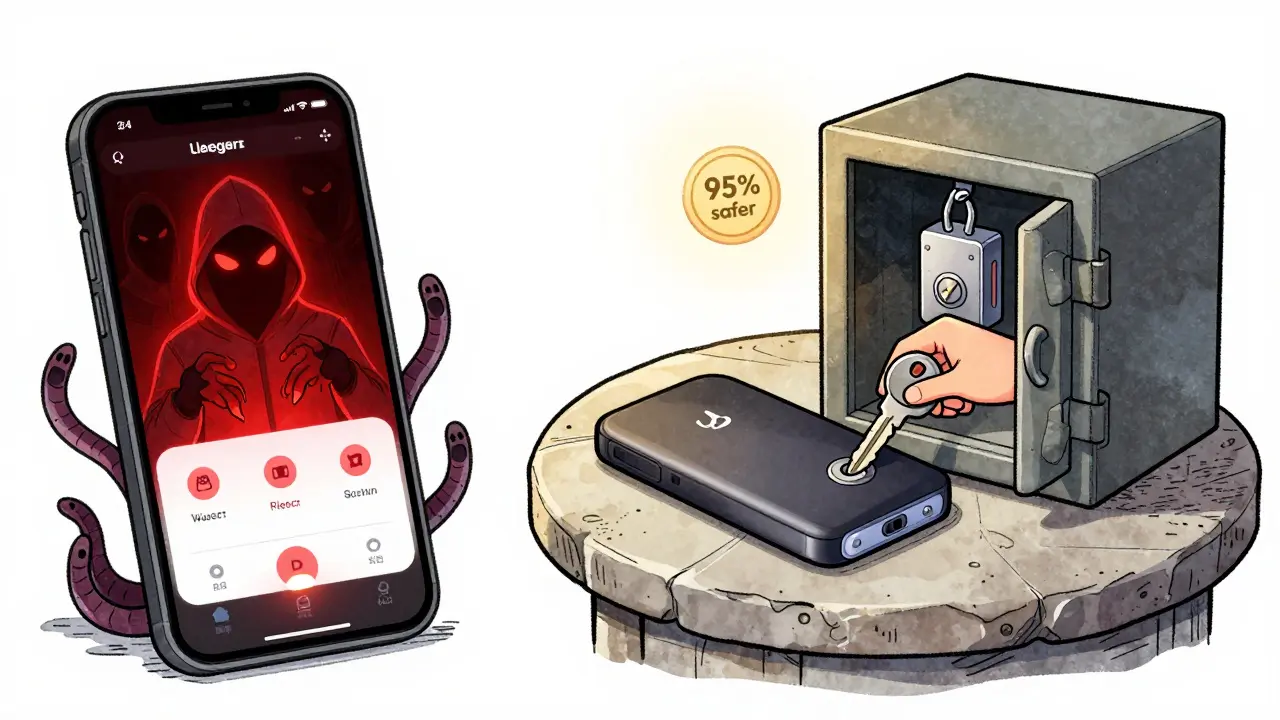
Yes, hardware wallets are significantly safer. They store your private keys offline, isolated from internet-connected devices that can be hacked. Software wallets run on phones or computers, which are vulnerable to malware, phishing, and remote attacks. While hardware wallets cost $50-$200, they reduce the risk of theft by over 95% compared to software wallets, according to Vault12’s 2023 survey.
What’s the difference between a seed phrase and a passphrase?
Your seed phrase (usually 12 or 24 words) is the master key to your wallet. A passphrase is an optional extra word or phrase you add to create a second wallet. If you use a passphrase, you must enter it every time you access your wallet. If you forget it, you can’t access that version of your wallet-even if you have the seed phrase. Many users lose funds by confusing the two.
Can I store my seed phrase on my phone or in the cloud?
Never. Storing your seed phrase on your phone, email, Google Drive, or any digital device makes it vulnerable to hackers. If your phone is compromised, your crypto is gone. Always write it on metal or paper and store it in a secure physical location like a fireproof safe. Digital backups defeat the purpose of cold storage.
Why do institutions use multi-signature or MPC instead of single keys?
Single keys create a single point of failure. If one person is compromised, the entire fund is at risk. Multi-signature requires multiple people to approve a transaction (e.g., 3 out of 5). MPC goes further by splitting the key across devices so no one ever holds the full key. This prevents insider threats, employee turnover risks, and single-point hacks. It’s the only way to securely manage large sums of crypto.
How often should I rotate my cryptocurrency keys?
For individuals, key rotation isn’t usually necessary unless you suspect a breach. For institutions, keys should be rotated after any employee leaves, after a security incident, or at least every 6-12 months. Fireblocks documented a $3.2 million loss when a hedge fund didn’t rotate keys after an employee quit. Regular rotation limits exposure and reduces the risk of long-term compromise.
Are there any regulations for cryptocurrency key management?
Yes. The EU’s MiCA regulation, effective January 2024, requires all licensed crypto service providers to use certified key management systems that meet strict security standards. Other regions, including the U.S. and Singapore, are moving toward similar rules. For institutions, compliance isn’t optional-it’s a legal requirement to operate.
What’s the biggest mistake people make with key management?
The biggest mistake is assuming it’s someone else’s problem. Whether it’s trusting an exchange, storing a seed phrase on a phone, or never testing a recovery, the root cause is complacency. Crypto security isn’t about fancy tools-it’s about habits. The people who lose money aren’t the ones who got hacked. They’re the ones who never practiced what to do when things go wrong.
Next Steps: Build Your Key Management Plan
Start small. Pick one wallet you use. Move your crypto to a hardware device. Write down your seed phrase on metal. Store it in a safe. Test the recovery process-do it now, before you panic. Then, if you manage more than $10,000, start thinking about multi-signature. Talk to a professional. Read the documentation. Don’t guess.Cryptocurrency gives you power. But power without responsibility is dangerous. Your keys are your responsibility. Manage them well, and you keep your wealth. Manage them poorly, and you lose everything-without a second chance.
bro i just use coinbase and hope for the best lmao. why make life harder? if they get hacked, i guess i lost my pizza money.
this whole thing is a scam. if you need a metal plate and a fireproof safe just to hold crypto, then it's not money, it's a hobby for people who hate their wallets. i lost 3k once and honestly? felt better.
i used to store my seed phrase on my phone. i know. i'm an idiot. got hacked. lost everything. now i write it on a steel plate and bury it in my backyard with a little flag that says "do not dig up unless i'm dead". 🙃
control is an illusion. the blockchain doesn't care if you have the key. it only cares if the math works. your responsibility is just noise in the system.
they're using MiCA to force you into institutional custody. this isn't security. it's surveillance with a fancy name. they want to know every transaction. don't fall for it.
i use a ledger + metal backup + 2of3 multisig. yeah it's a pain. but i lost $15k once because i trusted a software wallet. never again. if you're holding more than $1k, this isn't optional. just do the work.
i used to think i was too techy for this stuff. then i watched my friend cry because he forgot his passphrase. i cried too. you don't need to be a genius. you just need to be careful. please, for the love of god, test your recovery.
the real problem? people think crypto is about getting rich. it's not. it's about not being a dumbass. if you're reading this and still storing your seed on google drive, please stop. you're making the rest of us look bad.
all this "security" is just corporate propaganda to sell you $200 boxes. real crypto is on your phone, in a wallet app, and you don't give a damn. the system is rigged. stop buying the lie.
you people are so dramatic. i lost $50k because i didn't back up my keys. guess what? i'm still alive. got a job. got a new wallet. crypto isn't your life. stop acting like it is.