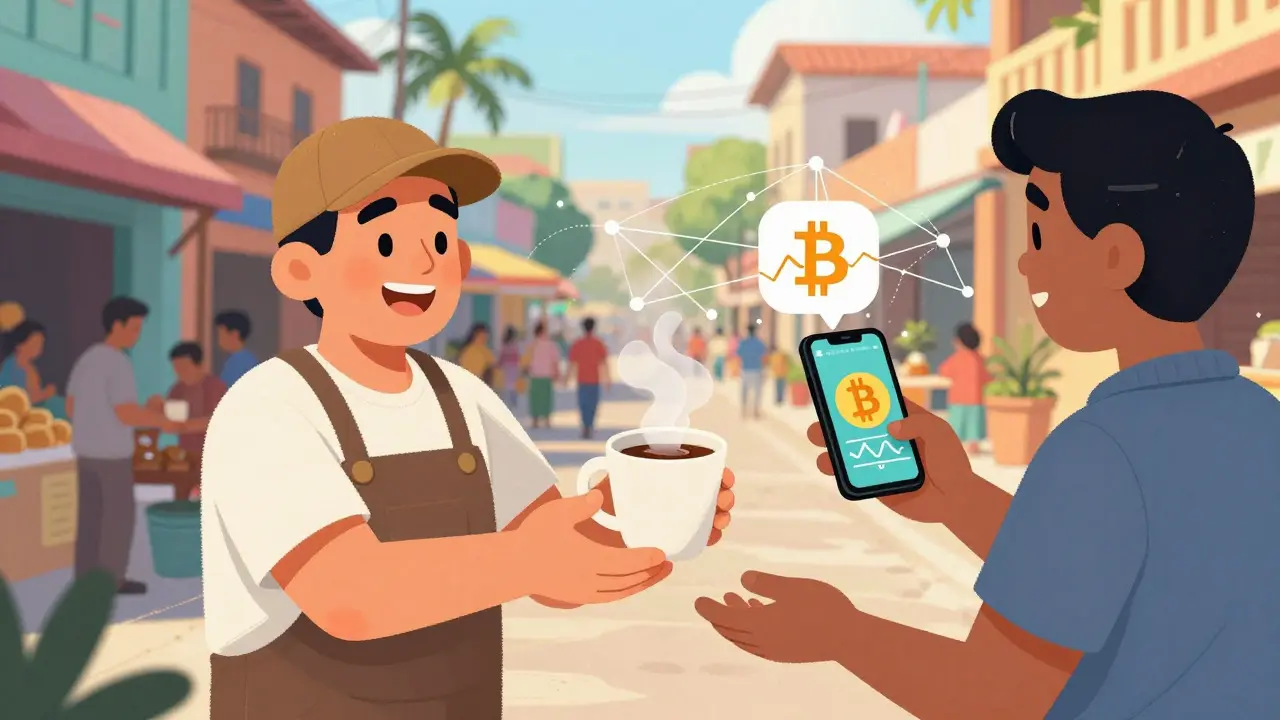
Imagine paying for your morning coffee with a digital asset that can swing by 10% in value before you finish your sip. That is the reality El Salvador has been trying to normalize since September 2021. When President Nayib Bukele announced that Bitcoin is a decentralized digital currency adopted as legal tender in El Salvador alongside the US dollar, it wasn't just a policy shift; it was a global financial experiment. The goal was bold: cut remittance costs, bank the unbanked, and attract foreign investment. But seven years later, the picture is far more complex than the initial hype suggested.
As of mid-2026, El Salvador remains the only country where Bitcoin holds the status of legal tender. However, this status comes with heavy strings attached. The narrative has shifted from "crypto utopia" to a pragmatic struggle against volatility, international pressure, and low public adoption. To understand where things stand today, we need to look past the political rhetoric and examine the actual mechanics of how Bitcoin functions within the Salvadoran economy, the restrictions imposed by international lenders, and what real users are experiencing on the ground.
The Foundation: How Bitcoin Became Legal Tender
To grasp the current situation, you first have to understand the mechanism established in 2021. The Bitcoin Law is legislation passed by the Legislative Assembly of El Salvador in June 2021, effective September 7, 2021, mandating Bitcoin acceptance for payments did not replace the U.S. dollar. Instead, it created a dual-currency system. The U.S. dollar remained the primary reference currency for accounting and stability, while Bitcoin became an optional medium of exchange.
The law required merchants to accept Bitcoin if they had the technical means to do so. Crucially, it allowed citizens to pay taxes, settle debts, and buy goods using Bitcoin. The government set aside $150 million to back the implementation, ensuring that when someone paid in Bitcoin, the merchant could instantly convert it to dollars if they wished. This "instant conversion" feature was designed to shield everyday businesses from price volatility. If you bought a shirt for $20, and Bitcoin’s price dropped five minutes later, the merchant still received $20 worth of value. For the consumer, however, the risk remained.
This structure was intended to solve three specific economic problems:
- Remittance Costs: Remittances make up over 20% of El Salvador’s GDP. Traditional transfer services charged high fees (often 7-10%). Bitcoin transactions via the Lightning Network were supposed to be near-free.
- Financial Inclusion: A significant portion of the population lacked access to traditional banking. A smartphone and a data connection were deemed sufficient to enter the financial system.
- Investment Attraction: By positioning itself as a crypto-friendly hub, El Salvador hoped to attract tech companies and foreign capital.
The Reality Check: Adoption and User Behavior
On paper, the logic held up. In practice, human behavior proved harder to engineer. Data from 2022 through 2026 reveals a stark contrast between government targets and actual usage. Initially, about half of all households downloaded the Chivo Wallet is the official government-sponsored cryptocurrency application launched in El Salvador to facilitate Bitcoin transactions and provide bonuses. The government incentivized downloads with free Bitcoin bonuses and discounts on gasoline. It seemed like a success story at first glance.
However, retention told a different story. Studies from the National Bureau of Economic Research, analyzing surveys of 1,800 households, showed that adoption stalled dramatically after early 2022. Among those who downloaded the app, more than 60% never made a transaction after spending their initial bonus. Another 20% hadn’t even spent the free money. Why? The friction was too high.
For many Salvadorans, especially older adults and those in rural areas, the learning curve was steep. Setting up a wallet, understanding private keys, and navigating the interface required digital literacy that wasn't universally present. Furthermore, the active user base skewed heavily toward young, educated, male demographics-people who were already likely to be banked or financially savvy. The core target audience for financial inclusion-the unbanked poor-largely stayed away. They preferred the familiarity and predictability of cash dollars.
IMF Pressure and New Restrictions
If domestic adoption was lukewarm, international reaction was cold. The International Monetary Fund (IMF) viewed El Salvador’s experiment with deep skepticism. They argued that pegging national reserves to a volatile asset threatened macroeconomic stability. For years, El Salvador struggled to secure funding from the IMF because of its Bitcoin stance. This changed in 2024.
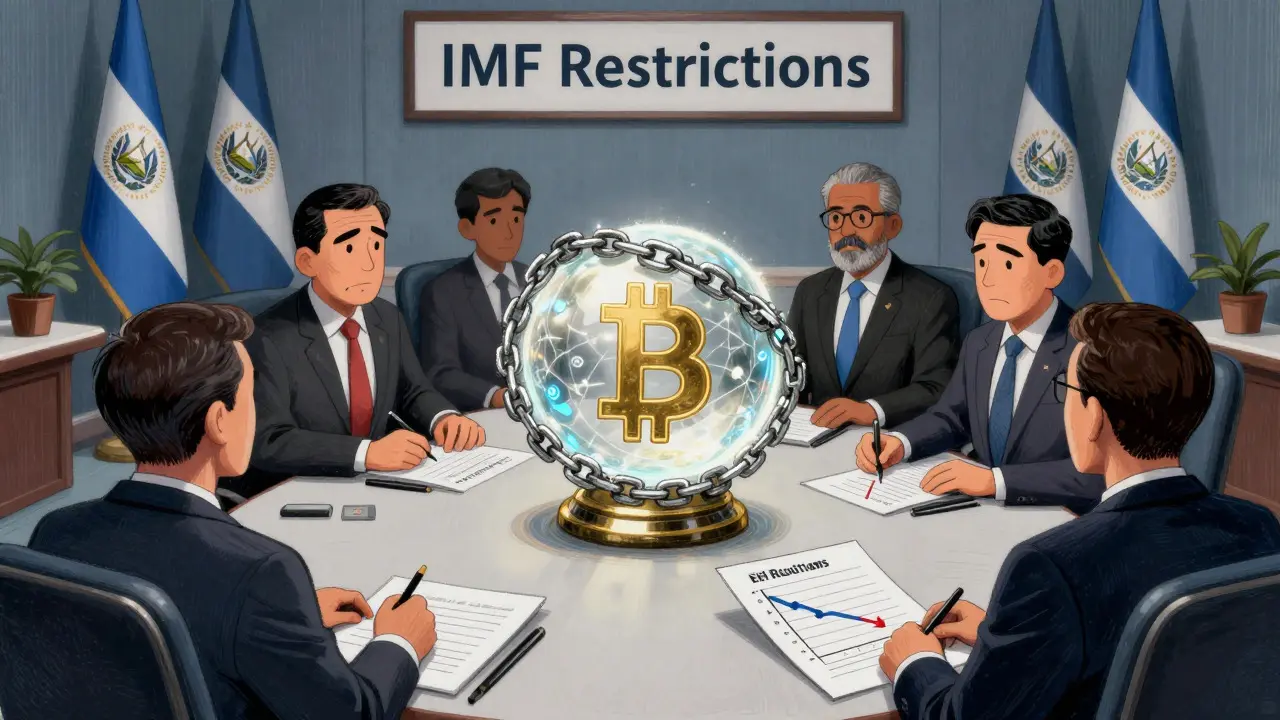
In a landmark deal, El Salvador secured a $1.4 billion loan from the IMF. But the price was high. The agreement included strict conditions regarding Bitcoin. While the country didn’t have to repeal the Bitcoin Law, it had to significantly limit its exposure. Key restrictions included:
- Halting New Purchases: The government agreed to stop buying new Bitcoin with taxpayer money for the duration of the program.
- Transparency Requirements: El Salvador had to disclose its Bitcoin holdings and transaction history regularly to the IMF.
- Fiscal Discipline: Strict limits on deficit spending, reducing the room for risky financial experiments.
This marked a pivot from "maximalist" adoption to managed coexistence. The dream of Bitcoin replacing the dollar as the reserve asset faded. Instead, Bitcoin became a niche tool within a broader, dollar-dominated economy. The IMF’s influence signaled to other emerging markets that adopting crypto as legal tender might come at the cost of crucial international financing.

Economic Impact: Costs vs. Benefits
So, did it work? The answer depends on which metric you prioritize. From a pure transactional efficiency standpoint, Bitcoin failed to displace traditional remittance channels. Services like Western Union and MoneyGram adapted by lowering fees, and informal networks remained robust. Most Salvadorans abroad continued sending money via traditional methods due to trust and ease of use.
However, there were some unexpected benefits. Tourism saw a modest boost, particularly among crypto enthusiasts visiting El Salvador to experience the "Bitcoin Beach" lifestyle in places like El Zonte. The country gained immense brand recognition in the tech world. Additionally, the infrastructure built for Bitcoin-such as improved internet connectivity in rural areas and digital literacy programs-had spillover effects that benefited the broader digital economy.
But the costs were tangible. The government incurred significant expenses maintaining the Chivo app, subsidizing transactions, and covering losses from its own Bitcoin purchases during market downturns. Credit rating agencies downgraded El Salvador’s outlook, citing governance risks and fiscal opacity. The environmental impact of mining operations, initially touted as green due to geothermal energy usage, also faced scrutiny as demand for hash rate increased.
| Metric | Pre-2021 (Dollar Only) | Post-2021 (Dual Currency) |
|---|---|---|
| Remittance Cost Average | ~7-10% | ~5-8% (mixed results) |
| Unbanked Population | High (~40%) | Slightly Reduced but Stalled |
| International Credit Rating | B+ | B (with negative outlook) |
| GDP Growth Contribution | Stable | Minimal direct impact |
Life in 2026: What It Looks Like Now
Fast forward to July 2026. Walking through San Salvador, you’ll see QR codes for Bitcoin payments in some shops, but cash registers still ring in dollars. The Chivo app is still available, but it’s no longer the center of daily life for most people. Merchants who accepted Bitcoin often did so voluntarily for small transactions or tourist interactions, not because they were forced to. Many turned off the feature due to technical glitches or lack of customer interest.
The government’s role has shifted from promoter to regulator. With the IMF watching closely, the state is cautious. New regulations focus on anti-money laundering (AML) and know-your-customer (KYC) compliance, aligning closer with global standards rather than pioneering new freedoms. This makes sense for stability but dampens the revolutionary spirit of 2021.
For the average citizen, Bitcoin is now seen as a speculative asset rather than a daily currency. People hold it in hopes of appreciation, similar to how they might hold gold or stocks, but they spend dollars. The distinction between "store of value" and "medium of exchange" has become clearer in practice, even if the law treats them equally.
Lessons for Other Nations
El Salvador’s experiment offers valuable lessons for other countries considering crypto integration. First, technology alone cannot overcome cultural inertia. Trust in institutions matters more than code. Second, volatility is a killer for daily commerce. Without stablecoins or hedging mechanisms, consumers hesitate to spend assets that might lose value overnight. Third, international relations matter. Ignoring the IMF and World Bank can isolate a nation financially, forcing eventual compromise.
Other Latin American countries watched closely. Some, like Argentina, explored crypto-friendly policies without going full legal tender, finding a middle ground that pleased both innovators and regulators. El Salvador’s path was unique, but its constraints are universal.
Future Outlook: Coexistence or Retreat?
Looking ahead, El Salvador is unlikely to abandon Bitcoin entirely. It has become part of the national identity under President Bukele. However, a return to aggressive expansion seems improbable given the IMF leash. The future likely involves a quiet coexistence: Bitcoin as a niche payment method for tech-savvy users and tourists, while the dollar anchors the economy.
Developments in Layer-2 solutions like the Lightning Network may improve speed and reduce fees further, potentially reigniting interest. But unless Bitcoin’s price stabilizes significantly, it will remain a secondary option. The true test of success isn’t whether Bitcoin exists in El Salvador, but whether it improves lives. On that front, the results are mixed, offering hope for innovation but cautioning against haste.
Is Bitcoin still legal tender in El Salvador in 2026?
Yes, Bitcoin remains legal tender in El Salvador as of 2026. The Bitcoin Law has not been repealed, meaning merchants must accept it if technically capable, and citizens can use it for payments and taxes. However, practical usage is limited compared to the U.S. dollar.
What restrictions did the IMF impose on El Salvador's Bitcoin policy?
In exchange for a $1.4 billion loan in 2024, El Salvador agreed to halt new Bitcoin purchases with public funds, increase transparency in reporting its holdings, and adhere to stricter fiscal discipline. These measures effectively scaled back the government's active promotion of Bitcoin.
Why did Bitcoin adoption stall among Salvadoran households?
Adoption stalled due to high technological barriers, lack of digital literacy among target demographics, and persistent preference for the stability of the U.S. dollar. Many users who downloaded the Chivo wallet never made transactions beyond spending their initial bonus.
Did Bitcoin reduce remittance costs in El Salvador?
The impact was minimal. While Bitcoin transactions can be cheaper, traditional remittance services lowered their fees in competition, and many users preferred familiar platforms. Consequently, Bitcoin did not become the dominant channel for remittances.
How does the Chivo Wallet work today?
The Chivo Wallet allows users to store, send, and receive Bitcoin and U.S. dollars. It features instant conversion between the two currencies. While still operational, its daily active user base is small, consisting mainly of tech-savvy individuals and tourists.
Can foreigners use Bitcoin in El Salvador?
Yes, foreigners can use Bitcoin in El Salvador, particularly in tourist areas and businesses catering to crypto enthusiasts. However, acceptance varies by location, and carrying U.S. dollars is still recommended for seamless transactions.