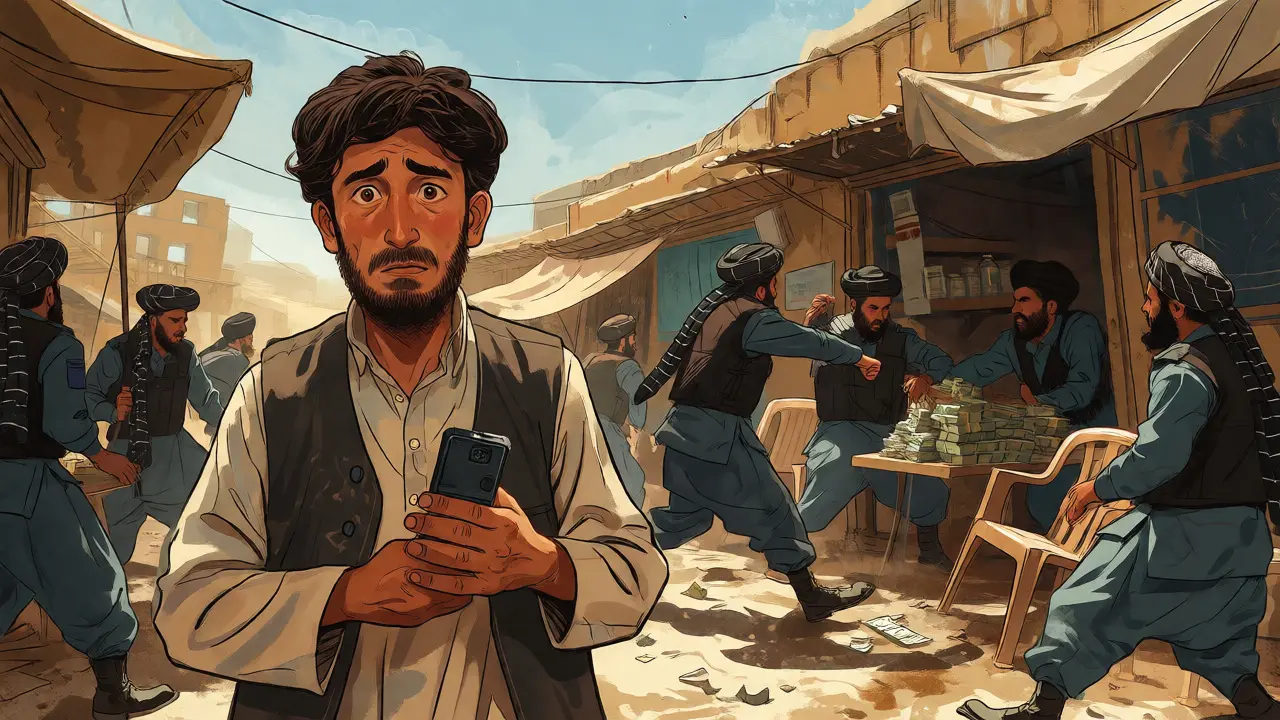
Imagine trying to feed your family while the government threatens to put you in prison for using the only financial tool that actually works. That is the reality for many Afghans today. Since the Taliban took control of Afghanistan, they have waged a relentless campaign against cryptocurrency. What started as confusion has turned into a strict ban, complete with raids, arrests, and business closures.
You might wonder why a regime would ban something so useful in a country cut off from global banking. It seems counterintuitive, right? But the story here isn’t just about money; it’s about control, religion, and survival. Let’s look at what is really happening on the ground in Kabul, Herat, and beyond.
The Sudden Shift from Adoption to Crackdown
To understand the current chaos, you have to look back to August 2021. When the Taliban returned to power, traditional banks collapsed. International sanctions froze billions in assets. People couldn’t access their savings. In that vacuum, cryptocurrency exploded. According to the Chainalysis Global Crypto Adoption Index, Afghanistan jumped to 20th place globally for grassroots adoption. Why? Because it was the only way to send remittances home. If your brother worked in Dubai or London, he could send USDT (a stablecoin pegged to the dollar) directly to your phone. No bank fees, no delays, no blocked transfers.
But this freedom didn’t last long. By June 2022, the Taliban-led central bank issued a formal ban. They declared online foreign exchange trading illegal. A spokesman told Bloomberg that there was "no instruction in Islamic law to approve it." This wasn’t just a suggestion. It was a command backed by police force. The message was clear: stop using digital assets, or face consequences.
How Enforcement Is Actually Working
The enforcement hasn’t been subtle. Police forces, particularly in major trade hubs like Herat province, have launched aggressive operations. In September 2023 alone, authorities shut down 16 cryptocurrency exchanges in Herat. Sayed Shah Sa’adat, head of the local counter-crime unit, confirmed these closures were part of a nationwide effort. This wasn’t an isolated incident. Earlier, in May 2023, eight traders were arrested and held for 28 days. Authorities hinted at sentences up to six months for repeat offenders.
What happens when the police raid a crypto office? Reports vary, which adds to the fear. Some detainees said their digital wallets weren’t touched. Others reported that all holdings were seized. This ambiguity makes planning difficult for anyone involved in the sector. You don’t know if you’re losing your profit margin or your entire life savings.
| Date | Action Taken | Location | Impact |
|---|---|---|---|
| June 2022 | Central Bank bans online forex/crypto trading | Nationwide | Initial shock; businesses continued operating quietly |
| August 2022 | Closure of 20+ crypto businesses | Herat Province | Significant contraction of formal market |
| May 2023 | Arrest of 8 traders; 28-day detention | Herat City | Fear increased; potential 6-month sentences warned |
| September 2023 | Raid and closure of 16 exchanges | Herat Province | Enforcement intensified; staff arrested |
The Religious and Economic Rationale
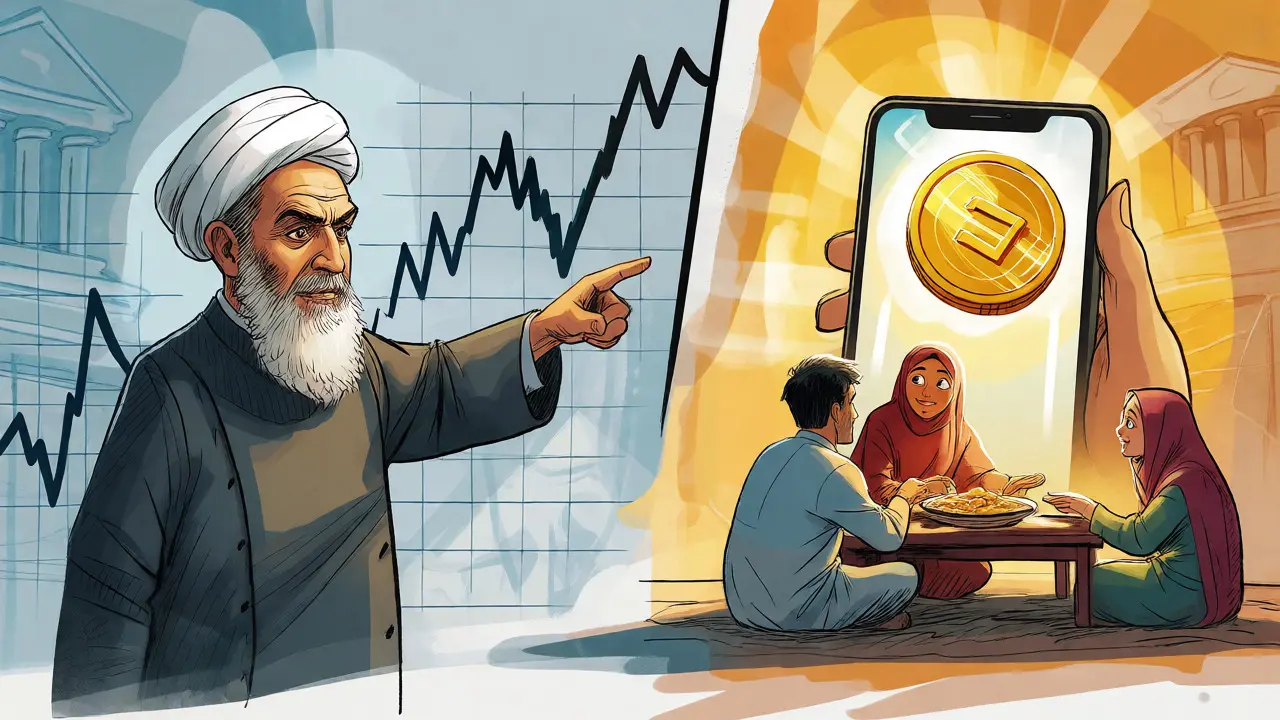
Why do they hate it so much? The Taliban cites two main reasons: fraud and Islamic law. They argue that cryptocurrencies are akin to gambling because of their volatility. In Islamic finance, this concept is known as gharar, or excessive uncertainty. Many conservative scholars agree that if an asset lacks intrinsic value and fluctuates wildly, it shouldn’t be used as currency.
However, this view isn’t universal among Islamic finance experts. Many argue that Bitcoin functions like gold-a commodity-while stablecoins like USDT offer stability. But the Taliban doesn’t care about academic debate. They see crypto as a threat to their authority. Cryptocurrency allows transactions outside the government’s watchful eye. For a regime trying to consolidate power and monitor every dollar moving through the economy, decentralized money is dangerous.
There is also a security angle. Groups like the Islamic State Khorasan Province (ISKP) have used crypto for small-scale financing. While the amounts are often modest-ranging from $100 to $15,000 per transaction-the Taliban uses this to justify broad crackdowns. They claim crypto facilitates terrorism, even though most ordinary Afghans use it simply to buy groceries.
The Human Cost of the Ban
Here is the hard truth: the ban hurts the poor more than the rich. Before the restrictions, a trader in Herat might earn a 1-2% margin on USDT transactions. After the raids, that income vanished. One trader told reporters he could no longer afford to feed his family. Another citizen explained that his family’s survival depended entirely on Bitcoin remittances from a brother in the United States. "There’s no other way," he said.
This isn’t just anecdotal. UNICEF reported in 2023 that over one million Afghan children faced severe malnutrition. The World Bank noted that 97% of the population lives below the poverty line. When you take away the most efficient channel for receiving aid and remittances, you deepen the crisis. NGOs tried to help. Organizations like WEDO partnered with platforms to send weekly food payments via crypto. But as enforcement tightened, even these channels became risky.
Going Underground: The Rise of P2P Markets
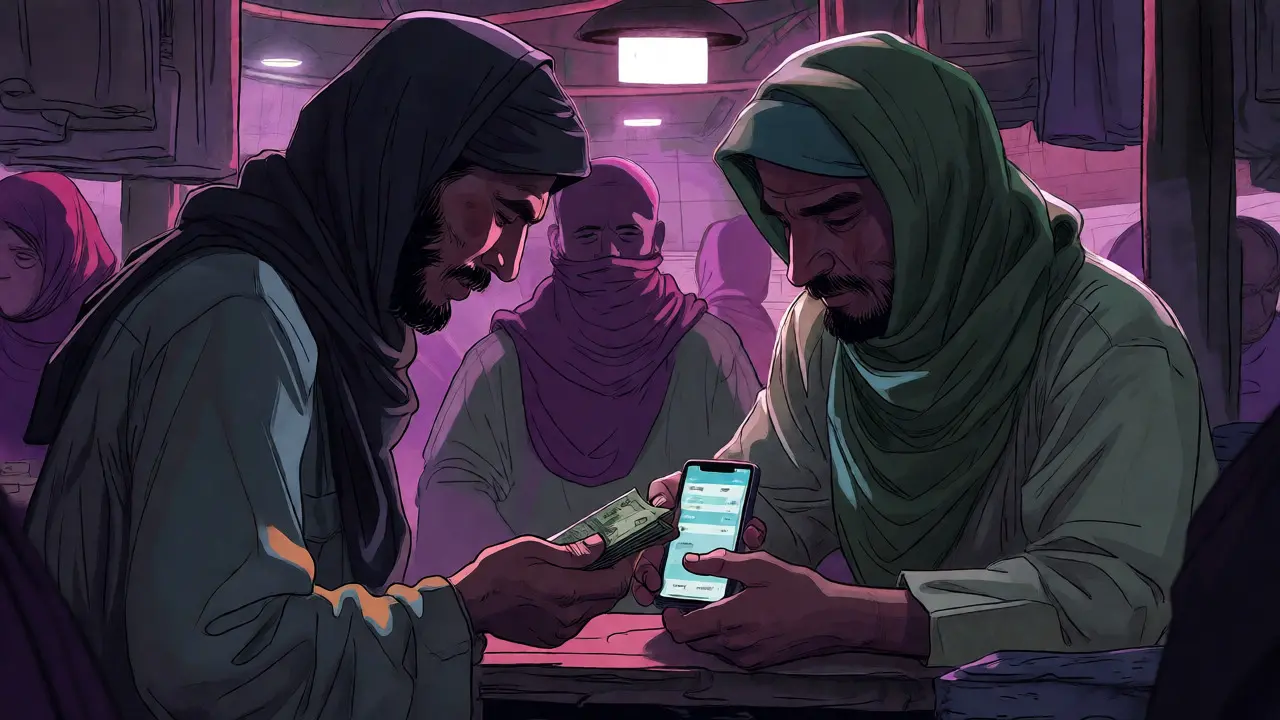
Did the ban kill cryptocurrency in Afghanistan? Not exactly. It drove it underground. Formal exchanges closed, but peer-to-peer (P2P) networks thrived. People began meeting in person to swap cash for digital tokens. WhatsApp groups replaced public websites. Transactions moved to private chats where trust is personal rather than institutional.
This shift creates new risks. Without regulated exchanges, fraud becomes common. There is no customer support if you get scammed. Prices fluctuate wildly based on local supply and demand, not global markets. You might pay a premium to buy USDT because sellers charge extra for the risk of arrest. Meanwhile, the Taliban struggles to track these informal networks. How do you police a handshake deal in a crowded bazaar?
What This Means for Investors and Observers
If you are watching from abroad, Afghanistan serves as a stark case study. It shows how quickly regulatory environments can change in unstable regions. It also highlights the tension between technological utility and political ideology. The Taliban wants a centralized, Sharia-compliant financial system. The people need speed, accessibility, and connectivity to the global economy.
For now, the enforcement pattern suggests increasing severity. We moved from warnings to closures, then to arrests. Will we see mass imprisonments next? Or will economic pressure force a relaxation of rules? Given that 97% of the population is poor, keeping them out of the crypto market is economically painful for the state itself.
The situation remains fluid. If international sanctions ease, traditional banking might return, reducing the need for crypto. But until then, Afghans will continue to find ways to use digital assets, regardless of the legal risks. They have little choice.
Is cryptocurrency completely illegal in Afghanistan?
Yes, the Taliban-led central bank banned cryptocurrency trading in June 2022. Enforcement includes closing exchanges, arresting traders, and confiscating assets in some cases. However, peer-to-peer trading continues informally despite the legal prohibition.
Why did the Taliban ban cryptocurrency?
The primary reasons are religious and economic control. Authorities cite Islamic law prohibitions against uncertainty (gharar) and gambling-like volatility. Additionally, they seek to prevent transactions from bypassing government oversight and to curb potential funding for opposition groups like ISKP.
What are the penalties for using crypto in Afghanistan?
Penalties have escalated from business closures to imprisonment. Traders in Herat have faced detentions of up to 28 days, with authorities warning of sentences up to six months for repeated violations. Assets may also be confiscated during raids.
How do Afghans receive remittances without banks?
Many rely on hawala networks or cryptocurrency. Despite the ban, families use stablecoins like USDT to transfer funds from relatives abroad. These transactions often occur via private peer-to-peer arrangements to avoid police detection.
Did the crypto ban reduce fraud in Afghanistan?
Not necessarily. While formal scams linked to unregulated exchanges decreased, informal P2P markets lack consumer protection. Fraud has shifted to personal transactions where buyers and sellers have no recourse if one party cheats the other.
It is absolutely heartbreaking to read this and I need everyone here to really sit with the weight of what these families are enduring because we take our banking systems for granted every single day without even thinking about it.
Imagine being cut off from your own savings overnight and then having the only lifeline that connects you to a brother working abroad in Dubai or London ripped away by men who claim religious authority but act like tyrants.
The Chainalysis data showing Afghanistan jumping to 20th place globally for adoption wasn't just a statistic it was a testament to human resilience and the sheer desperation of people trying to feed their children when traditional banks collapsed under the weight of international sanctions.
We talk about 'decentralization' as some abstract tech buzzword in Silicon Valley while in Herat and Kabul it means the difference between eating dinner tonight or going to bed hungry again.
The enforcement tactics described here-raids, arrests, business closures-are not just regulatory hurdles they are acts of violence against the poor who have no other options left.
I want to emphasize how crucial it is for us as global citizens to understand that banning crypto in such a fragile economy doesn't stop the usage it just pushes it underground where fraud runs rampant and protection disappears entirely.
When a trader loses his 1-2% margin on USDT transactions he isn't just losing profit he is losing his ability to put food on the table for his family which is a devastating blow to any household.
The ambiguity surrounding whether digital wallets are seized or left alone during police raids adds a layer of psychological terror that makes planning for the future impossible for anyone involved in this sector.
We must remember that behind every transaction there is a human story of survival and these policies are actively deepening the humanitarian crisis reported by UNICEF and the World Bank.
If we truly care about human rights we cannot look away when financial tools that work are criminalized by regimes that prioritize control over compassion.
Let's keep sharing these stories so that the world does not forget the real cost of ideological purity tests applied to basic economic survival.
This is not just about money it is about dignity and the right to participate in the global economy without fear of imprisonment.
Actually you're missing the bigger picture here because this isn't just about religion or control it's about the fundamental misunderstanding of monetary policy by a group that has never run a modern economy before.
People love to quote Islamic law regarding gharar but fail to realize that most conservative scholars distinguish between volatile assets like Bitcoin and stablecoins like USDT which function more like gold or fiat currency respectively.
The Taliban is conflating all digital assets into one bucket of 'gambling' which is intellectually lazy and ignores the nuanced debates happening within Islamic finance institutions globally.
Furthermore the argument about ISKP funding is largely overstated since the transaction volumes are minuscule compared to the total flow of remittances that sustain millions of households.
You also have to consider the hawala network which has existed for centuries and operates on trust rather than blockchain technology yet the Taliban hasn't banned that despite similar lack of oversight.
This selective enforcement reveals that the ban is less about Sharia compliance and more about eliminating competition to their nascent central bank efforts which are currently failing miserably.
The rise of P2P markets proves that demand is inelastic meaning people will pay higher premiums and accept greater risks to access liquidity regardless of legal status.
Investors watching from abroad should note that regulatory environments in unstable regions can flip overnight rendering long-term strategies useless in favor of short-term arbitrage opportunities.
The fact that 97% of the population lives below the poverty line suggests that the state itself suffers economically by excluding the majority from efficient financial channels.
Eventually economic pressure will force a relaxation of rules because starving populations are harder to govern than fed ones.
Until then expect increased friction costs and a thriving black market for digital assets that benefits neither the consumer nor the regulator.
This case study serves as a warning for any government considering heavy-handed bans on emerging technologies without understanding their utility in crisis scenarios.
The shift from formal exchanges to private WhatsApp groups indicates a regression in financial infrastructure quality that could last decades if sanctions persist.
We are witnessing a clash between technological utility and political ideology where the latter is winning at great human cost.
Finally someone mentions the reality of the situation instead of crying about feelings. The Taliban is doing exactly what any sovereign nation would do to protect its borders and economy from foreign interference. Crypto is just another tool for Western influence to undermine local sovereignty. If they want to follow Sharia law that is their right. Stop projecting American values onto a society that clearly rejects them. Order and discipline are better than chaotic gambling markets anyway.
i think it's pretty clear that banning something doesn't make it go away especially when people are desperate. i've seen similar things happen in other countries where strict laws just push activity underground making it harder to regulate and more dangerous for regular folks. it seems like a lose-lose situation for everyone involved except maybe those who profit from the chaos.
we must ask ourselves what is the nature of value itself
is it intrinsic or is it merely a collective hallucination sustained by belief and power structures
the taliban seeks to impose a moral order upon the chaos of the marketplace believing that uncertainty is a sin
but in doing so they create a new form of uncertainty where the rule of law becomes arbitrary and unpredictable
the individual is crushed beneath the weight of ideological purity that offers no sustenance
to ban currency is to ban freedom for the poor have no choice but to obey or starve
we observe the tragedy of governance that mistakes control for competence
the wallet remains silent while the stomach grows loud
in the end we see that power fears what it cannot count and therefore destroys what it cannot comprehend
Wake up sheeple!
They aren't banning crypto because of religion.
They are banning it because the West is tracking every move.
The Taliban is just a puppet for the Fed.
Why else would they target the only free market?
It's all connected.
Follow the money trail.
It leads back to DC.
Nothing is accidental.
Stay vigilant.
Hey guys, I think it's important to highlight the resilience of the Afghan people here. Despite the harsh conditions, they are finding ways to adapt and survive using peer-to-peer networks. It's inspiring to see how community trust replaces institutional trust in times of crisis. We should support initiatives that help these informal networks operate more safely. Let's focus on solutions rather than just criticizing the current situation. There is hope if we work together.
From a technical perspective, the distinction between Bitcoin and stablecoins is critical. The Taliban's blanket ban fails to account for the stability offered by USDT, which mitigates the risk of volatility often cited in Islamic finance arguments. Furthermore, the reliance on hawala networks prior to crypto adoption shows that Afghans have always utilized alternative financial channels. The current crackdown may inadvertently strengthen the hawala system, which is opaque and difficult to tax. This creates a paradox where the state seeks transparency but achieves opacity through prohibition.
dude this is insane
imagine getting arrested for sending money home
that is literally insane
the poor get poorer and the rich stay safe
it is so unfair
why cant they just let people trade
its not hurting anyone
except the government
they are scared of losing control
total nightmare scenario
hope things get better soon
One finds it quite tedious to engage with such emotionally charged narratives that ignore the fundamental principles of state sovereignty. The Taliban is exercising its legitimate right to regulate its domestic economy according to its own cultural and religious standards. It is presumptuous for outsiders to dictate financial policies to a nation that has suffered enough foreign meddling. If the populace wishes to gamble on volatile digital assets that is their prerogative but the state is under no obligation to facilitate such speculation. Order prevails over chaos and that is a positive outcome for national stability.
this hits so hard honestly i can't even imagine what those families are going through just trying to eat
it breaks my heart to think that sending money home could land you in jail
people are just trying to survive and the government is making it harder
it feels so unfair that the poor suffer while the powerful play politics
i hope someone listens and helps them out
One must observe with considerable skepticism the motivations behind this abrupt regulatory shift. It appears highly probable that external actors are influencing domestic policy to serve geopolitical interests rather than theological ones. :-/ The suppression of decentralized finance aligns suspiciously well with the desire for centralized surveillance capabilities. One wonders if the 'religious' justification is merely a convenient facade for deeper strategic objectives. (o_0) The timing coincides perfectly with increased interest in regional resource extraction. :-| Thus, the suffering of the common citizen is likely an acceptable collateral damage in this grand chessboard. :-\
Wow this is intense stuff! But hey look at the bright side - innovation finds a way! 😎 People are adapting fast with P2P networks. That's some serious hustle right there. 💪 Keep pushing forward Afghanistan! 🚀
hey wait a minute i know everything about this topic actually
you guys are wrong about the reasons
its simple supply and demand stuff
the government wants more taxes
crypto hides money from taxes
so they ban it
religion is just an excuse
everyone knows this already
i am very smart
trust me on this
no need to argue further
case closed