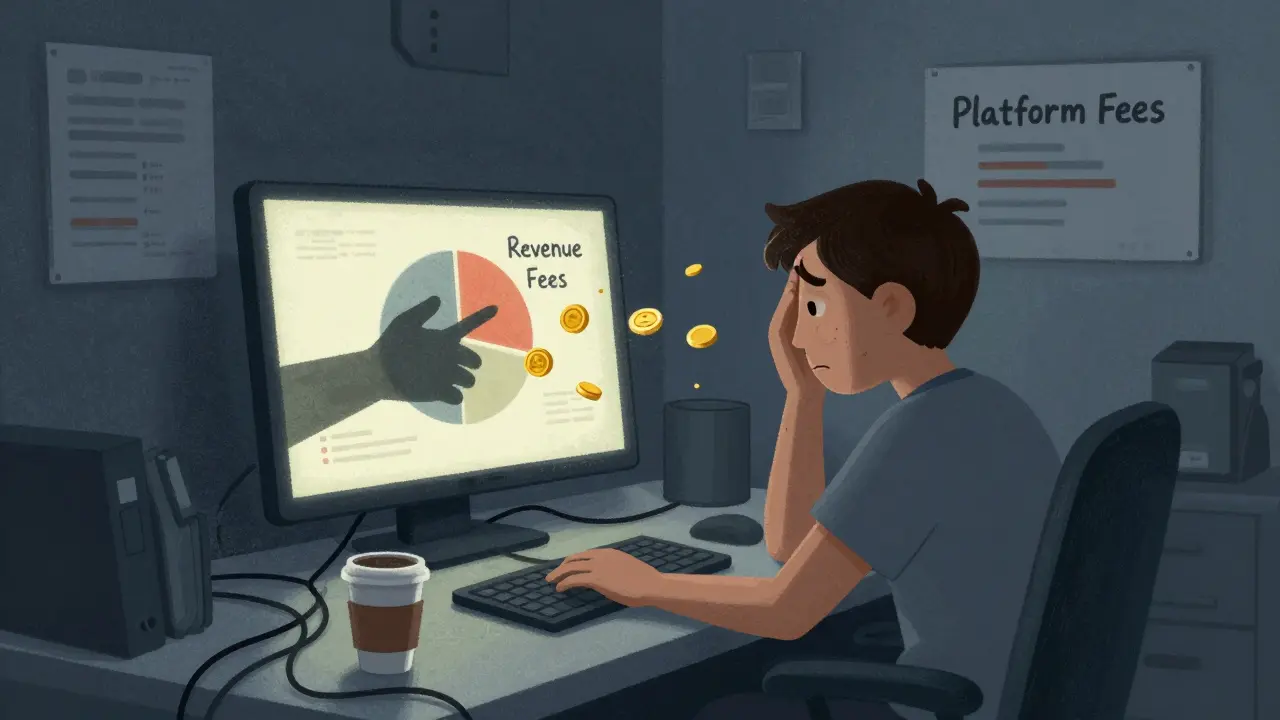
You wake up, check your analytics, and see that your latest viral video earned you $4.50. You spent twelve hours editing it. You spent another four hours writing captions and engaging with comments. And yet, the platform that hosts your work keeps 55% of the ad revenue, while an opaque algorithm decides whether anyone sees it at all. This isn’t a hypothetical nightmare; it is the daily reality for millions of people in the creator economy a global ecosystem where individuals earn income by creating and sharing content online.
We are now in late 2026. The hype around becoming a 'full-time creator' has cooled significantly. The initial gold rush is over. What remains is a brutal grind characterized by saturation, burnout, and a desperate search for stability. While many look to better lighting or new camera gear to solve these problems, the real issues are structural. They are baked into the code of the platforms we use. To fix them, we have to look beyond traditional social media and examine how blockchain technology a decentralized digital ledger that records transactions across many computers so that the record cannot be altered retroactively might offer a different path forward.
The Algorithm Trap: Why You Don't Own Your Audience
The biggest challenge facing creators today is not a lack of creativity. It is a lack of control. When you build an audience on Instagram, YouTube, or TikTok, you are building it on rented land. The landlord-the platform-can change the rules whenever they want. In 2025 and 2026, we saw multiple instances where minor updates to recommendation algorithms wiped out overnight incomes for thousands of creators. One day you are visible; the next, your reach drops by 90% because the platform decided to prioritize short-form video over long-form, or vice versa.
This dependency creates a constant state of anxiety. Creators feel forced to chase trends rather than build genuine connections. If the trend dies, their income dies. Traditional platforms rely on this volatility. They need you anxious enough to keep posting, but dependent enough to stay on their site. There is no direct line between a fan’s support and a creator’s wallet. Instead, there is a black box of advertising metrics that only the platform understands.
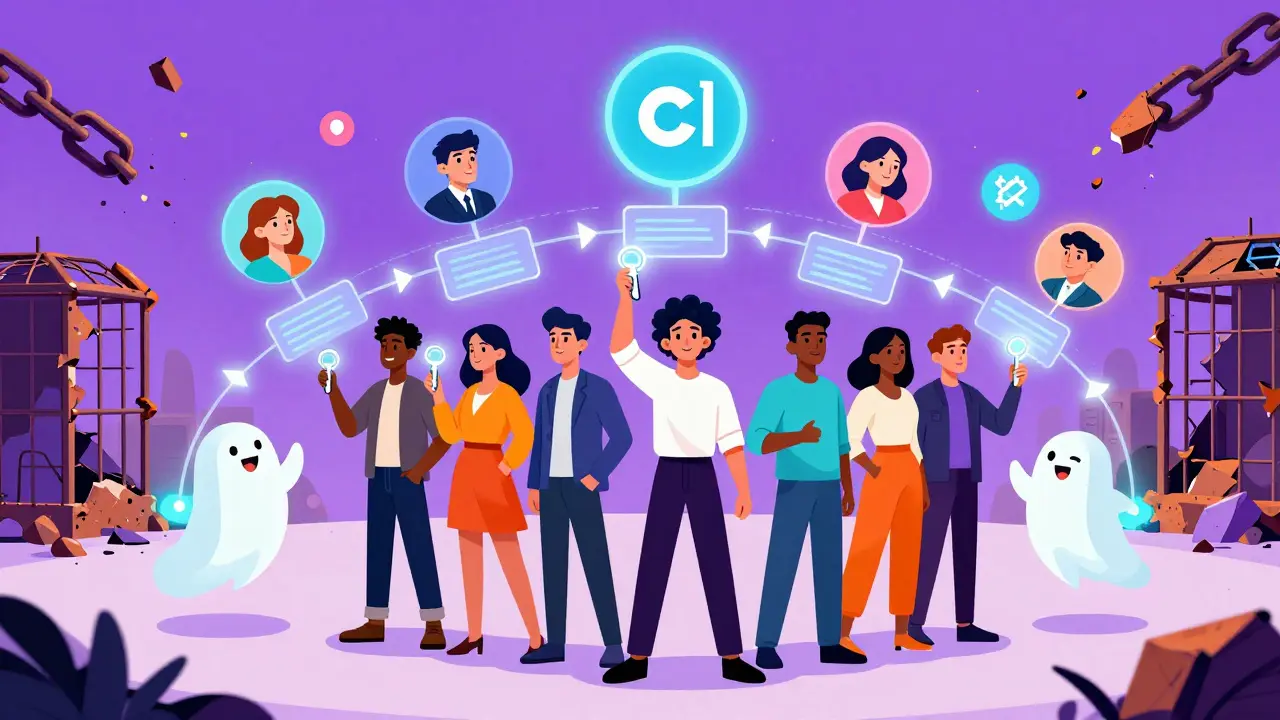
Blockchain offers a solution through decentralized social networks. Imagine a platform where your followers are tied to your digital identity, not a specific app. If you move from one social protocol to another, your community moves with you. You own the relationship. No algorithm can hide your content from the people who explicitly chose to follow you. This shifts the power dynamic from platform-centric to user-centric.
The Monetization Maze: Beyond Ads and Sponsorships
Let’s talk about money. For most creators, ad revenue is a lottery ticket. It fluctuates wildly based on seasonality, advertiser budgets, and view counts that can be inflated by bots. Brand sponsorships are slightly more stable, but they come with heavy restrictions. Brands often demand usage rights, approval processes, and strict guidelines that stifle creativity. Worse, payments are slow. A typical sponsorship deal involves invoicing, waiting 30 to 60 days for payment, and dealing with middlemen like agencies that take a 15-20% cut.
In 2026, the complexity of managing multiple income streams-subscriptions, tips, merch, affiliates-has become a full-time job in itself. Most creators do not have accounting teams. They use spreadsheets that break down when tax season arrives. The friction of moving money from fans to creators is high. Credit card processors charge fees. Platforms take cuts. International transfers lose value to exchange rates.
This is where cryptocurrency and smart contracts shine. With smart contracts self-executing contracts with the terms of the agreement directly written into code, payments can be automated and instant. A fan buys a piece of exclusive content, and the creator receives the funds immediately, minus a tiny network fee. No middleman. No 60-day wait. No agency taking a cut. Furthermore, tokens allow for new forms of loyalty. Instead of a one-off purchase, fans can hold a token that grants them access to a community, voting rights on future content, or a share of the project's success. This aligns the incentives of the creator and the audience permanently.
| Feature | Traditional Platform (Web2) | Decentralized Protocol (Web3) |
|---|---|---|
| Audience Ownership | Rented; lost if account banned | Owned; portable across protocols |
| Payment Speed | 30-60 days via banks/agencies | Instant via blockchain |
| Revenue Share | Platform takes 30-55% | Network fees only (<1%) |
| Data Control | Platform sells data to advertisers | User owns and controls data |
| Censorship Risk | High; arbitrary bans common | Low; permissionless architecture |
The AI Crisis: Proving You Are Human
If algorithm changes were bad, the rise of generative AI made things worse. By 2026, the internet is flooded with AI-generated images, videos, and text. It is increasingly difficult for audiences to distinguish between human-created art and machine-generated output. For creators, this devalues their work. If anyone can generate a perfect image in seconds, why pay a photographer? If any bot can write a blog post, why read a journalist?
Trust has become the scarcest resource online. Brands are skeptical of influencers because they don't know if the engagement is real or bought. Audiences are skeptical of content because they don't know if it's authentic. This erosion of trust threatens the entire creator economy. If no one believes what they see, the attention economy collapses.
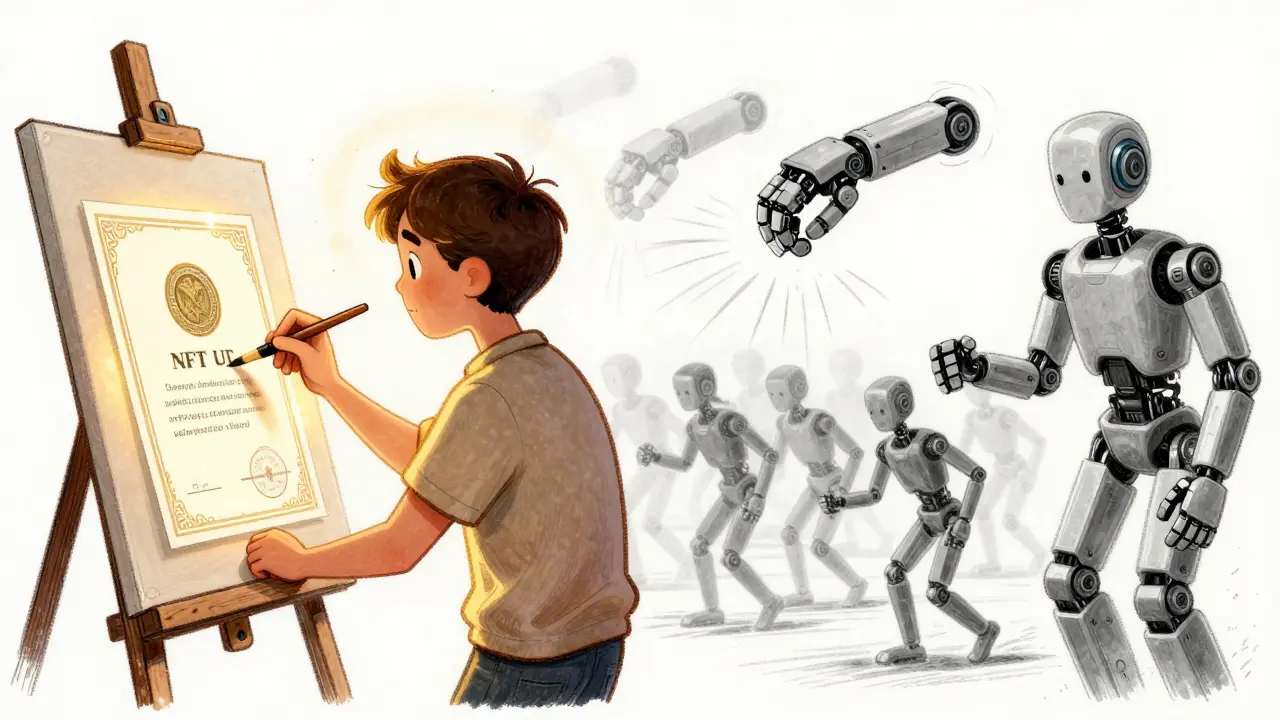
Blockchain provides a technical solution to this problem through Non-Fungible Tokens (NFTs) unique digital certificates of authenticity stored on a blockchain. An NFT doesn't just represent a JPEG; it represents provenance. It proves that a specific file was created by a specific person at a specific time. As AI generation becomes ubiquitous, verified human creation will become a premium product. Creators can mint their original works as NFTs, providing an immutable certificate of authenticity. This allows them to command higher prices because buyers are paying for verified human effort and intent, not just pixels.
Burnout and the Relentless Grind
There is a human cost to this economic model. The pressure to produce content daily, to engage constantly, and to grow endlessly leads to severe burnout. In 2025, studies showed that nearly 70% of full-time creators reported signs of mental health decline due to work-related stress. The business model demands infinite growth on finite human energy. It is unsustainable.
Many creators quit not because they ran out of ideas, but because they ran out of steam. The administrative burden of managing sponsors, taxes, and platform disputes drains the joy out of creation. We need systems that reduce friction, not add to it. Decentralized autonomous organizations (DAOs) offer a way for creators to collaborate without the hierarchy of traditional businesses. Instead of hiring employees, creators can form communities where members contribute skills-editing, marketing, coding-in exchange for governance tokens. This distributes the workload and shares the rewards, making the creative process more sustainable and less isolating.
Technical Barriers: The Elephant in the Room
I won't sugarcoat it: moving to blockchain-based solutions is hard right now. The user experience is still clunky. Managing private keys, understanding gas fees, and navigating crypto wallets can be intimidating for someone who just wants to sell their photography. Security is also a major concern. If you lose your seed phrase, you lose everything. Scams and phishing attacks are rampant in the Web3 space.
However, technology evolves. Just as smartphones made mobile banking easy, new interfaces are abstracting away the complexity of blockchain. Account abstraction, a recent development in Ethereum, allows users to log in with email or biometrics while still using secure blockchain backends. Layer-2 solutions have reduced transaction costs to fractions of a cent. The barrier to entry is lowering rapidly. Creators who learn these tools now will have a significant advantage in the coming years as the rest of the industry catches up.
Building for the Long Term
The creator economy is not dying; it is maturing. The early days of getting rich quick from viral moments are gone. The future belongs to those who build durable, owned relationships with their audiences. This means diversifying away from single-platform dependency. It means finding ways to monetize directly without intermediaries. It means proving authenticity in an age of AI.
Blockchain is not a magic bullet. It won't make your content better. But it can give you the tools to own your work, get paid fairly, and connect with your fans without a corporation standing in the middle. For creators tired of the rollercoaster, exploring Web3 isn't just a tech trend; it's a survival strategy.
Is it too late to enter the creator economy in 2026?
No, but the strategy has changed. You cannot rely on viral luck anymore. Success now requires building a niche community and owning your distribution channels. Focus on quality and direct audience connection rather than chasing broad, shallow metrics.
How does blockchain help with copyright protection?
Blockchain creates an immutable timestamped record of your work. When you mint a piece of content as an NFT, you establish proof of ownership and origin. This makes it easier to prove infringement if someone steals your work, as the blockchain history shows you were the first creator.
Do I need to understand coding to use Web3 for my content?
Not necessarily. Many no-code platforms allow creators to mint NFTs, set up subscription tokens, and manage communities without writing a single line of code. However, understanding basic concepts like wallets and gas fees is essential for security.
What are the risks of relying on crypto for income?
Volatility is the main risk. Crypto prices can fluctuate wildly. It is wise to convert earnings to stablecoins or fiat currency regularly. Additionally, security risks like hacking or losing access to your wallet require careful management of private keys and using hardware wallets for large amounts.
Can I still use traditional platforms alongside Web3?
Yes, and you should. Use traditional platforms like YouTube or Instagram for discovery and top-of-funnel awareness. Then, funnel your most engaged fans to your decentralized channels where you own the relationship and can monetize more effectively. This hybrid approach minimizes risk while maximizing reach.