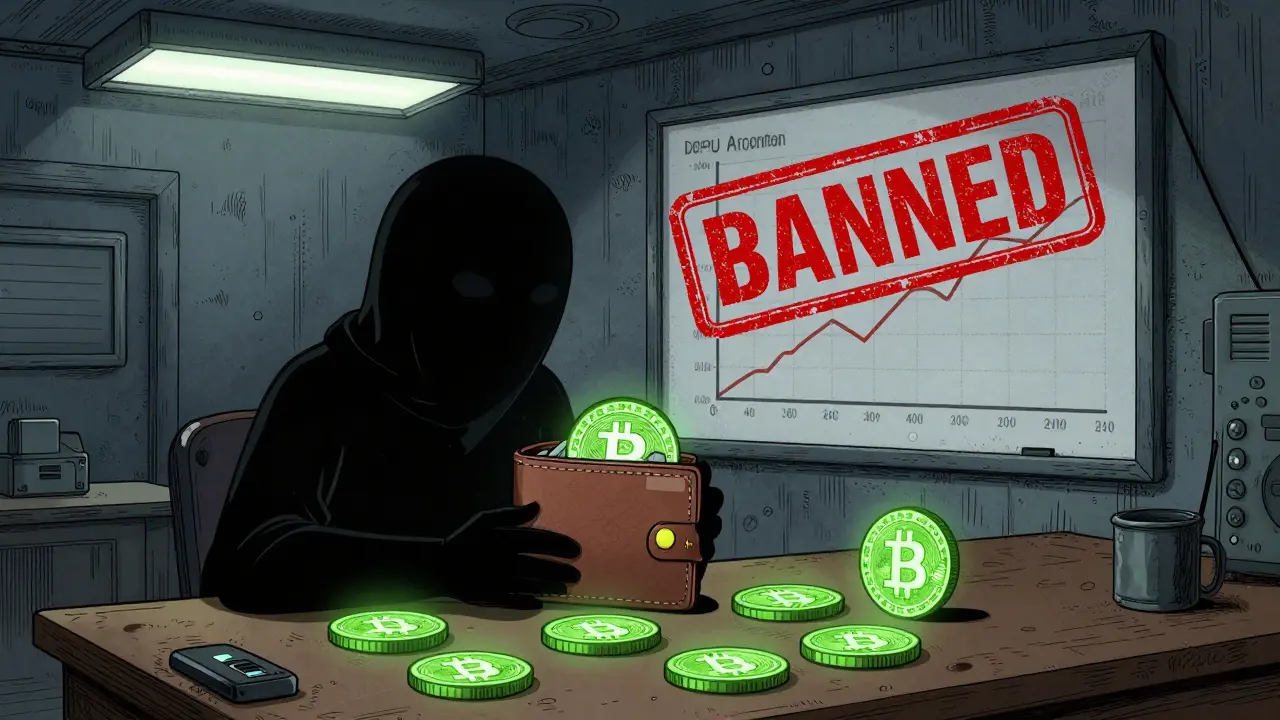
By December 2025, over 1.4 billion people live in countries where owning, trading, or mining cryptocurrency is either completely illegal or heavily restricted. That’s nearly one in five people on Earth. If you’ve ever wondered why crypto feels so different depending on where you are, the answer isn’t just about technology-it’s about power, control, and fear.
Where Crypto Is Completely Banned
Ten countries have outright bans on all forms of cryptocurrency activity. This means no buying, no selling, no holding, no mining. If you’re caught, you could face fines, asset seizures, or even jail time.
- China: The world’s strictest ban. Since 2021, all crypto trading and mining are illegal. Financial institutions can’t touch it. The government doesn’t hate blockchain-it just hates decentralization. That’s why they launched the digital yuan (e-CNY), a state-controlled digital currency with full tracking ability.
- Bangladesh: Under the Money Laundering Prevention Act, holding or trading crypto is a criminal offense. The central bank has warned that violators can be sentenced to up to 10 years in prison. Despite this, underground trading thrives through peer-to-peer networks and informal channels.
- Egypt: The Central Bank of Egypt declared crypto transactions illegal in 2018. Religious scholars issued fatwas calling crypto haram (forbidden), adding cultural weight to the legal ban. Banks are forbidden from processing crypto-related payments.
- Nepal: The Nepal Rastra Bank banned crypto in 2017, calling it a threat to national currency and financial stability. Enforcement is inconsistent, but penalties are severe: fines up to 1 million NPR (around $7,500) and possible imprisonment.
- Morocco: The Bank Al-Maghrib prohibits all cryptocurrency transactions. The government argues crypto undermines the Moroccan dirham and enables unregulated capital flight.
- Afghanistan: After the Taliban took power in 2021, they banned crypto, citing Islamic law and concerns over money laundering. Enforcement is unpredictable, but possession can lead to detention.
- Algeria: Crypto is illegal under a 2018 decree. The government fears loss of monetary control and capital outflows. Even using crypto to send remittances is punishable.
- Tunisia: While Tunisia once had one of Africa’s most crypto-friendly communities, a 2020 law made all crypto transactions illegal. The central bank cited risks to financial stability and consumer protection.
- Iraq: The Central Bank of Iraq declared cryptocurrencies illegal in 2023. Citizens who trade crypto face criminal charges under the country’s banking laws.
- Bolivia: Bolivia banned crypto in 2014, one of the first countries to do so. The central bank called it a threat to the financial system and a tool for fraud.
Why These Countries Ban Crypto
It’s not about technology. It’s about control.
Every country that bans crypto has the same core fears:
- Loss of monetary sovereignty: Governments want to control the money supply. Crypto lets people bypass central banks. In countries like Egypt and Tunisia, where inflation is high and trust in local currency is low, citizens turn to Bitcoin as a store of value. That’s a direct challenge to state power.
- Money laundering and tax evasion: Crypto’s pseudonymity makes it attractive for illicit activity. Countries with weak financial oversight-like Bangladesh and Algeria-see crypto as a loophole for corruption and capital flight.
- Financial instability: In Turkey and Vietnam, people used crypto to protect savings from currency collapse. Governments responded by banning it as a payment method, not because crypto was dangerous, but because it was working too well.
- Religious or cultural opposition: In Egypt and Afghanistan, religious authorities have labeled crypto as haram. This isn’t just legal-it’s moral.
China’s case is the clearest example: they don’t hate digital money. They hate uncontrolled digital money. The digital yuan is fully traceable, centrally managed, and designed to replace cash-not to empower citizens.
What About Countries With Partial Bans?
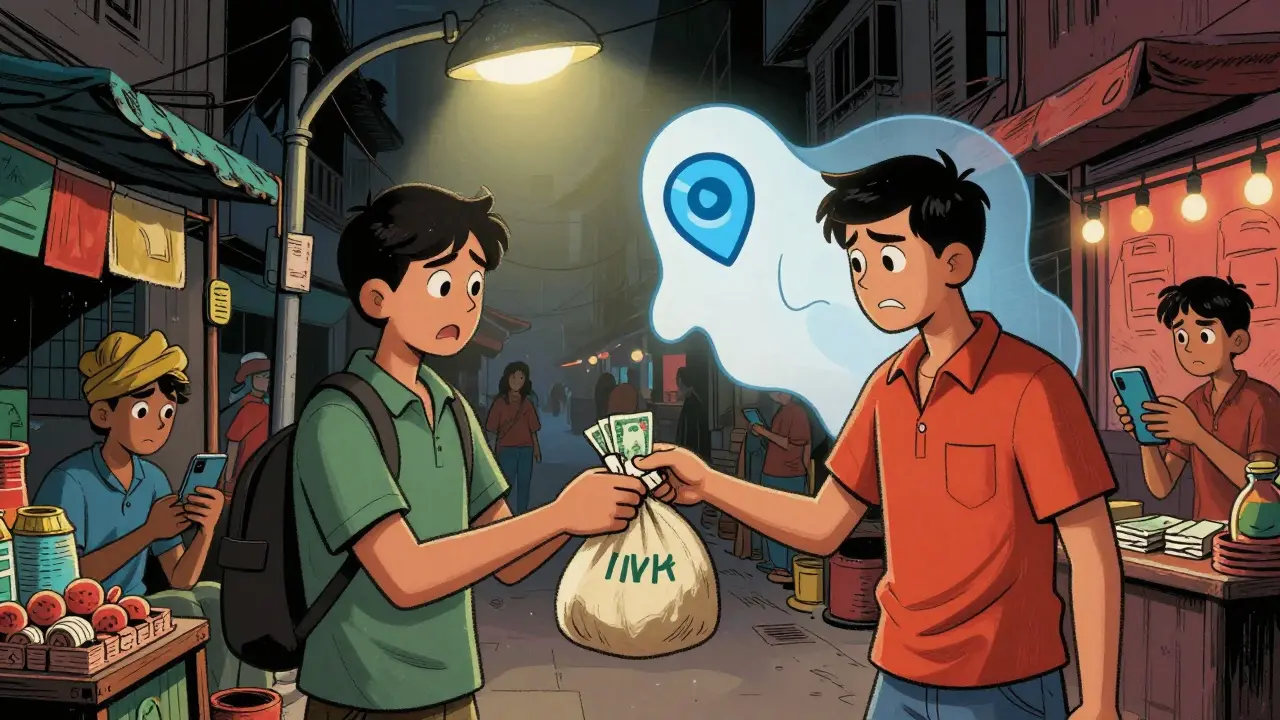
Many countries don’t ban crypto outright-they just make it useless for everyday use.
- Turkey: Since 2021, you can’t use Bitcoin or Ethereum to buy coffee, rent an apartment, or pay a bill. Banks can’t process crypto payments. But you can still buy and hold it as an investment. The goal? Stop citizens from fleeing the collapsing lira.
- India: Crypto is legal to hold, but you pay a 30% tax on gains. You can’t use it to pay for goods. The government wants to tax it, not ban it. They’ve even launched a blockchain-based trade finance platform while keeping crypto payments illegal.
- Indonesia: You can trade crypto as a commodity, but not use it as payment. The government runs its own regulated crypto exchange to keep control.
- Vietnam: Crypto can’t be used as payment, but trading is tolerated. In 2021, Vietnam announced plans to regulate crypto exchanges-hinting at future legalization.
- Russia: Crypto mining and trading are legal, but using it to pay for goods is banned. The government wants to control how crypto flows into and out of the country.
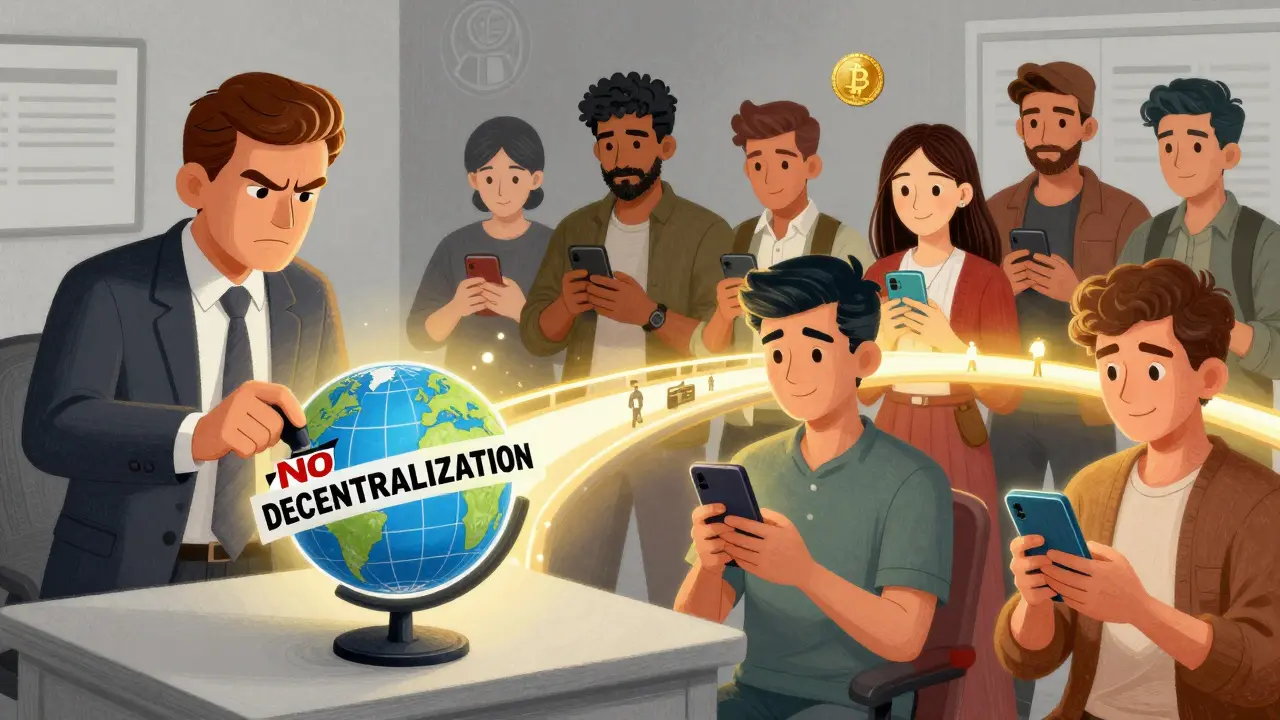
These countries aren’t anti-crypto-they’re anti-decentralization. They want the benefits of blockchain technology without giving up control.
How People Bypass These Bans
When a government bans something people want, they find a way.
In Bangladesh, traders use peer-to-peer platforms like LocalBitcoins and Paxful, often meeting in person to exchange cash for crypto. In Nigeria, despite restrictions, crypto adoption grew 1,200% between 2020 and 2023. In China, miners moved operations overseas, but many still run hidden mining rigs in basements or data centers.
VPNs are common. Wallets are stored offline. Cash trades happen in coffee shops, not online. In Iraq and Algeria, Telegram groups have become the de facto crypto exchanges. Enforcement is patchy. Police can’t monitor every wallet address. They can’t shut down every peer-to-peer meetup.
Still, the risks are real. In 2023, a man in Bangladesh was arrested for holding $20,000 in Bitcoin. In Egypt, a crypto influencer was jailed for promoting trading on social media. These aren’t rare cases-they’re warnings.
What Happens When Countries Don’t Ban Crypto
Compare the banned countries to places like El Salvador, Switzerland, or the UAE.
El Salvador made Bitcoin legal tender in 2021. It’s now used in 70% of retail transactions in some towns. The government built Bitcoin ATMs and even issued a bond backed by Bitcoin.
Switzerland allows crypto payments, mining, and exchanges. Zurich has over 500 blockchain startups. The country attracts global talent because it doesn’t fear innovation-it regulates it.
The UAE has licensed crypto exchanges, taxed them fairly, and even created a free zone for blockchain companies. Dubai now hosts one of the world’s largest crypto conferences.
These places didn’t ban crypto-they built systems around it. They created legal clarity. They attracted investment. They gave people freedom.
The Future of Crypto Bans
Is the trend moving toward more bans-or fewer?
Right now, the list of banned countries hasn’t changed much since 2023. But pressure is building.
Youth populations in banned countries are tech-savvy and connected. They see crypto as a tool for financial freedom. In Vietnam, over 60% of people under 30 own or have traded crypto. In Egypt, crypto adoption grew 300% between 2021 and 2025, despite the ban.
Meanwhile, countries that banned crypto are falling behind. China’s digital yuan rollout has been slow. Bangladesh’s banking system still struggles with digital payments. Nepal’s economy remains isolated from global innovation.
Experts predict that within five years, most total bans will soften. Not because governments love crypto-but because they can’t stop it. Enforcement is expensive. People are resourceful. And the world is moving toward digital money.
The real question isn’t whether crypto will be legal somewhere. It’s whether governments will choose control-or trust.
Is it illegal to own Bitcoin in every country that bans crypto?
Yes. In countries with total bans like China, Bangladesh, and Egypt, owning Bitcoin is illegal-even if you never trade it. The law often targets possession, not just transactions. Holding crypto can lead to asset seizure, fines, or criminal charges.
Can I get in trouble for using a VPN to access crypto exchanges in a banned country?
Technically, yes. Using a VPN to bypass crypto restrictions violates telecom and financial laws in banned countries. While enforcement is rare, authorities have started tracking VPN traffic linked to crypto platforms. In 2024, Bangladesh fined several individuals for using VPNs to access Binance. The risk is low for casual users but high for active traders.
Why does China ban crypto but promote its own digital currency?
China doesn’t oppose digital money-it opposes decentralized money. The digital yuan is fully controlled by the central bank. Every transaction is tracked, and the government can freeze funds or restrict usage. Crypto removes that control. China wants the efficiency of digital payments without the risk of public autonomy.
Are there any countries that banned crypto and then reversed the ban?
Not yet for total bans, but partial restrictions are changing. Vietnam and Indonesia have signaled plans to regulate crypto instead of banning it. Thailand and Malaysia moved from uncertainty to licensing frameworks. The trend shows that outright bans are becoming unsustainable as public demand grows and economic pressure mounts.
Can I be prosecuted in my home country for buying crypto in a country where it’s legal?
Yes-if your home country bans crypto. Countries like Bangladesh and Algeria claim jurisdiction over their citizens’ financial activities, even abroad. If you buy Bitcoin in Thailand while living in Bangladesh, you’re still breaking the law. Authorities can track wallet addresses and bank transfers across borders.
Crypto bans are just governments screaming into the wind
People will always find a way
VPN, P2P, cash meets in coffee shops
They can't un-invent decentralization
Oh wow so China’s digital yuan is basically Big Brother with a blockchain skin? How original.
They don’t hate tech-they hate freedom. Shocking.
One must contemplate the ontological rupture wrought by decentralized finance upon the Hegelian state apparatus.
The sovereign’s monopoly on currency, once sacrosanct, now trembles before the algorithmic chorus of nodes scattered across the globe.
Is control an illusion when the ledger is immutable?
And if a man holds BTC in his basement in Dhaka, does he not become, in that quiet defiance, a philosopher-king of his own economic destiny?
The state fears not the coin-but the consciousness it awakens.
What is law but the shadow of power? And what is power when the people no longer kneel?
They ban it because they know-this is not about money.
This is about the soul of autonomy.
And that, my friends, terrifies them more than any market crash ever could.
Perhaps the real revolution isn’t mined in silicon-but in the quiet resolve of a thousand individuals choosing to be free.
And so the ban becomes a monument-not to control-but to the inevitability of liberation.
History does not record the edicts of tyrants.
It remembers the whispers that outlived them.
USA here and i’m like why tf are these countries still living in the 1900s
crypto is the future and if you cant handle it then stay in your mud hut with your paper money
china is a dictatorship so ofc they hate it
but bangladesh? nepal? they’re just scared of progress
get with the program or get left behind
Decentralized finance = financial liberation 🚀
Central bank digital currencies = digital serfdom 💸🔒
China’s e-CNY is the ultimate surveillance tool 😬
Meanwhile, people in Egypt are buying BTC like it’s the last slice of pizza during a blackout 🍕🤯
They’re not breaking rules-they’re reclaiming power. #CryptoIsFreedom #Web3IsTheFuture
It’s not illegal to own Bitcoin. It’s immoral. You’re undermining the social contract. The state provides stability. You reject it for a speculative digital token. That’s not freedom. That’s selfishness.
You don’t need to agree with the bans to see why they exist.
But you also don’t need to accept them.
People are finding ways.
And that’s what matters.
bro why do these countries even exist if they’re scared of tech??
like imagine being so insecure you ban something because people might be happier without you
also i used a vpn to buy btc last week and my cat watched me do it
she’s now my crypto advisor 🐱💸
I lived in Nigeria for a year. People used crypto to pay rent, send money home, buy medicine.
It wasn’t about speculation-it was survival.
When your currency loses 40% of its value in a month, you don’t ask for permission.
You just find a way.
And honestly? That’s human.
These countries are right to ban crypto. It’s a tool for criminals, anarchists, and people who don’t respect authority.
Anyone using it is just a tax-evading rebel with no loyalty.
Real citizens use the system.
Not some anonymous blockchain nonsense.
It’s heartbreaking to see how many people are locked out of financial freedom just because their governments are afraid.
Imagine growing up knowing your options are limited because someone in a suit decided your money shouldn’t belong to you.
But you know what? People are still finding ways.
And that hope? That’s powerful.
Okay but like… why is everyone so surprised? 🤦♀️
Of course governments hate crypto-it’s the ultimate ‘screw you’ to their control.
They can’t tax it, track it, or manipulate it.
So they ban it.
Meanwhile, teens in Bangladesh are mining Bitcoin in their bedrooms with a $50 GPU.
Who’s really winning here?
Also, the digital yuan? That’s not innovation-it’s a prison with a nice UI.
Let’s not romanticize this. Crypto bans exist for a reason.
Most people in these countries don’t understand it.
They get scammed.
They lose everything.
And then blame the government.
It’s not control-it’s protection.
And before you say ‘freedom,’ ask yourself: who’s really helping them?
Not the anonymous devs on Reddit.
It’s the banks, the regulators, the systems they’re trying to destroy.