
Most global exchanges fight for your attention with flashy interfaces and hundreds of altcoins. COREDAX takes a different approach. It’s a specialized platform built for the South Korean market, prioritizing regulatory compliance and local usability over broad international appeal. If you’re based in Seoul or Busan, this might be your best bet. If you’re in Auckland or New York, it’s likely not worth your time. Here is what you need to know before depositing a single won.
The Bottom Line: Who Is This For?
COREDAX is a centralized cryptocurrency exchange established in South Korea in 2020, serving retail traders with a focus on domestic regulatory compliance. As of late 2025, it ranks as the fourth-largest domestic exchange by trading volume, holding roughly 6.2% of the market share. It trails giants like Upbit (52.3%) and Bithumb (28.1%). The platform lists only 47 cryptocurrencies, focusing heavily on major tokens like Bitcoin and Ethereum, alongside specific Korean blockchain projects. It does not aim to be a global player; it aims to be a safe, compliant hub for local investors.
Fees and Payment Methods: The Wire Transfer Reality
Let’s talk money. COREDAX charges a fixed withdrawal fee of 0.001 BTC for every Bitcoin transaction. To put that in perspective, Binance charges 0.0005 BTC, while Upbit charges 0.0004 BTC. So, you pay more here than on most major platforms. But the bigger hurdle isn’t the fee-it’s how you get money in. There are no credit cards, no debit cards, and no PayPal. You must use bank wire transfers in Korean Won (KRW). The minimum deposit is ₩50,000 (about $38 USD). Processing times average 1.8 business days, which is slower than Upbit’s 0.5-day turnaround. If you rely on instant card payments, COREDAX will feel restrictive.
| Feature | COREDAX | Upbit | Binance |
|---|---|---|---|
| Market Share (KR) | ~6.2% | 52.3% | N/A (Global) |
| Listed Coins | 47 | 300+ | 600+ |
| BTC Withdrawal Fee | 0.001 BTC | 0.0004 BTC | 0.0005 BTC |
| Fiat Deposit Method | Wire Transfer Only | Card + Wire | Card + P2P + Wire |
| Primary Audience | Korean Retail | Korean Retail/Inst. | Global |

Security and Regulatory Compliance
In an industry riddled with hacks, regulation is a shield. COREDAX operates under South Korea’s Virtual Asset User Protection Act, which took effect in July 2023. This law mandates strict KYC procedures, proof-of-reserves audits, and segregated customer asset management. While no exchange-specific security audits are publicly available, the regulatory environment forces compliance with standards set by bodies like the Cloud Security Alliance. This includes cold storage for the vast majority of assets and multi-sig wallet systems. Since its launch, there have been no reported major security incidents involving COREDAX. However, the broader landscape remains risky; Chainalysis noted that North Korean-affiliated hackers stole $1.34 billion across 47 incidents in 2024 alone. COREDAX’s compliance posture makes it safer than unregulated offshore exchanges, but it doesn’t make it immune to systemic risks.
User Experience: Desktop vs. Mobile
The interface is functional but not flashy. The desktop platform requires Windows 10+ or macOS 11.0+. The mobile app, available on iOS and Android, has a 4.1/5 rating on Google Play from over 1,200 reviews. Users praise the Korean language optimization and responsive support. However, if you aren’t fluent in Korean, you’ll hit walls. Documentation is primarily in Korean, with only partial English translation for core functions. Customer support responds in about 2.3 minutes for Korean speakers, but wait times jump to 18.7 minutes for English queries. The learning curve is moderate-rated 6.2/10 on usability scales-but the language barrier is the real friction point for international users.
Why Choose COREDAX Over Global Giants?
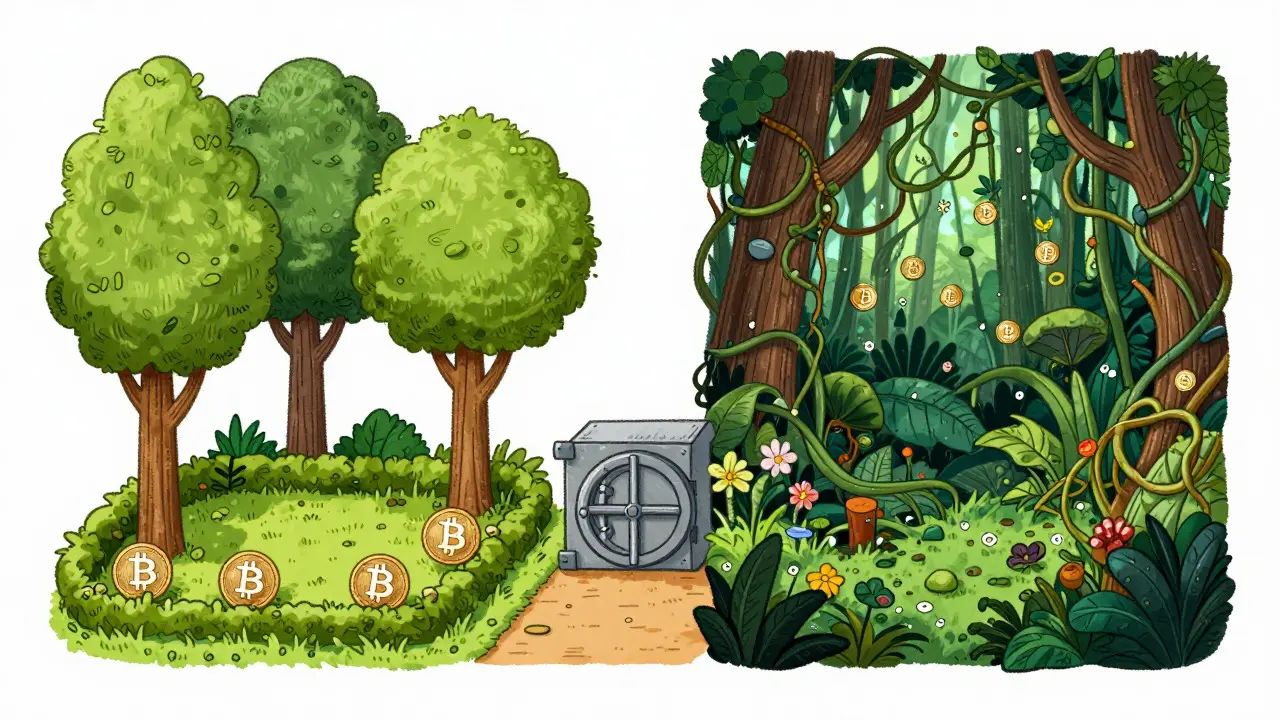
You don’t choose COREDAX for variety; you choose it for stability within the Korean ecosystem. With only 47 listed coins, you won’t find obscure memecoins or new DeFi tokens here. The platform focuses on Bitcoin, Ethereum, Solana, and local projects. This curation reduces risk exposure to low-liquidity assets. For Korean retail investors aged 25-44, who make up 78% of the user base, this feels like a trusted bank rather than a casino. International users, however, face a significant disadvantage: a 34% lower conversion rate compared to competitors offering multiple payment methods. If you need access to a wide range of assets or fast fiat on-ramps, look elsewhere.
Frequently Asked Questions
Is COREDAX good for international users?
Generally, no. The platform is optimized for South Korean residents. International users face strict KYC requirements, limited English support, and a lack of diverse payment options like credit cards. The 12.7% rejection rate for international applications due to document format issues makes onboarding difficult.
What are the main fees on COREDAX?
The primary fee is the withdrawal cost, set at 0.001 BTC for Bitcoin transactions. Trading fees follow standard tiered structures, though specific percentages vary by volume. Fiat deposits via wire transfer may incur bank fees, but the exchange itself does not charge a deposit fee.
How secure is COREDAX compared to Binance?
Both are considered secure, but for different reasons. Binance relies on its massive internal security infrastructure and global scale. COREDAX benefits from strict South Korean regulatory oversight, which mandates proof-of-reserves and segregated assets. Neither has had a major breach recently, making both viable choices for long-term holding.
Can I buy crypto with a credit card on COREDAX?
No. COREDAX only supports fiat deposits through bank wire transfers in Korean Won. There is no support for credit cards, debit cards, or e-wallets like PayPal. This is a significant limitation compared to global exchanges.
How many cryptocurrencies does COREDAX list?
As of September 2025, COREDAX lists 47 cryptocurrencies. The selection focuses on major assets like BTC, ETH, and SOL, along with select Korean blockchain projects. It lacks the extensive altcoin variety found on exchanges like Binance or Coinbase.