When you buy Bitcoin or trade Ethereum in Japan, you’re not just taking a gamble-you’re entering one of the most tightly regulated crypto markets in the world. Unlike places where exchanges vanish overnight with users’ funds, Japan has built a system designed to keep your money safe. Since 2017, the country has been tightening its rules, and by 2026, its consumer protection framework is among the strictest globally. If you’re holding crypto in Japan, here’s exactly how the system works to protect you.
How Japan’s Crypto Rules Keep Your Money Safe
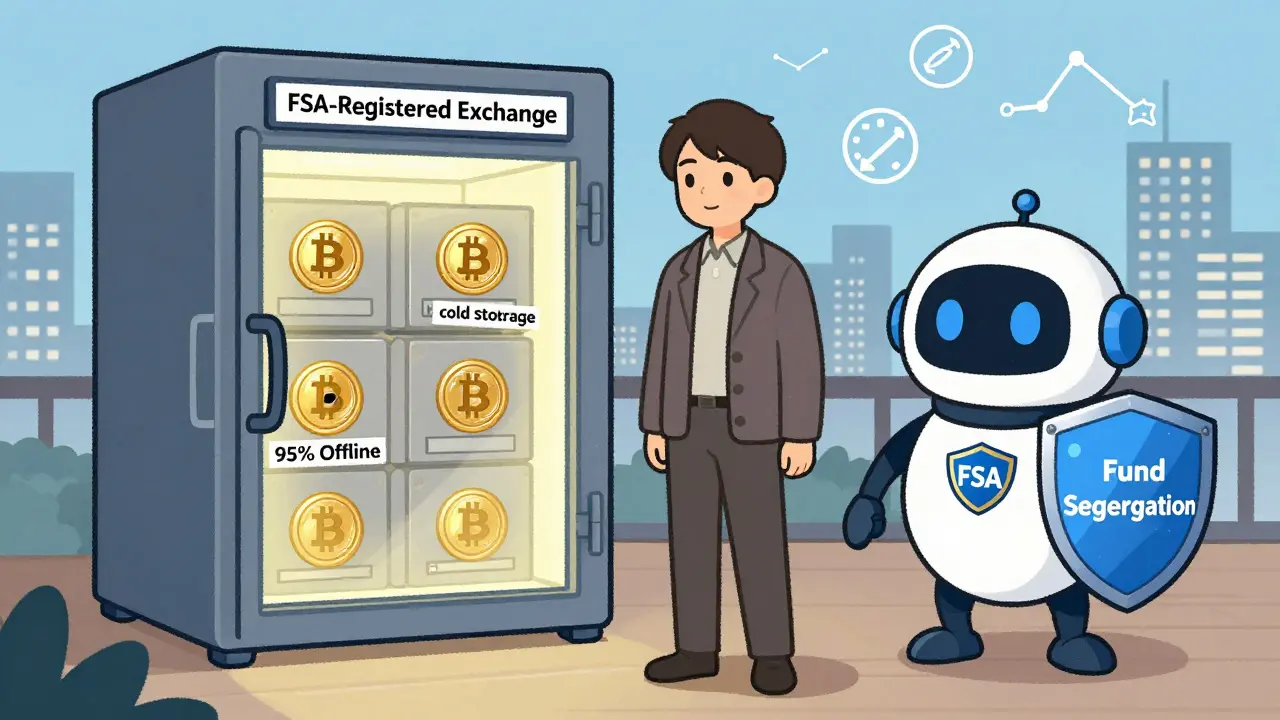
All crypto exchanges operating legally in Japan must register with the Financial Services Agency (FSA). This isn’t just a formality-it’s a full audit of their operations. To get registered, an exchange must prove it can handle your money securely. That means keeping your funds completely separate from their own business money. This is called fund segregation. If the exchange goes bankrupt, your crypto and yen deposits can’t be touched by creditors. They’re locked away in trust, legally yours. But there’s more. By law, registered exchanges must store at least 95% of user assets in cold wallets. These are offline storage systems, disconnected from the internet. Hackers can’t reach them. Even if a hacker breaks into an exchange’s online systems, they won’t find your coins. The remaining 5% is kept online for day-to-day withdrawals, but that’s a tiny slice of the total. This rule alone has stopped dozens of potential thefts since it was introduced.What Happens When an Exchange Fails?
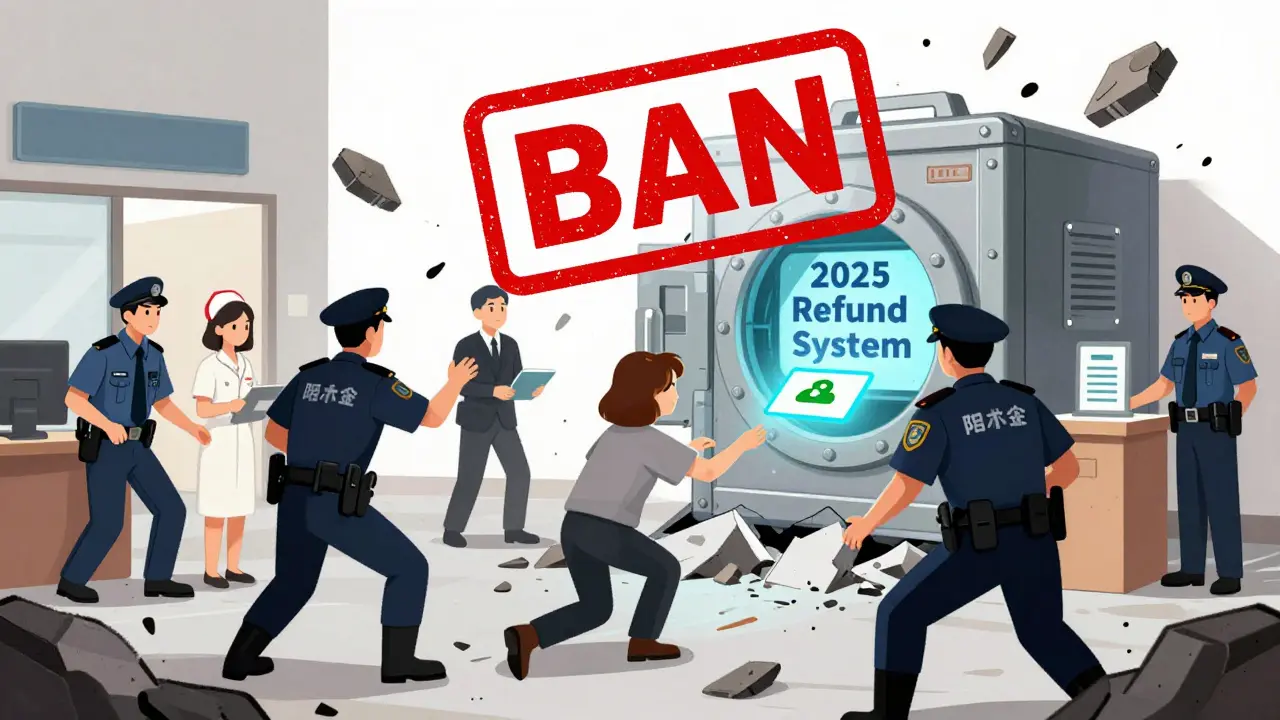
Before 2025, if an exchange collapsed, users had to wait months-even over 170 days-to get their money back. The government had to step in, file paperwork, and go through legal channels. It was slow, confusing, and stressful. The 2025 amendment changed all that. Now, if an exchange shuts down, banks and trust companies that hold user funds can refund money directly. No waiting for government approval. No red tape. You get your cash back faster, often within weeks. This is a huge win for everyday users. It means your savings aren’t trapped in legal limbo. The FSA can also order exchanges to freeze or retain assets inside Japan if they’re at risk of moving money overseas. This stops bad actors from fleeing the country with user funds. It’s a powerful tool that makes Japan’s system harder to exploit.Who’s Regulated? And What’s Not Covered?
Not every digital token is treated the same. Japan clearly separates two types of assets:- Crypto-assets: These are things like Bitcoin, Ethereum, Solana. They’re not backed by any bank or government. These fall under the Payment Services Act and are strictly regulated.
- Currency-denominated assets: These include prepaid cards, e-money, or digital coins tied 1:1 to yen or dollars. These are treated like regular payment tools, not crypto, and are regulated differently.
- Issuers must disclose detailed financial info
- Insider trading is illegal
- Brokers must follow strict conduct rules
- Regulators can issue emergency orders to freeze trading
What About Credit Cards That Spend Crypto?
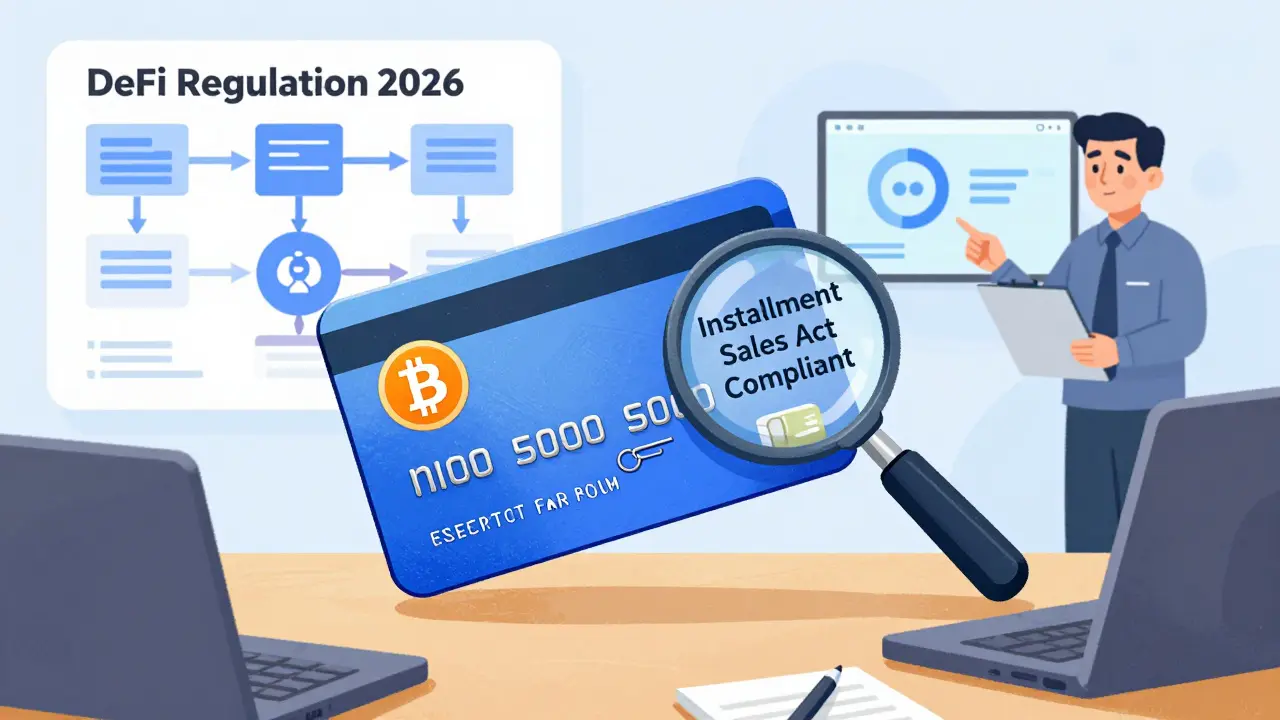
Some exchanges in Japan now offer crypto-linked credit cards. These let you spend Bitcoin or Ethereum like cash. But if the card lets you pay in installments, use revolving credit, or make bonus payments, it’s no longer just a payment tool-it’s a credit product. Under the Installment Sales Act, companies offering these cards must register as credit intermediaries. That means they have to:- Clearly explain interest rates
- Disclose fees and repayment terms
- Verify your income and ability to repay
Penalties for Breaking the Rules
Running an unregistered crypto exchange in Japan is a crime. Since June 2025, the punishment isn’t jail time anymore-it’s confinement punishment (koukin-kei), a new legal term under Japan’s 2022 Penal Code reforms. It means forced labor in a detention facility, not prison. But the consequences are still severe:- Up to 3 years of confinement
- Fines up to 3 million yen (~$20,000 USD)
- Permanent ban from financial services
Who Uses Crypto in Japan?
About 12 million people in Japan hold crypto. Most aren’t Wall Street traders. They’re teachers, small business owners, nurses-middle-income earners who see crypto as a long-term investment. Finance Minister Katsunobu Kato has said these users aren’t gamblers; they’re building diversified portfolios. That’s why Japan’s rules focus on transparency and safety, not banning crypto. The system assumes people want to invest, but they need protection from scams, hidden fees, and hacked exchanges. Every rule is designed to make crypto feel less like a wild gamble and more like a controlled financial tool.What’s Next? The Future of Crypto Protection in Japan
Japan isn’t done. The FSA is working on a new bill expected in early 2026 that will fully integrate crypto tokens under the FIEA. This means:- Full securities-style oversight for all investment tokens
- Real-time monitoring of trading platforms
- Clear rules for decentralized finance (DeFi) platforms
Why This Matters to You
If you’re using crypto in Japan, you’re protected like never before. Your money is segregated. Your assets are cold-stored. Your exchange is monitored. If something goes wrong, you get your cash back fast. And if an exchange tries to cheat you, they face real consequences. This isn’t perfect. No system is. But Japan’s approach shows that crypto doesn’t have to be a lawless frontier. With clear rules, strong enforcement, and smart updates, it can be a safe place to invest.Are all crypto exchanges in Japan safe?
Only FSA-registered exchanges are legal and protected under Japan’s rules. Unregistered platforms are illegal and carry high risk. Always check the FSA’s official list of licensed exchanges before depositing funds. You can find this list on the FSA’s website under "Registered Crypto-Asset Exchange Service Providers."
Can I lose my crypto if the exchange gets hacked?
If the exchange is registered with the FSA, your assets are extremely unlikely to be lost in a hack. At least 95% of user funds are stored in offline cold wallets, which are immune to online attacks. Even if hackers breach the exchange’s hot wallets, they’ll only get the small 5% kept online for daily transactions. The rest of your money remains untouched.
What if my exchange shuts down? Will I get my money back?
Yes. Since the 2025 amendment, banks and trust companies that hold your funds can refund you directly without waiting for government approval. This process takes weeks, not months. You’ll receive your yen or crypto back through the same method you used to deposit-usually bank transfer or wallet address. The FSA ensures this system works smoothly.
Are stablecoins protected in Japan?
Stablecoins that are 1:1 backed by yen or USD and issued by registered entities are treated as currency-denominated assets, not crypto-assets. They’re regulated under payment laws and have strong consumer protections. However, algorithmic or unbacked stablecoins are not permitted. Only those with clear reserves and audits are allowed to operate.
Can I invest in crypto ETFs in Japan yet?
Spot Bitcoin ETFs are expected to launch in late 2026 after the FIEA integration is finalized. Until then, only futures-based crypto ETFs are available. The FSA has approved several applications and is working with major asset managers to roll out compliant products. These will be available through licensed brokers, not random platforms.
Japan thinks it’s the FBI of crypto? LOL. They’re just scared of decentralized tech because it can’t be controlled. Cold wallets? Sure. But what about the FSA’s backdoor access to every exchange? You think they’re not logging every transaction? This isn’t protection-it’s surveillance with a smiley face. And don’t get me started on how they’re forcing all tokens into securities law. That’s not regulation. That’s corporate capture.
They shut down 12 platforms? Cool. But how many were foreign-owned? Bet half of them were Korean or Chinese. Real crypto freedom doesn’t need government permission slips. Japan’s system is a velvet cage. And we’re supposed to clap?
Oh, and ‘confinement punishment’? That’s just prison with a new name. They’re not protecting users-they’re protecting banks. Crypto’s supposed to be the antidote to this crap. But here we are, letting bureaucrats rewrite the rules so Wall Street can play nice with Bitcoin. Pathetic.
Oh wow. Japan’s sooo safe. Let me grab my tiny umbrella while I walk through this perfectly regulated crypto wonderland.
95% cold storage? Cute. Until the exchange’s CEO ‘accidentally’ transfers the other 5% to a vanity wallet and vanishes to Bali. And who’s auditing the auditors? The same FSA that gave licenses to 3 exchanges that later got hacked? Yeah, right.
And ‘confinement punishment’? That’s not justice-that’s a PR stunt. They’re just trying to look tough while quietly letting big players slip through. I’d rather trust a DAO than this performative bureaucracy. At least DAOs don’t wear suits and call themselves ‘protective.’
Japan’s framework is actually one of the most thoughtful approaches to crypto regulation I’ve seen. Fund segregation isn’t just a buzzword-it’s a legal firewall that’s been tested in court. Cold storage mandates? Yes, they’re rigid, but they’ve prevented real losses. The 2025 amendment allowing direct refunds through trust companies? That’s a game-changer. No more waiting 170 days like in 2021.
And the FIEA reclassification? Brilliant. If a token behaves like a security, it should be regulated like one. That’s not stifling innovation-it’s bringing order. DeFi Study Group? They’re not just talking-they’re building sandbox environments with real code, real users, real risk. That’s how you innovate responsibly.
Most people think regulation = death to crypto. But Japan proves the opposite: clear rules attract institutional capital, which then lowers entry barriers for average users. The credit card rules? Perfect. No more ‘buy crypto on credit like it’s a Netflix subscription.’ That’s consumer protection done right.
It’s not perfect, but it’s the most coherent system I’ve seen. Other countries are still arguing about whether crypto is a currency or a commodity. Japan’s already building the infrastructure for the next decade.
Japan? LOL. All this ‘protection’ and still, 12 million people use crypto? That’s less than 10% of the population. If it’s so safe, why aren’t they all in? Because deep down, even Japanese people know this is just a fancy shell game.
They say ‘cold wallets’ but what about the 5% online? That’s all a hacker needs. And ‘trust companies’? Who trusts them? They’re just banks with a new coat of paint.
And ‘confinement punishment’? Sounds like a prison with yoga mats. What’s next? Mandatory crypto seminars before you can buy Dogecoin? This isn’t protection. It’s control dressed up like a TED Talk.
Interesting how Japan treats crypto like a financial product instead of a revolution. Makes sense if you want mainstream adoption.
Japan’s approach reflects a deep cultural value: responsibility over chaos. The emphasis on segregation, transparency, and accountability isn’t about restricting freedom-it’s about ensuring that freedom doesn’t come at the cost of someone else’s livelihood. In a world where ‘move fast and break things’ has broken so many, Japan’s model offers a different path: build slowly, build right.
This isn’t anti-innovation. It’s pro-sustainability. And for everyday users who aren’t trying to gamble their life savings on a meme coin, that’s not just smart-it’s essential.
So Japan’s got rules? Cool. But did they fix the fact that you still can’t withdraw your crypto to a non-registered wallet without jumping through 12 hoops? And why is the FSA’s list of approved exchanges so small? Like 7 total? That’s not protection-that’s a cartel. And ‘confinement punishment’? Sounds like a bad anime plot.
Also, why are they letting stablecoins in but banning everything else? Sounds like they’re just trying to protect the yen. Not the user. Just the currency. Classic.
Japan’s system is like a luxury hotel with armed guards and a no-smoking policy. Everything’s clean, quiet, and perfectly arranged.
But you can’t bring your own wine. You can’t play loud music. You can’t even leave your room without filling out a form in triplicate.
Is it safe? Yes. Is it free? Not really.
Maybe crypto doesn’t need to be a wild west. But maybe it shouldn’t be a corporate boardroom either. The real question isn’t whether Japan’s rules are effective-it’s whether we want our digital money to be as sanitized as a Tokyo subway.
OMG I’m so emotional right now. Japan is literally saving crypto from itself. I cried when I read about the 95% cold storage rule. That’s not policy-that’s poetry.
And the fact that they’re regulating DeFi? With a STUDY GROUP? AHHH. I’m so proud. Someone’s finally doing it right. No more rug pulls. No more anonymous devs. Just clean, clear, beautiful rules.
I wish every country had this level of care. I’m telling my friends. I’m posting this on my Insta. This is the future. This is hope.
Also, I just bought 0.03 BTC. It’s my first investment. And I feel SAFE. For the first time ever. Thank you, Japan. You’re my hero.
Japan’s model is interesting because it doesn’t try to ban crypto or force it into old banking boxes. Instead, it recognizes that crypto is different-and then builds rules that fit its unique risks. Fund segregation, cold storage, direct refunds-these aren’t arbitrary. They’re responses to real failures elsewhere.
And the FIEA reclassification? That’s the smartest part. If a token acts like a stock, treat it like one. That’s not overreach-it’s consistency. It prevents the ‘this isn’t a security’ loophole that’s been exploited for years.
The real win? They’re not trying to stop innovation. They’re trying to make innovation sustainable. That’s rare. Most regulators either ignore crypto or crush it. Japan’s doing the hard work of integration.
There’s a quiet beauty in how Japan handles this. It’s not flashy. No Elon tweets. No memes. Just steady, methodical work.
Think about it: they didn’t say ‘crypto is bad.’ They didn’t say ‘crypto is the future.’ They just said: ‘Here’s how money moves. Here’s how risk is managed. Here’s how we protect the person who just wants to save for their kid’s education.’
That’s not regulation. That’s respect.
And the fact that they’re working with universities on DeFi? That’s how you build the future-not by banning it, but by studying it. Slow. Smart. Patient.
Maybe the answer isn’t chaos. Maybe it’s calm.
Yesss!! I just moved all my crypto to a Japanese exchange after reading this. Finally, someone gets it!!
95% cold storage? YES. Direct refunds? YES. No more sketchy platforms? YES.
I used to be scared to even hold BTC, but now I feel like I can breathe. Thank you Japan!! You’re the OG crypto parents. I’m telling all my friends!!
P.S. I just bought 0.002 ETH. It’s my first real investment. I’m so proud of myself 😊
Japan’s system isn’t perfect, but it’s the closest thing to a ‘crypto safety net’ I’ve seen. Cold storage + segregation + fast refunds = real peace of mind.
And the fact that they’re regulating DeFi instead of ignoring it? Huge. Most countries are still stuck in 2017. Japan’s already planning for 2030.
Also, the credit card rules? Genius. No more ‘buy Bitcoin on a 24% APR card’ like some TikTok trend. This is adulting with purpose.
One thing I love about Japan’s framework is how it bridges traditional finance and crypto without forcing one to replace the other. Fund segregation isn’t just a technical requirement-it’s a philosophical stance: user funds are sacred. That’s rare.
And the FIEA reclassification? It’s not about killing innovation. It’s about ensuring that when you’re selling a token with yield, you’re not hiding behind a whitepaper. That’s accountability. That’s maturity.
Even the confinement punishment-it’s symbolic, yes, but it sends a message: this isn’t a game. Real people lose real money. And we’re not letting that slide.
Japan’s regulatory architecture is arguably the most sophisticated crypto framework globally. The integration of the Payment Services Act with the FIEA creates a dual-layered system that addresses both utility and security tokens-something the SEC still can’t get right.
The cold storage mandate, coupled with direct refund mechanisms via trust companies, represents a structural innovation in asset custody. It eliminates the counterparty risk inherent in centralized exchanges.
Furthermore, the FSA’s proactive engagement with academia on DeFi governance models suggests a commitment to evidence-based policy rather than reactive panic. This is regulatory excellence.
Japan’s system works because it focuses on outcomes, not ideology. Safe storage. Fast refunds. Clear rules. That’s all most people need.