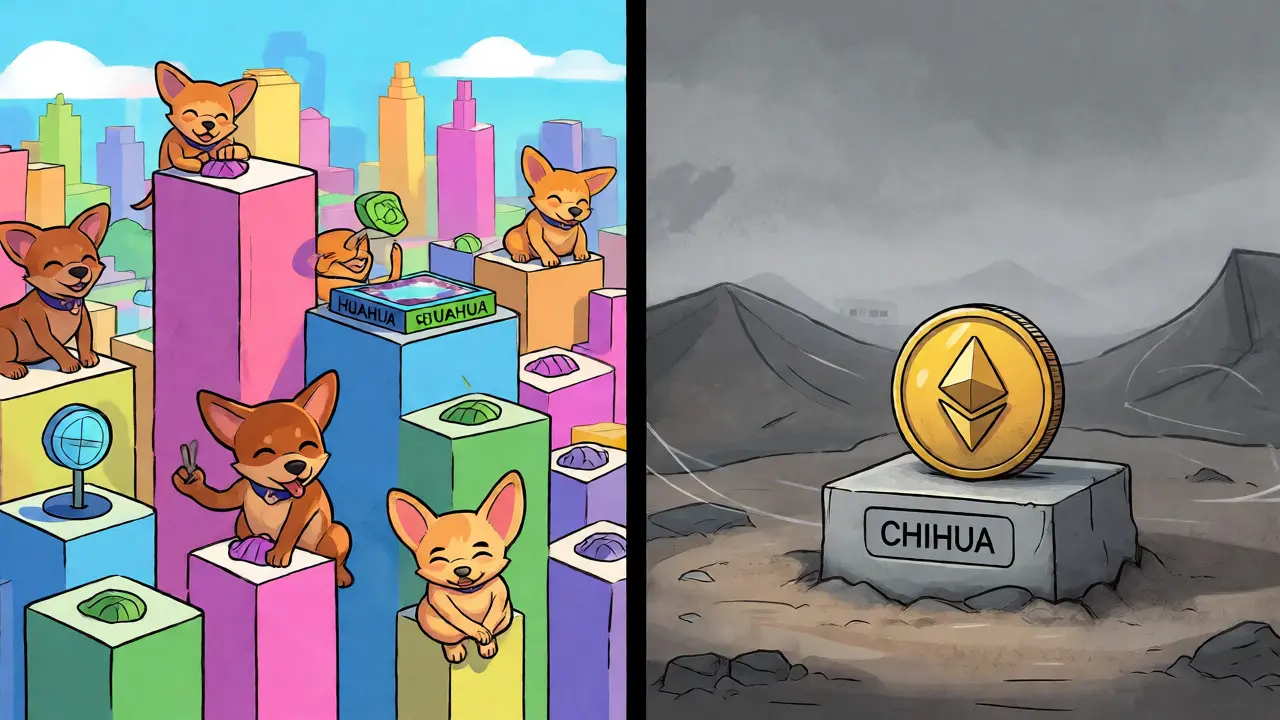
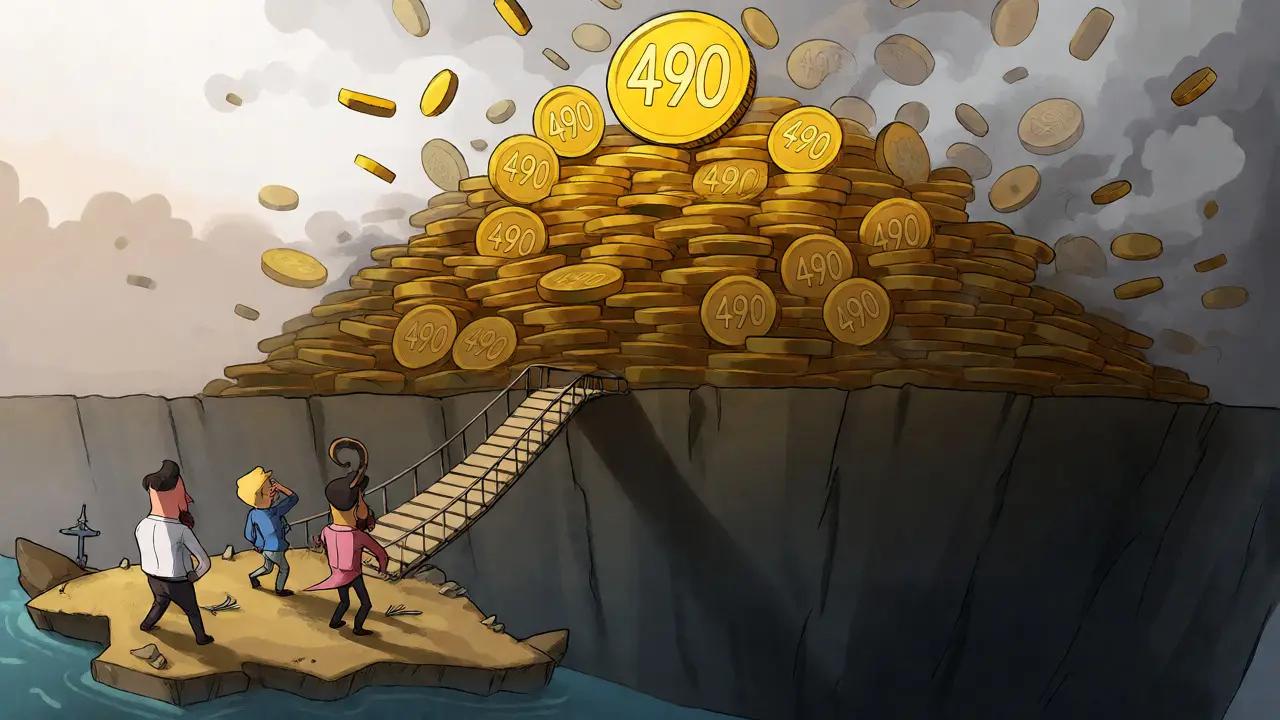
Ever seen a token with 490 trillion in maximum supply but zero circulating coins? That’s the current reality for the Chihua Token (CHIHUA). If you’re hunting for a quick payout from its rumored airdrop, hold your horses. The landscape here is messy, confusing, and riddled with red flags that could cost you more than just time.
Most people searching for "CHIHUA airdrop" are actually mixing up two very different projects. One is a legitimate, community-driven chain called Chihuahua (HUAHUA) that ran a major drop back in 2022. The other is this obscure Ethereum-based meme token claiming to be the "community answer" to Doge and Shiba Inu. As of late 2026, there is no verified, active distribution event for the latter. Let’s break down exactly what we know, what’s missing, and how to spot if you’re being led into a trap.
The Identity Crisis: HUAHUA vs. CHIHUA
This is the biggest hurdle. Search engines and social media feeds often blur these names together. To understand the airdrop situation, you have to separate them completely.
Chihuahua Chain (HUAHUA) is a Cosmos-based blockchain project launched in early 2022. It features a governance model and a community pool funded by 10 billion tokens. Its airdrop was real, executed via MEXC exchange, and distributed over 7 million tokens to users who staked MX tokens.
In contrast, Chihua Token (CHIHUA) is an Ethereum ERC-20 token. It markets itself as a fair-launch meme coin where founders bought alongside regular users on Uniswap. Unlike HUAHUA, CHIHUA lacks a dedicated blockchain infrastructure. It relies entirely on Ethereum’s network.
| Feature | Chihuahua (HUAHUA) | Chihua (CHIHUA) |
|---|---|---|
| Blockchain | Cosmos SDK | Ethereum (ERC-20) |
| Airdrop Status | Completed (Jan 2022) | Unverified / No Active Drop |
| Max Supply | Trillions (Inflationary) | 490 Trillion |
| Circulating Supply | Active Market Cap | Reported as Zero or Negligible |
| Main Utility | Governance & Community Pool | Meme Speculation |
Tokenomics: The "Rug Pull Proof" Claim
The developers of CHIHUA make a bold claim: they say the project is "100% rug pull proof." How do they justify this? By pointing to their unique token allocation strategy. Here’s the breakdown:
- 51% Burned: More than half the total supply was sent to a dead wallet immediately after launch.
- 48% Liquidity Burned: Tokens provided to Uniswap liquidity pools were also burned, meaning liquidity providers can’t withdraw the underlying assets easily.
- 1% Reserved: Only 1% of the supply remains for marketing and development.
On paper, this sounds safe. If the founders can’t dump their holdings because most tokens are burned, the price shouldn’t crash due to insider selling. But here’s the catch: burning tokens doesn’t create value. It only reduces supply. If demand is zero-which the trading volume suggests-then even a tiny amount of sell pressure can wipe out the price. Plus, with 490 trillion tokens, the math gets weird fast. You need massive capital inflows to move the needle even slightly.
Why Is There No Confirmed Airdrop?
If you’re looking for a link to connect your wallet and claim free CHIHUA, you won’t find one from an official source. Most "airdrop" listings for CHIHUA come from third-party aggregators that scrape data automatically. These platforms often list tokens before they are fully verified or traded.
As of October 2026, major trackers like CoinMarketCap show zero circulating supply and zero trading volume for CHIHUA. This usually means one of three things:
- The Project is Dead: The team abandoned the token after the initial launch hype faded.
- Data Lag: The token exists but trades so little that automated bots haven’t updated the stats correctly.
- Scam Setup: A fake airdrop site is collecting wallet connections or small ETH fees under the guise of distributing free tokens.
Without a verifiable contract address linked to a live trading pair with significant volume, any "airdrop" is speculative at best.
How to Verify Legitimacy Before Connecting Your Wallet
Don’t just click links in Telegram groups. Scammers love new meme coins. Use this checklist before you risk your funds or private keys.
- Check the Contract Address: Go to Etherscan.io and paste the contract address found on CoinMarketCap. Look for the number of holders. If it’s under 100, the project has virtually no community.
- Verify Trading Volume: Check DEX Screener or DexTools. If the 24-hour volume is less than $1,000, liquidity is dangerously low. You might buy in but never get out.
- Look for Official Socials: Does the project have an active Twitter/X account with real engagement? Or is it just bot comments? Real teams post updates; scams post generic hype.
- Beware of "Connect Wallet" Prompts: Legitimate airdrops rarely ask you to sign a transaction that moves your main ETH balance unless it’s a gas fee. Never share your seed phrase.
The Broader Context: Meme Coins in 2026
The crypto market has changed since the dog-coin craze of 2021. Today, investors are smarter. They look for utility, not just cute dogs. Projects like Pump.fun and Hyperliquid dominate the narrative because they offer clear mechanisms for discovery and reward.
For a token like CHIHUA to succeed now, it needs more than a burned supply. It needs a reason for people to hold it long-term. Currently, it appears to lack that hook. The confusion with the established Chihuahua chain further dilutes its brand identity. When users search for "Chihuahua," they find a functioning ecosystem. When they search for "Chihua," they find a ghost town.
Risk Assessment: Should You Participate?
If you’re determined to try CHIHUA, treat it as high-risk speculation, not an investment. Here’s the realistic outlook:
- High Risk of Loss: With near-zero volume, slippage will be terrible. Selling even a small amount could crash the price by 50%.
- No Vesting Clarity: Since there’s no confirmed airdrop, there’s no vesting schedule to protect you from sudden dumps.
- Opportunity Cost: Time spent researching CHIHUA could be better used investigating verified airdrops from Layer 2 networks or DePIN projects.
The smartest move? Wait for concrete evidence. If the team announces a partnership, lists on a centralized exchange like Binance or Coinbase, or shows sustained trading volume above $50k daily, then reconsider. Until then, keep your wallet disconnected.
Is the CHIHUA airdrop currently active?
No, there is no widely recognized, officially verified active airdrop for the CHIHUA token as of late 2026. Most claims stem from outdated data or confusion with the Chihuahua (HUAHUA) project.
What is the difference between CHIHUA and HUAHUA?
HUAHUA is the native token of the Chihuahua Chain, a Cosmos-based blockchain with completed airdrops and active governance. CHIHUA is an Ethereum-based meme token with minimal trading activity and no dedicated blockchain infrastructure.
Why does CHIHUA have 490 trillion max supply?
This large supply is typical for meme coins aiming for low unit prices (e.g., $0.000001). However, without proportional demand, such a high supply makes price appreciation difficult and indicates potential inflationary pressure if not managed by burns.
Is CHIHUA a scam?
It may not be a malicious scam, but it shows signs of abandonment or poor execution. The zero circulating supply and lack of volume suggest it is either inactive or extremely illiquid. Always verify contract addresses on Etherscan before interacting.
Where can I trade CHIHUA tokens?
If available, it would likely trade on decentralized exchanges like Uniswap. However, due to low liquidity, trading may be impractical or result in significant price impact. Centralized exchanges generally do not list it.