
When Catalyx launched as Canada’s homegrown crypto exchange, it looked like the real deal. Fast trading, clean interface, 40+ cryptocurrencies, and a flat 0.75% fee with no hidden spread. For a while, it even looked like it could challenge bigger names like Bitbuy or Coinsquare. But by January 2024, Catalyx was gone - bankrupt, frozen, and under investigation for fraud. This isn’t just another crypto exchange review. It’s a case study in how quickly trust can vanish when internal controls fail.
What Catalyx Offered (Before It Crashed)
Catalyx wasn’t trying to be a complicated platform. It wanted to be simple: one-click trades, real-time charts, and support for both fiat and crypto deposits. You could trade BTC, ETH, USDT, ADA, LTC, HBAR, and more. The backend ran on Elixir and Phoenix, with GraphQL handling communication between front and back end. That tech stack was chosen for speed and scalability - not for show, but because they needed to handle sudden spikes in volume. In early 2021, those choices paid off. Trading volume jumped 1,542% quarter-over-quarter. In March 2021 alone, trades hit C$28.44 million - up 91% from February. Deposits surged from C$3.4 million to over C$9.1 million in one month. Revenue climbed 76% to C$275,540. The referral program was a big driver: users earned up to 20% of their friend’s trading fees, with no cap. That kept growth going. The interface had a learning curve. New users found it cluttered at first. But once you got past the charts and order book, placing a trade was straightforward. Advanced traders had access to limit orders, stop-losses, and real-time depth data. It wasn’t as polished as Binance, but for a Canadian exchange, it was competitive. Registration required ID, a selfie video, and employment details. No one could sign up under 18. It was compliant with FINTRAC, Canada’s financial intelligence unit. That gave users a false sense of security. Compliance doesn’t mean safety - it just means you filled out the paperwork.The Hidden Rot: How the Fraud Started
Behind the scenes, things were falling apart long before the public noticed. In 2019, CFO Jae Ho Lee began siphoning client funds. Over $14 million in crypto assets disappeared - withdrawn without authorization, moved to private wallets, and never accounted for. The Alberta Securities Commission (ASC) later alleged Lee did this over months, even years. He wasn’t acting alone - the company’s internal controls were nonexistent. There were no audits, no dual approvals, no separation of duties. One person had access to everything: wallets, bank accounts, admin panels. CEO Hyuk Jae Park claims he didn’t know until November 24, 2023. By then, Lee had already stopped responding to emails. Park tried to access the company’s wallets and bank accounts. No response. On December 14, 2023, legal counsel sent a formal demand. Still nothing. Two weeks later, on December 28, Catalyx shut down. No warning. No notice. Just silence. The ASC says Park knew about the fraud by late November but didn’t report it until December 21. That delay was a breach of their written undertaking with regulators. It wasn’t just negligence - it was a violation of legal obligations. And when the platform froze, users couldn’t log in. Their funds were locked in wallets controlled by a man who had vanished.Why Catalyx Failed - And Why It Matters
Catalyx didn’t fail because of market conditions. It didn’t collapse because of a hack or a liquidity crunch. It failed because of human greed and poor governance. Most crypto exchanges fail for technical reasons: they can’t scale, they get hacked, or they lose money on trading. Catalyx failed because someone stole from clients - and no one stopped them. This case exposes a dangerous gap in Canada’s crypto regulatory system. Exchanges were allowed to operate under pre-registration undertakings while waiting for formal approval. That meant they could handle millions in client funds without full oversight. Catalyx was one of them. The ASC didn’t have the power to audit daily transactions. They relied on self-reporting. And when self-reporting is broken, the system breaks. For users, this was a nightmare. People deposited CAD, bought crypto, and watched it vanish. Some had life savings in Catalyx wallets. Others were day traders who trusted the platform because it looked legit. There was no insurance. No FDIC. No protection. Just a company that promised security and delivered nothing.
What You Should Learn From Catalyx
If you’re thinking about using any crypto exchange - especially a smaller one - here’s what you need to know:- Check regulatory status: Is the exchange registered with FINTRAC, SEC, or another official body? Catalyx was FINTRAC-registered - but that didn’t protect users. Look for full licensing, not just pre-registration.
- Ask about custody: Who holds the keys to your crypto? If the exchange controls your private keys, you’re at risk. Some platforms use cold storage and third-party custody. Catalyx didn’t disclose details.
- Watch for red flags: If a platform grows too fast, offers unusually high referral rewards, or doesn’t publish clear financial reports - be cautious. Catalyx’s 1,542% growth in one quarter was a warning sign.
- Don’t keep large sums on exchanges: Use cold wallets for long-term holding. Exchanges are for trading, not storage. Even the biggest ones get hacked or mismanaged.
- Know the leadership: Who’s running the company? A quick Google search for the CEO or CFO can reveal past legal issues or deleted social media profiles. Jae Ho Lee’s name was buried in filings - until it wasn’t.
The Aftermath: Where Are the Funds?
As of January 2026, Catalyx remains in receivership. A court-appointed trustee is trying to recover assets. So far, only a fraction of the stolen crypto has been traced. Some wallets were moved to mixers. Others were sold on decentralized exchanges. Recovery is slow, expensive, and uncertain. A hearing is scheduled for September 2025 in Calgary. The ASC is seeking penalties, fines, and possibly criminal charges against Park and Lee. But even if they’re convicted, the money is likely gone. Users are left with nothing but a bitter lesson: centralized exchanges are not banks. They’re tech companies with access to your money. If they’re poorly run - or worse, dishonest - your funds vanish with them.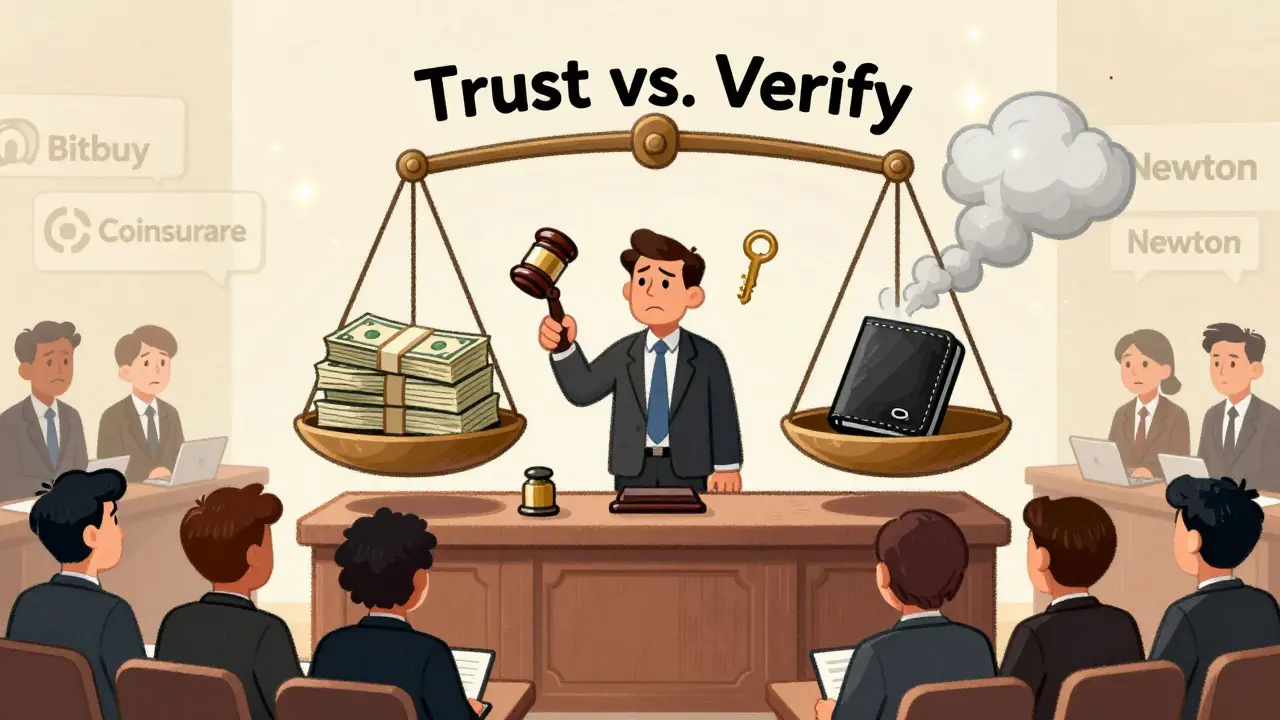
Alternatives to Catalyx in Canada
If you’re looking for a safe, regulated exchange in Canada today, consider these:- Bitbuy: Fully licensed by FINTRAC, offers CAD deposits, and uses cold storage for 95% of client assets.
- Coinsquare: Operates under strict Canadian compliance rules. Has insurance for digital assets held on the platform.
- Newton: Simple interface, no trading fees on basic swaps, and transparent about custody practices.
Final Thoughts: Trust, But Verify
Catalyx wasn’t a scam from day one. It started as a legitimate attempt to build a Canadian crypto platform. But without proper oversight, accountability, and transparency, even good intentions turn toxic. The lesson isn’t that crypto is dangerous. The lesson is that centralized control without checks equals risk. If you’re using any exchange that doesn’t let you control your keys, you’re trusting someone else with your money. And history shows that trust, without verification, is the most expensive mistake you can make. Don’t look for the biggest exchange. Look for the most transparent one. The one that answers your questions. The one that doesn’t grow too fast. The one that doesn’t let one person have too much power. Catalyx is gone. But the risks it exposed? They’re still out there.Is Catalyx crypto exchange still operating?
No, Catalyx ceased operations on December 28, 2023, and was placed into receivership in January 2024. The platform is no longer accessible, and users cannot withdraw funds. A court-appointed trustee is attempting to recover lost assets, but recovery remains uncertain as of early 2026.
What happened to the money users deposited on Catalyx?
Over $14 million in client crypto assets were allegedly stolen by former CFO Jae Ho Lee. The funds were moved to private wallets, mixed through privacy tools, or sold on decentralized exchanges. As of early 2026, only a small portion has been traced. Most users have not recovered any of their deposits.
Was Catalyx regulated by Canadian authorities?
Yes, Catalyx was registered with FINTRAC and operated under a pre-registration undertaking with the Alberta Securities Commission (ASC). However, this status only allowed it to operate while its full registration was pending. It did not have full licensing, and regulators had limited oversight. The ASC later accused the company of failing to meet its legal obligations regarding client asset protection.
Did Catalyx have insurance for user funds?
No, Catalyx did not offer insurance for user deposits. Unlike some Canadian exchanges like Coinsquare or Bitbuy, Catalyx did not disclose any third-party insurance coverage. This left users completely exposed when the fraud occurred.
What were Catalyx’s trading fees?
Catalyx charged a flat 0.75% trading fee on all transactions, with no spread. This made fees predictable and transparent compared to other exchanges that hid costs in price spreads. However, this low fee structure did not compensate for the lack of security or regulatory safeguards.
Could users withdraw funds before the shutdown?
Yes, users could withdraw funds until mid-December 2023. After that, the platform stopped processing withdrawals. By December 28, 2023, all trading and withdrawal functions were disabled. Many users tried to withdraw large amounts in the days before the shutdown, but some withdrawals were delayed or blocked due to suspicious activity flags - a common practice before collapse.
Are there any legal actions against Catalyx’s founders?
Yes, the Alberta Securities Commission (ASC) issued a Notice of Hearing in July 2025 against CatalX CTS Ltd., CEO Hyuk Jae Park, and former CFO Jae Ho Lee. The ASC alleges Lee committed fraud by misappropriating over $14 million in client assets, and that Park failed to report the breach in a timely manner. A hearing is scheduled for September 2025 in Calgary.
How can I avoid a Catalyx-style collapse with my crypto?
Use exchanges with full licensing, transparent custody practices, and insurance for client funds. Never keep more crypto on an exchange than you’re willing to lose. Use hardware wallets for long-term storage. Research leadership teams - look for public track records and past legal issues. Avoid platforms with unusually high referral bonuses or rapid growth without clear revenue models.
This is exactly why I only use exchanges with cold storage and insurance. Catalyx looked slick, but no one asked who held the keys. Big red flag right there. I lost my first crypto stack to a similar setup years ago. Never again.
The 0.75% fee was misleading. It wasn't low-it was predatory because it masked the lack of liquidity and internal safeguards. Anyone who traded more than $5k on Catalyx was either naive or complicit. The tech stack doesn't matter if the CFO is laundering crypto through Monero mixers.
If you're using any exchange that doesn't let you control your keys, you're not holding crypto-you're holding IOUs. Catalyx didn't fail because of market conditions. It failed because it was a Ponzi dressed in Elixir code. Use Coinbase or Kraken if you want to sleep at night.
Bro just don't keep money on exchanges period. I keep 95% in a Ledger. Only keep what I'm trading. Catalyx was a trap wrapped in a clean UI. Everyone got fooled by the charts and the referral bonuses. Real talk: if it sounds too good to be true, it is.
This is why I say Canada’s crypto scene is a joke. FINTRAC registration means nothing. They let these fly-by-night ops run with millions while regulators sip coffee. The government knew. They just didn’t care until it blew up. And now they want us to trust 'licensed' exchanges? Lol.
Catalyx was doomed from day one. That 1542% QoQ growth? That’s not success-that’s a pump. Referral bonuses with no cap? That’s how you attract money launderers and bots. Anyone who invested more than $1k was asking for it.
I can’t believe people still think regulation = safety. FINTRAC isn’t a shield-it’s a stamp of paperwork. Catalyx had all the boxes checked, but zero accountability. I’m so glad I moved everything to a hardware wallet after the Terra collapse. You have to be your own bank.
Catalyx? Never heard of it. Probably some indie site with a fancy logo. All these crypto exchanges are scams anyway. Just use BTC and HODL. Why even touch an exchange?
I used Catalyx for a few months in 2022. The interface was clean, the trades were fast. I never thought about who held the keys. Now I keep everything in cold storage. I’m not mad, just embarrassed. Lesson learned the hard way.
This is why I tell everyone: don’t trust anyone with your crypto. Not even the ‘safe’ ones. I keep 90% offline. Only 10% on Bitbuy for quick trades. Catalyx didn’t fail because of fraud-it failed because people stopped asking questions.
The real lesson here isn’t about Catalyx-it’s about custody. If you don’t know where your private keys are, you don’t own your crypto. Even Bitbuy and Coinsquare have had minor issues. The only 100% safe option? Your own wallet. Paper or hardware. No exceptions.
I SAW THIS COMING. I posted about Catalyx in June 2022 saying their growth was unsustainable. People called me a hater. Look where we are now. The CEO knew. The CFO stole. The regulators slept. This is the system. It’s broken. And now we all pay.
To everyone still putting money on exchanges: you’re not investing-you’re gambling. Catalyx wasn’t the first, and it won’t be the last. But here’s the good news-you can fix this. Buy a Ledger. Learn how to self-custody. It’s not hard. And your future self will thank you.
I used to trade on Catalyx. I lost $8k. I cried for a week. But then I started learning. Now I use Newton for small trades and keep the rest in a Trezor. You don’t need fancy platforms. You just need to know what you’re doing. You got this.
I read this whole thing and felt so much better. I was scared to use any exchange after the FTX crash. But now I know what to look for: transparency, insurance, and leadership you can Google. I switched to Newton last month. No drama. Just simple swaps. I feel safe again.
The collapse of Catalyx underscores the critical necessity of institutional governance in decentralized financial ecosystems. While technological infrastructure may be robust, the absence of fiduciary accountability and internal audit mechanisms renders even the most sophisticated platforms vulnerable to moral hazard. This case exemplifies the perils of regulatory arbitrage in the absence of enforceable oversight.
Catalyx? More like Catastrophe. Anyone who trusted them had their head in the clouds. Real investors use cold wallets. Period. End of story. Stop looking for hand-holding exchanges. Be your own bank or get rekt.
I lost my mom’s life savings on Catalyx. She thought it was safe because it was Canadian. I don’t blame the company. I blame the system that let them operate without real oversight. If you’re reading this and you’re still on an exchange… please, just move it. Please.