
Have you ever checked your crypto wallet and wondered if you missed out on free money? If you were active in the Caduceus community around mid-2022, you might have. The project ran several high-profile airdrops across major platforms like MEXC and CoinMarketCap, distributing hundreds of thousands of CMP tokens. But here is the catch: many participants forgot to claim them, or didn't realize they qualified. This guide breaks down exactly how those events worked, who got paid, and what happened to the tokens after the dust settled.
What Was Caduceus and Why Did It Run Airdrops?
Caduceus is a decentralized metaverse protocol that uses edge rendering technology to speed up blockchain gaming experiences. Think of it as trying to fix the lag in online games by processing graphics closer to the player rather than on a distant server. To build its user base, the team needed more than just tech; they needed eyeballs. That is where the airdrops came in. Between July 2022 and early 2023, Caduceus launched campaigns totaling over 174,500 CMP tokens plus significant USDT rewards. They weren't just giving away change; they were buying attention in a crowded market.
The strategy was simple but effective. By partnering with big exchanges and data aggregators, they reached users who already cared about crypto. For example, the MEXC Exchange hosted a "Kickstarter" voting event where holding MX tokens let you vote for projects to list. Caduceus won this vote, triggering a 50,000 USDT airdrop pool. This wasn't random luck; it was a calculated move to ensure their token had liquidity and visibility from day one.
Breaking Down the Major Airdrop Campaigns
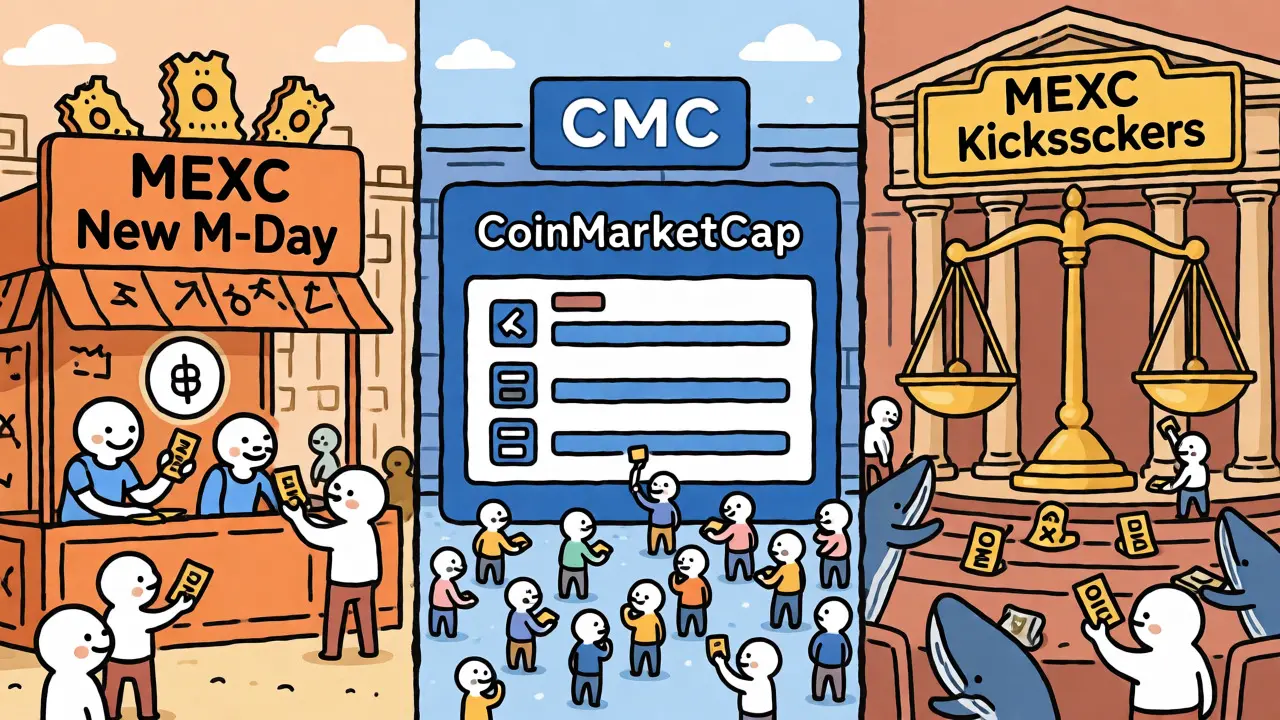
Not all airdrops are created equal. Caduceus used three distinct methods to distribute wealth, each targeting a different type of user. Understanding these helps you see why some people got rich while others got crumbs.
- MEXC New M-Day Event: This was a lottery-style distribution. The total prize pool was 62,000 CMP tokens. Instead of splitting it evenly, they created 950 winning tickets. Each ticket held 50 CMP. If you bought a ticket, you had a shot at a moderate payout. The remaining tokens went to other promotional activities.
- CoinMarketCap (CMC) Airdrop: This one was broader but shallower. CMC offered 62,500 CMP tokens to 12,500 winners. That means each winner received up to 5 CMP tokens. While 5 tokens sounds small, getting them directly into a verified CMC account added social proof and ease of access for casual investors.
- MEXC Kickstarter Voting: This was for the heavy hitters. Participants had to hold between 1,000 and 500,000 MX tokens. The reward pool was 50,000 USDT, distributed based on voting weight. This favored whales and long-term MEXC users, rewarding loyalty with stablecoin value rather than volatile native tokens.
| Platform | Total Reward Pool | Winners | Individual Max Reward | Requirement |
|---|---|---|---|---|
| MEXC New M-Day | 62,000 CMP | 950 | 50 CMP | Purchase Ticket |
| CoinMarketCap | 62,500 CMP | 12,500 | 5 CMP | Follow & Verify |
| MEXC Kickstarter | 50,000 USDT | Variable | Based on Weight | Hold MX Tokens |
The Tokenomics Behind the Freebies
You might wonder if these free tokens diluted the value of CMP. The short answer is yes, but not as much as you'd think. At the time of the main airdrops, Caduceus had a market cap hovering around $86,000. The total supply of CMP tokens was capped at 90 million. Core contributors unlocked 82.27 million tokens, which is 91.41% of the total supply. This high unlock rate meant that most tokens were already circulating. Adding another 125,000 CMP through airdrops increased circulation slightly but didn't crash the price because the trading volume was low anyway.
Most airdropped tokens had no lock-up period. You could sell them immediately upon receipt. This differs from investor rounds, where some funds faced a 3-month cliff followed by daily vesting over two years. For airdrop hunters, this instant liquidity was the main draw. You could claim, sell, and pocket the profit without waiting for a vesting schedule to mature.
How to Check If You Were Eligible
If you are reading this in late 2026, you are likely doing retroactive research or checking old wallets. Here is how to verify your status:
- Check Your Wallet History: Look for transactions involving the Caduceus contract address. If you see an incoming transaction labeled "Airdrop" or similar, you were included in a batch distribution.
- MEXC Account Activity: Log into your MEXC account. Go to the "Rewards" or "Campaigns" section. Even if you didn't win the lottery, you might have earned points or smaller rewards from the Kickstarter voting event.
- CoinMarketCap Profile: Visit your CMC profile. Past airdrops often leave a digital footprint in the "My Airdrops" section. If you claimed the CMP drop, it will show there.
Don't forget the YouTube tutorials. Many users followed video guides to participate. If you watched a tutorial by a prominent crypto influencer in 2022, you likely completed the necessary steps to qualify for the CMC drop.

What Happened to the Price After the Drop?
Airdrops create temporary hype, but they rarely sustain long-term growth alone. After the TGE in July 2022, CMP traded around $0.006225 USD. The 24-hour trading volume was modest at roughly $72,000. This indicates that while people claimed tokens, few held them long enough to drive significant price action. The token ranked #4383 on CoinMarketCap, placing it deep in the "small cap" territory.
For those who sold immediately, the gains were small but real. For those who held, the journey has been rocky. The low market cap suggests limited adoption compared to larger metaverse protocols like Decentraland or The Sandbox. However, the technical promise of decentralized edge rendering remains relevant for future gaming applications. Whether CMP recovers depends on whether Caduceus can deliver on its tech roadmap, not just on past airdrops.
Lessons for Future Airdrop Hunters
Caduceus serves as a case study in modern crypto marketing. Here is what you should take away:
- Volume Matters More Than Hype: An airdrop with 12,500 winners gets more chatter than one with 950 winners, even if the individual payouts are smaller.
- Liquidity is Key: Listing on MEXC ensured that airdropped tokens could be sold instantly. Projects that don't secure exchange listings before airdrops often see their tokens stuck in wallets.
- Check the Unlock Schedule: Always look at how many tokens core teams have unlocked. High unlocks can lead to selling pressure, dampening the post-airdrop pump.
If you missed the Caduceus waves, don't sweat it. The crypto space moves fast. Keep an eye on new metaverse protocols using similar engagement tactics. The next big airdrop is always around the corner, usually hiding in plain sight behind a simple "follow and retweet" task.
Did everyone who participated get CMP tokens?
No. Most Caduceus airdrops were either lottery-based or weighted by participation. The MEXC New M-Day event had only 950 winners out of potentially thousands of participants. The CoinMarketCap event had 12,500 winners, which was a higher success rate, but still not guaranteed for every applicant.
Can I still claim unclaimed Caduceus airdrops?
Generally, no. Airdrop claims typically expire within a set window, often 30 to 90 days after the announcement. Since the main events occurred in 2022, any unclaimed tokens have likely been returned to the treasury or burned. Check specific platform policies, but assume the window is closed.
What is the difference between CAD and CMP tokens?
CAD refers to the Caduceus Protocol token, while CMP stands for Caduceus Metaverse Protocol. In practice, they are closely related representations of the same ecosystem's utility. Some exchanges listed CAD, while airdrops focused heavily on CMP. Ensure you are tracking the correct ticker when checking historical prices.
Was the MEXC Kickstarter airdrop in USDT or CMP?
The MEXC Kickstarter voting campaign rewarded participants with 50,000 USDT. This was distinct from the CMP token distributions. Users voted using MX tokens, and successful voters shared the USDT pool based on their voting weight.
Why did Caduceus run so many airdrops?
Caduceus raised $4.17 million across ten funding rounds. A portion of this budget was allocated to marketing. Airdrops are a cost-effective way to acquire users and generate social media buzz without paying for traditional advertising. It also helped decentralize token ownership early on.