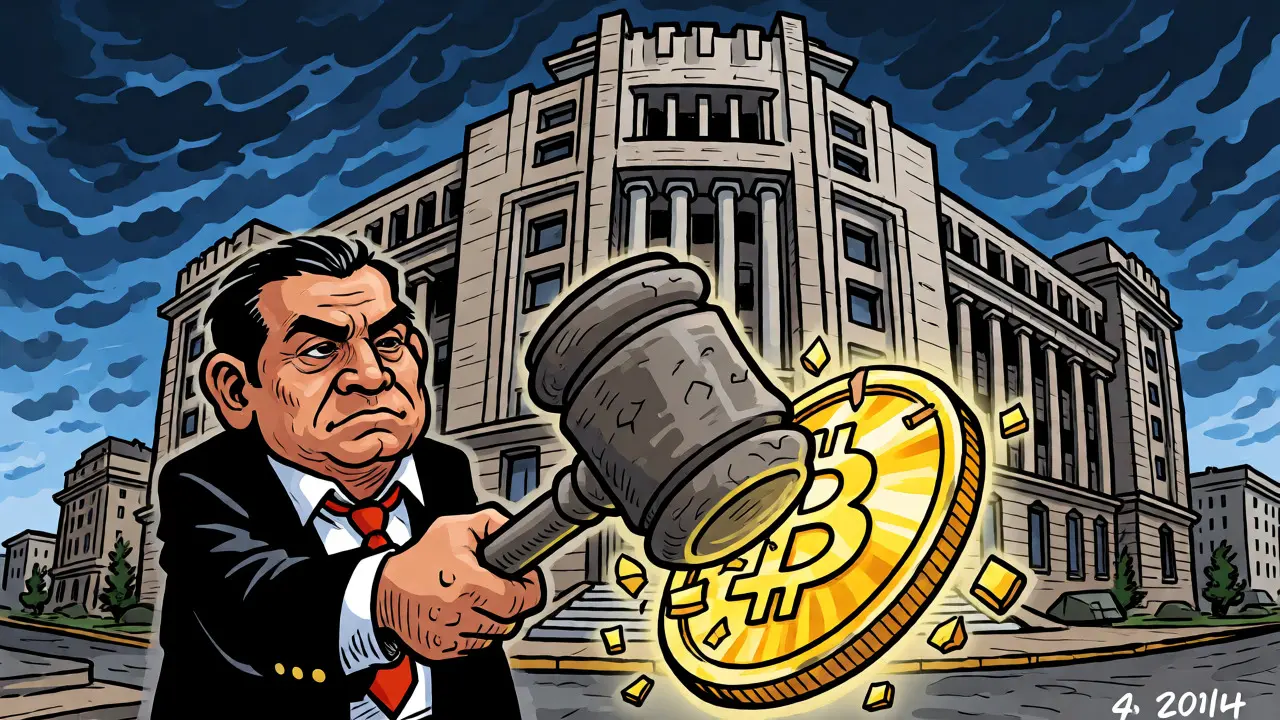
Most people assume China or maybe Vietnam were the first to slam the door on Bitcoin. But if you dig into the regulatory archives, you’ll find a different story. Back in May 2014, while most of the world was still figuring out what a blockchain even was, Bolivia’s central bank issued a blanket prohibition on all cryptocurrencies. It wasn’t just a warning label; it was a hard legal stop. This move by the Banco Central de Bolivia (BCB) made the South American nation the first country to formally declare digital currencies illegal.
Why does this matter now? Because for ten years, Bolivia stood as an outlier in global finance. While neighbors like El Salvador eventually embraced Bitcoin, Bolivia kept its borders closed to digital money until mid-2024. Understanding why they banned it, how they enforced it, and what happened when they finally lifted the ban offers a crucial lesson for any country considering strict monetary controls today.
The Resolution That Started It All
In May 2014, the BCB released Resolution No. 24-14-001. This document didn’t mince words. It stated that using any currency not issued or regulated by the government was illegal. This explicitly targeted Bitcoin, but also swept up other early altcoins like Namecoin, Peercoin, Quark, Primecoin, and Feathercoin. The logic was straightforward: only the boliviano is legal tender.
The central bank argued that uncontrolled currencies threatened financial stability. They worried that citizens might lose their savings in volatile markets that no one could regulate. At the time, Bitcoin traded around $650, and the total market cap was a tiny fraction of what it is today. Yet, the fear of losing control over national monetary policy drove the decision. Other countries had floated similar ideas, but Bolivia actually passed the law. Russia had draft laws that stalled, and Thailand issued non-binding warnings. Bolivia acted.
How the Ban Was Enforced
A ban is useless without teeth. Bolivia gave theirs plenty. Commercial banks were strictly prohibited from facilitating any transactions involving cryptocurrencies. If your bank caught wind of you buying Bitcoin with a wire transfer, that transaction could be flagged or blocked. Price denomination in digital assets was also forbidden. You couldn’t legally list a car or a house for sale in Bitcoin terms within the formal economy.
The Financial System Supervisory Authority (ASFI) took charge of enforcement. They mandated daily reporting of suspicious transactions exceeding 5,000 BOB (roughly $725 at the time). Banks had to implement monitoring systems to catch crypto-related activity. For smaller institutions, this was a nightmare. ASFI’s own 2017 assessment noted that smaller banks needed six to nine months just to get their compliance systems up to scratch. False positives were rampant. In a 2020 survey, 63% of banks reported struggling to distinguish legitimate international transfers from hidden crypto deals.
The Underground Market Thrives
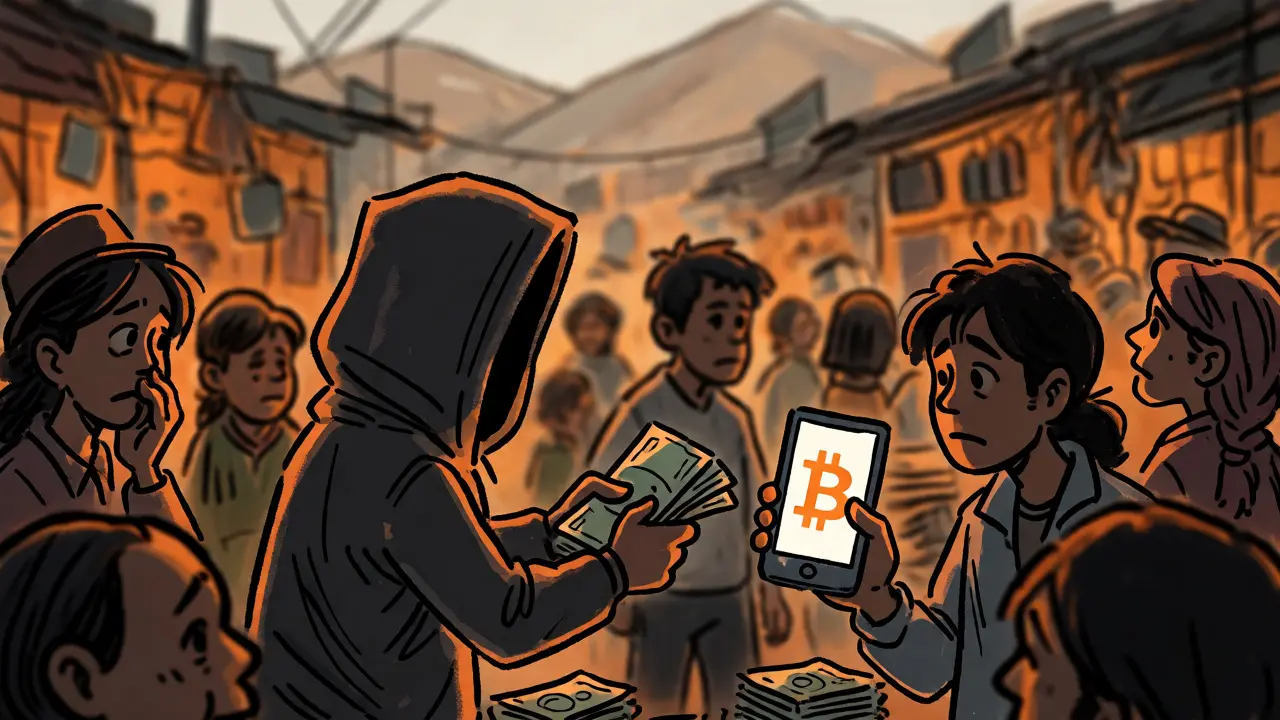
You can ban a technology, but you can’t easily ban human behavior. Despite the official zero-adoption stance, a robust underground market emerged. Reddit communities like r/CryptoBolivia became hubs for users sharing tips on how to buy and sell without getting flagged. Platforms like LocalBitcoins and Paxful saw significant activity from Bolivians. Users reported paying high fees-often 8-12%-to convert bolivianos into Bitcoin because of the scarcity of direct banking channels.
Why bother? Remittances. Traditional remittance fees in the region often hit 15-20%. Using stablecoins like USDT allowed families to send money across borders cheaper and faster. A 2021 survey by the Bolivian Digital Rights Observatory found that 68% of crypto users operated through informal channels. About 41% managed at least one successful transaction monthly. One user, u/CryptoLaPaz, summed it up well: “The ban doesn’t stop us, it just makes everything more expensive and risky.”
Risk was real. The Bolivian Financial Intelligence Unit recorded 147 fraud cases between 2018 and 2023, totaling about $2.3 million. But given the underreporting inherent in black markets, the actual number was likely higher. Without consumer protections, scams flourished. Yet, for many, the utility outweighed the danger.
Global Context: Why Bolivia Was Unique
To appreciate Bolivia’s position, look at the rest of the world in 2014. Japan introduced licensing for exchanges but didn’t ban usage. The United States treated crypto as property for tax purposes but allowed trading. China started tightening screws later, in 2017 and again in 2021. Bolivia’s approach was absolute prohibition. It remained the most restrictive jurisdiction in Latin America throughout the ban period. Only Algeria and Egypt maintained comparable prohibitions globally during those years.
| Country | Regulatory Status | Key Mechanism | Impact on Adoption |
|---|---|---|---|
| Bolivia | Total Ban | Resolution 24-14-001; Banking restrictions | High underground usage; Low formal adoption |
| China | Restrictive | Exchange bans (2017); Mining crackdowns | Shifted mining abroad; High retail interest |
| Japan | Regulated | Licensing regime for exchanges | High institutional participation |
| USA | Legal/Property | Tax classification; SEC oversight | High innovation and investment |
| El Salvador | Legal Tender | Chivo Wallet; State-backed adoption | Significant tourism and tech influx |
This isolation had economic costs. By 2023, Bolivia faced inflation rates exceeding 3.5%, according to World Bank data. Citizens lacked access to inflation-hedging instruments available elsewhere. Stablecoin usage in border regions grew by 34% annually between 2020 and 2023, driven by necessity rather than choice. The ban created a regulatory vacuum that informal networks filled, growing remittance corridors using crypto by 19% annually despite the law.
The Reversal and Current Landscape
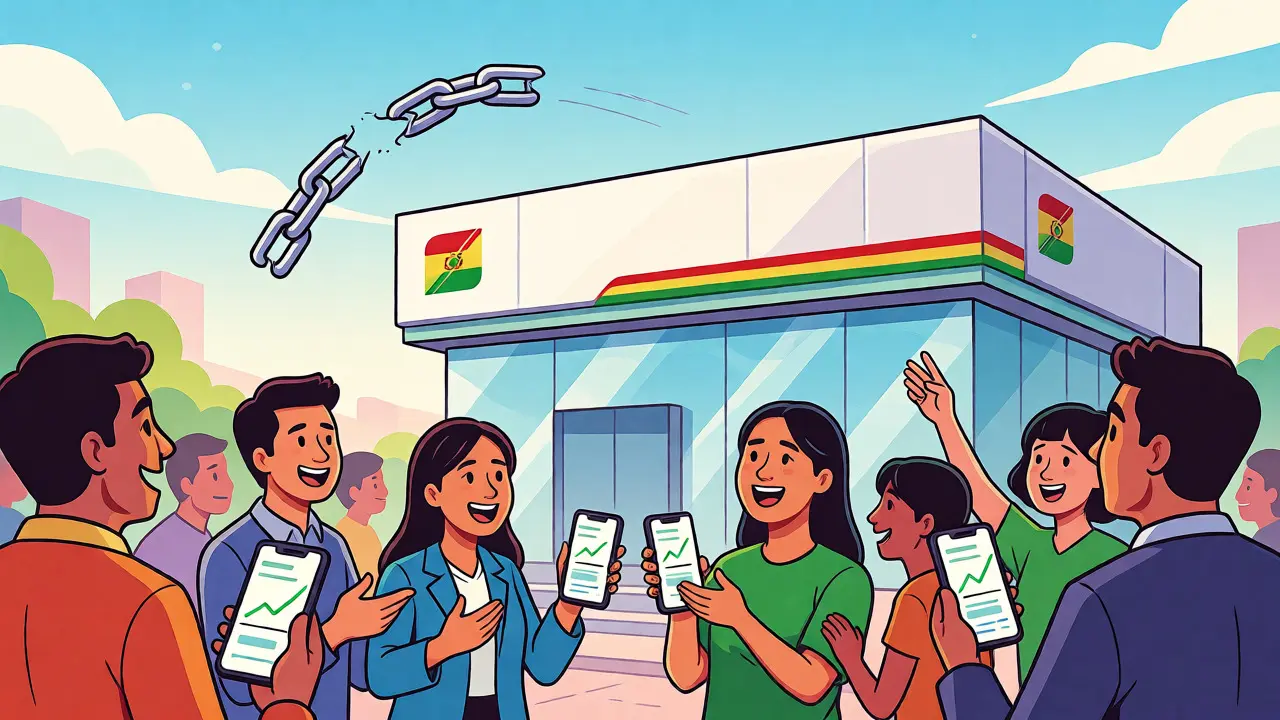
On June 26, 2024, the BCB officially lifted the ban. The shift was dramatic. Within months, transaction volumes exploded. Data shows crypto transactions jumped 630% from $46.5 million in early 2024 to $294 million in the first half of 2025. By May 2025, total value reached $430 million across over 10,000 transactions. Platforms like Meru wallet reported a 6,600% surge in Bolivian users.
The new framework isn’t a free-for-all. Virtual Asset Service Providers (VASPs) must register with ASFI. Strict anti-money laundering (AML) protocols are in place. Interestingly, Bolivia hasn’t adopted Bitcoin as legal tender like El Salvador. Instead, they allow trading but maintain a ban on using crypto for everyday payments. This hybrid model aims to protect the boliviano while allowing investment opportunities. The Ministry of Economy projects transaction volumes will hit $1.2 billion by 2026.
Current usage patterns show individuals dominate the market. A May 2025 report indicated 86% of transactions come from individuals, primarily using Binance and USDT. Business adoption lags behind, with only 3% of surveyed companies reporting any exposure. This suggests the demand is driven by personal wealth preservation and remittances, not corporate treasury management.
Lessons from a Decade of Prohibition
Bolivia’s experiment teaches us that blanket bans rarely eliminate demand. They simply drive it underground, increasing costs and risks for consumers. The IMF shifted from neutrality to criticism by 2020, noting that such bans often reduce regulatory oversight by pushing activity off-books. Dr. Rebecca Liao, a Stanford researcher, called it a protectionist measure that cut citizens off from global innovation.
Conversely, defenders like former BCB advisor Carlos Newland argued that emerging economies with volatile currencies need to guard their monetary sovereignty fiercely. Both sides have points. Bolivia’s recent reversal acknowledges that isolation came at a high price. Now, with measured regulations in place, the country is trying to balance innovation with stability. Whether this middle ground proves sustainable remains to be seen, but it marks a significant departure from the rigid dogma of 2014.
Was Bolivia really the first country to ban Bitcoin?
Yes, Bolivia is widely recognized as the first country to issue a formal, nationwide ban on Bitcoin and other cryptocurrencies. The Banco Central de Bolivia enacted this via Resolution No. 24-14-001 in May 2014, prohibiting the use of any currency not issued by the government.
When did Bolivia lift its cryptocurrency ban?
Bolivia officially lifted its ban on June 26, 2024. This ended a decade-long prohibition, allowing for regulated cryptocurrency trading and services, though using crypto for direct payments remains restricted.
Can I use Bitcoin to buy coffee in Bolivia today?
Generally, no. While trading and holding cryptocurrencies are now legal and regulated, the current framework maintains a ban on using digital assets as a method of payment for goods and services. The boliviano remains the sole legal tender.
What were the main reasons for the original ban?
The primary reasons were protecting monetary sovereignty and safeguarding consumers. The central bank feared that unregulated, volatile digital currencies could undermine the national currency (the boliviano) and lead to financial losses for citizens who didn't understand the risks.
Did the ban completely stop crypto use in Bolivia?
No. An active underground market persisted throughout the ban. Estimates suggest millions of Bolivians used peer-to-peer platforms like LocalBitcoins and Paxful. Chainalysis estimated that by 2023, around 1.2 million Bolivians engaged in crypto activity informally.
It is fascinating how a small nation in the Andes managed to outpace global superpowers in regulatory boldness. Bolivia’s early prohibition wasn't just about monetary control; it was a profound statement on sovereignty that rippled through Latin America for years. While neighbors like El Salvador embraced digital gold, Bolivia stood firm in its isolationist stance, creating a unique case study for economists and policymakers alike. The underground market that thrived despite the ban proves that human ingenuity often finds ways around rigid laws, especially when economic necessity drives behavior. This historical context adds depth to our understanding of crypto adoption curves worldwide.
Wait did they actually lift the ban?? 🤯 I thought it was still illegal! 😱 That's huge news honestly. 🚀
they probably lifted it because the black market was eating their lunch lol. govts always wait until they cant ignore the money flow anymore. sus behavior if you ask me 👀