
Elections have always been about trust. For centuries, we relied on paper ballots and human overseers to ensure that votes counted were votes cast. But what if the system itself could be unbreakable? Imagine a voting booth where your choice cannot be stolen, altered, or lost. Blockchain voting systems promise exactly that. By using a decentralized digital ledger to record every ballot, these platforms aim to solve age-old problems like fraud and voter suppression. We aren't talking about sci-fi here; pilots are already testing this in real communities.
If you have ever wondered how your vote stays secure or why recounting takes days, blockchain technology offers a different path. It turns the chaotic process of counting millions of slips of paper into a mathematical certainty. In this guide, we’ll break down how the technology actually works, who is using it, and whether it’s ready for the next big election cycle.
The Core Mechanics of Digital Ballots
To understand why this changes things, you need to look at the engine under the hood. Unlike traditional servers where a single admin controls the database, a blockchain spreads that data across many computers. When you cast a vote, it isn't just saved in one place; it is locked into a block of data that links to previous blocks. This structure creates a distributed ledger, which means the history of the vote cannot be rewritten by anyone, even the person running the election.
Here is how the flow typically happens:
- Registration: Your identity is verified through a unique digital token, often linked to government records but kept separate from your vote.
- Authentication: You access the platform using a private key, similar to logging into a secure email account.
- Voting: You select your candidate. This action generates a transaction.
- Recording: The transaction is hashed (scrambled) and added to the ledger.
- Tallying: Smart contracts automatically count the results once the window closes.
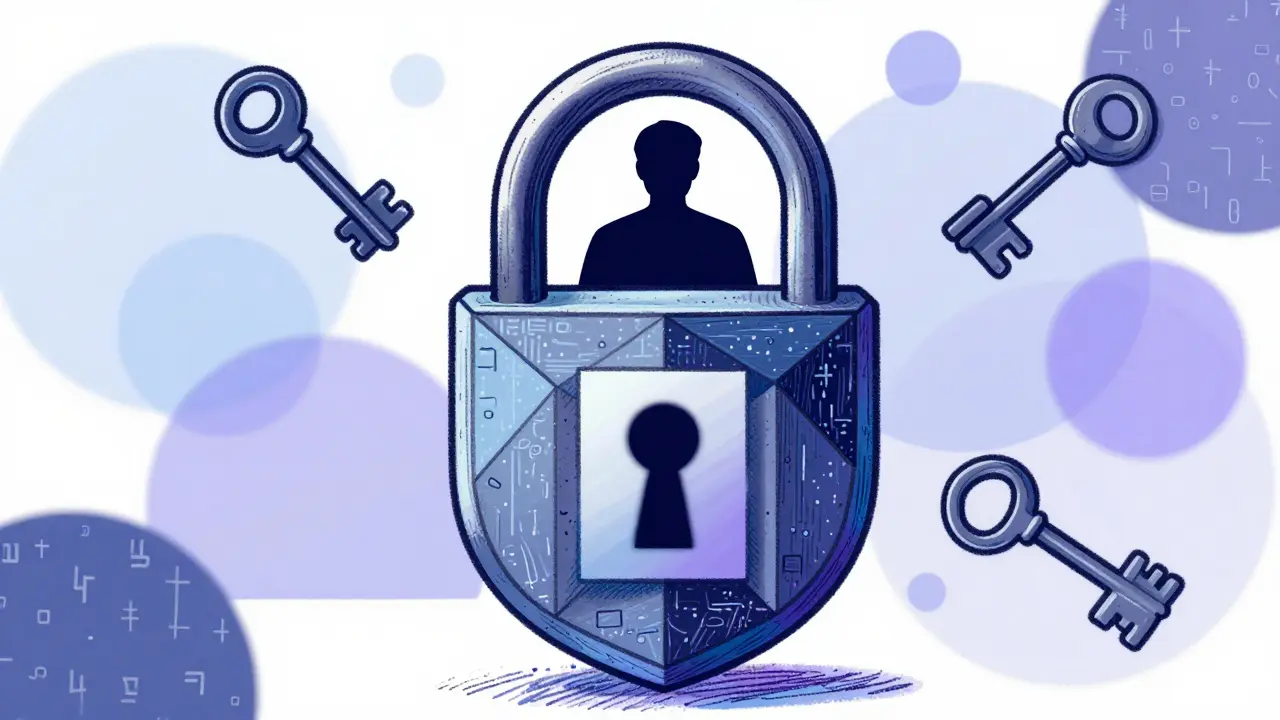
A crucial element here is privacy. Even though the ledger is public, your identity isn't tied to the result visible to everyone. This balance is achieved through advanced cryptography, which acts like a sealed envelope that only opens when the math checks out.
Privacy Protocols and Anonymity
The biggest concern with digital voting is whether the system knows who voted for whom. If an attacker can link a ballot to a name, coercion becomes possible. To fix this, developers use complex methods to ensure separation between identity and choice.
One popular method involves Zero-Knowledge Proofs. This sounds technical, but the concept is simple: it allows you to prove you are a registered voter without revealing your identity during the casting phase. Another technique is Homomorphic Encryption. This allows votes to be counted while still encrypted. The system adds up the numbers mathematically without ever unlocking the individual choices, preserving total anonymity.
Consider the workflow in a typical deployment. A voter logs in, encrypts their preference, and sends it to the network. The network sees a code representing a vote but cannot decode it to see the candidate name. Only after the election ends does a multi-party decryption key unlock the final totals. This ensures that no single party holds the power to peek at the ballots before the deadline.
Real-World Implementation Examples
This technology has moved beyond theory into pilot programs. Several companies have tested these platforms in actual elections to prove viability.
| Platform Name | Key Feature | Deployment Status |
|---|---|---|
| Voatz | Mobile app interface | Used in US absentee voting trials |
| Follow My Vote | Webcam ID verification | Active in local organizational elections |
| Votem | Full suite management software | Piloted in D.C. and Montana |
Voatz, a Boston-based firm, notably enabled overseas military personnel to vote during the 2018 West Virginia elections. Their approach used mobile phones familiar to users, removing the barrier of needing specialized hardware. Verification relied on driver's license data to confirm eligibility before issuing a digital token. Once the token was spent, the voter couldn't vote again.
Another player, Votem, offered a different angle with their CastIron Platform. They focused on creating a complete ecosystem for election management, including remote ballot pre-marking. This allowed voters to prepare their choices beforehand, reducing the load on the live voting session. These tests showed that the technology could handle thousands of transactions, but also highlighted the importance of user training.
Security Advantages Over Traditional Methods
Why bother switching from paper when we've been doing that for generations? Paper ballots suffer from physical vulnerabilities. Boxes can be lost, scanners can malfunction, and counting requires layers of humans who might make honest mistakes or dishonest choices. Blockchain introduces a level of verifiability that paper simply cannot match.
In a traditional recount, you go back to the boxes and manually re-read the marks. On a blockchain, the "recount" is instant because the transaction is already verified by code. Every participant has a copy of the ledger, so no one person can delete a page. If someone tries to tamper with the data, the chain breaks immediately, alerting the auditors.
Furthermore, transparency is built-in. Citizens can verify that their specific vote made it onto the ledger without revealing who they picked. This cryptographic receipt gives voters peace of mind, which is currently lacking in many jurisdictions where ballots disappear into black-box machines.
Challenges and Limitations
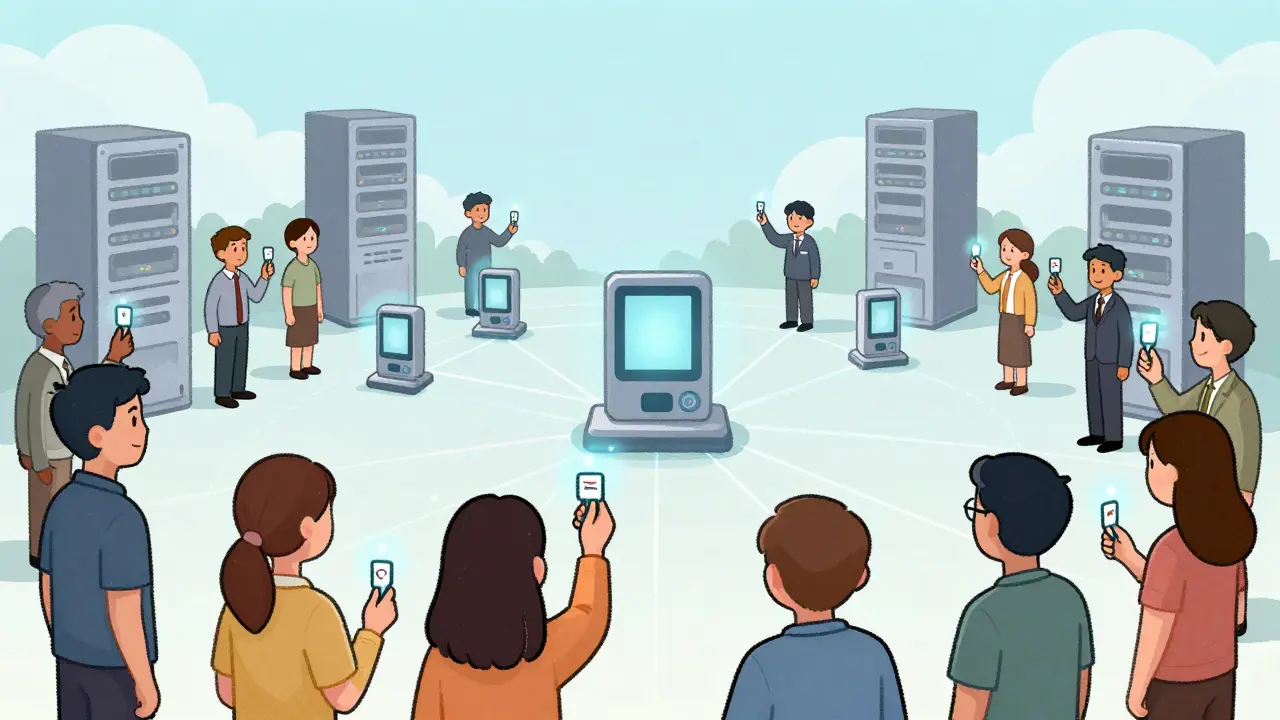
Despite the potential, widespread adoption faces hurdles. The digital divide remains a massive concern. Not every eligible voter has a smartphone or reliable internet access. Asking people to download an app and manage digital keys introduces friction that a physical polling station doesn't have.
Scalability is another factor. During high-volume presidential elections, processing millions of votes in minutes requires significant computing power. While Layer 2 solutions and Software-Defined Edge architectures help address throughput, the infrastructure costs for a national rollout are non-trivial.
Finally, there is the regulatory landscape. Laws regarding voting were written decades ago, long before Bitcoin existed. Many governments hesitate to adopt blockchain until legal frameworks clearly define digital ballots as legally binding evidence. Until statutes catch up to the code, these systems remain in the pilot phase.
The Future of Election Infrastructure
We are standing at the intersection of legacy bureaucracy and modern innovation. As the technology matures, hybrid models are emerging. These combine the familiarity of traditional ballots with the security of distributed ledgers. For instance, a ballot box could be connected to a blockchain device that seals the results digitally before transport.
Future developments will likely focus on making the interface invisible to the average user. Just as you don't think about SSL certificates when browsing the web, voters shouldn't need to understand cryptography to cast a ballot. The goal is to make security seamless.
As we move toward 2026 and beyond, the question isn't just if blockchain voting will work, but how quickly societies can adapt to trust the math over the messengers. With successful pilots proving resilience, the momentum suggests a gradual shift away from purely analog systems.
Is blockchain voting completely anonymous?
Yes, in terms of public view. The system uses encryption to separate your identity from your choice. The public ledger shows valid votes were cast but cannot reveal which specific person cast them, thanks to zero-knowledge proofs.
Can I change my vote on the blockchain?
Some systems allow this before the deadline. Because tokens are managed in a wallet, a voter can sometimes recall their token and reassign it. However, once the ledger closes, immutability kicks in and changes are impossible.
Who runs the blockchain for an election?
It depends on the architecture. Some use a consortium model where multiple trusted organizations (courts, parties, observers) run nodes together. This prevents any single actor from controlling the outcome alone.
Are these systems immune to hacking?
While the blockchain itself is highly resistant to tampering, the endpoints (voter devices) are vulnerable. If someone compromises a voter's phone or computer before they submit, the integrity is at risk. This is why device security is critical.
What happens if the internet goes down?
Offline voting capabilities are a priority. Some platforms allow offline storage of the vote which is then batched and submitted once connectivity returns, ensuring participation isn't blocked by temporary service outages.
They want to track your vote with these fancy tokens. It’s all a setup to count every single move you make. Big Brother watching who you pick isn’t freedom, it’s control. Trust the paper, trust the people who handle it. Digital records get bought and sold behind closed doors.
The cryptographic hash functions employed in these distributed ledgers offer theoretical integrity. However, implementation layers frequently suffer from consensus mechanism vulnerabilities. We are conflating protocol security with endpoint security in the voter’s environment. Zero-knowledge proofs do not negate client-side malware risks entirely. The scalability bottlenecks remain a significant hurdle for mass deployment in legacy infrastructures.
This is actually a pretty solid step forward for transparency. Having immutable records means fewer excuses when things go wrong. I think we need more education before rolling this out everywhere though. People should know how their data is protected beforehand. Safety checks are key here.
Thats a good point Sean abt safety. I tink tech works but people r tricky. We shd focus on making sure evrybody gets access tho.
I love the idea of blockchain because it makes things fairer for everyone involved in the process.
Think about how many times recounts happen and end up being messy with human error involved.
If the math does the work then nobody can argue about whether a dot was filled in correctly.
It seems obvious that automation is the future of counting votes securely.
I have read a lot about how Voatz worked in West Virginia and it looked really promising.
Some people worry about hacking but I think encrypton keeps it safe enough.
We just need to train votez so they don’t lose their private keys which would be bad.
Imagine not having to wait in line for hours at a pollowing place anymore.
Everyone could vote from home which helps people with jobs or disabilities.
The system needs to work offline too though because internet goes down sometimes.
Developers are already fixing those issues with batching methods.
I hope we see this in national elections soon because it feels safer.
My friends are skeptical but they probably just dont understand the code yet.
Once they see how fast results come in without arguments they will change their minds.
Technology always improves faster than laws can keep up with the changes happening now.
We should support testing more pilots rather than stopping progress due to fear.
It really matters to get this right.
It’s going to cause chaos if the servers crash. Everyone loves talking about digital perfection until the screen turns black. Then what happens to my vote? I prefer something tangible.
Such concepts appeal to the uninitiated masses seeking validation through novelty. The average citizen lacks the technical literacy to verify blockchain integrity independently. True electoral integrity requires institutional oversight not algorithmic obfuscation.
That sounds harsh Matt but I think regular people can learn new things easily. We all learn to use smartphones so voting apps can be the same. It will take time but the benefits are worth the effort. Let’s encourage innovation instead of shutting it down immediately.
The narrative presented ignores the inherent weaknesses in any digital infrastructure reliant on electricity. A simple power outage renders the entire network obsolete compared to analog methods. Efficiency is prioritized over actual security in these hype-driven deployments.
We shouldn’t give up on trying new things just because of risks. Every system has downsides but paper has had problems too. Maybe a mix of both old and new would work best. I’m hopeful we can solve the privacy parts properly.
Why do you care if people hate it. You just want to save money for the gov right. They want to watch us vote. Don’t trust it.
Seems cool tbh
Exactly. We need to stay engaged and informed to push for better systems. Don’t let cynicism stop us from building something secure. Keep learning about the tech side of it.
These elites want to control the election outcomes with code. Foreign hackers might already be inside the wallet system. We need domestic software only! :)
The claim regarding foreign access is speculative. Actual vulnerability assessment shows endpoint compromise is the primary vector. Focus resources on device hygiene rather than conspiracy theories.
Yeah sure just buy a computer and it’s safe now lol. Good luck with that plan.
People defend the technology while ignoring the human element completely. Perfect code cannot fix corrupt intent disguised as efficiency measures. This is just another tool for the powerful.