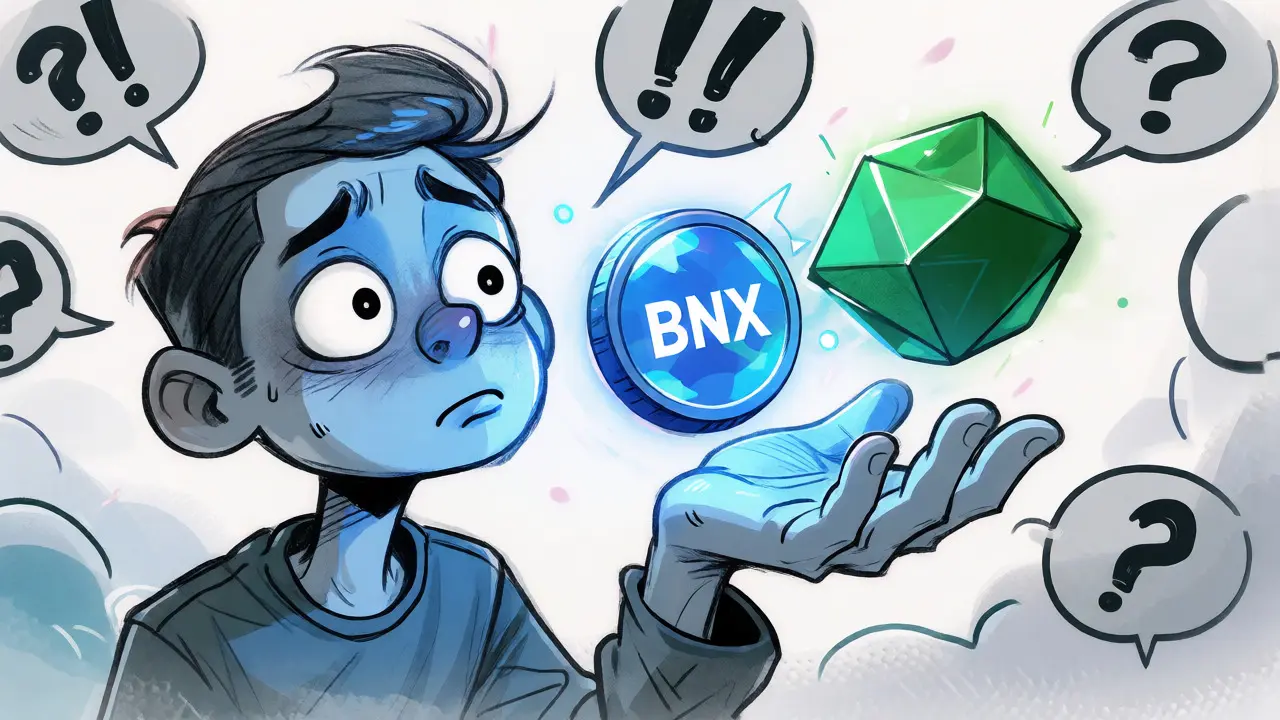
Did you wake up one morning to find your BinaryX holdings suddenly renamed? You weren't alone. For many investors holding the BNX token, the transition in March 2025 was less of an exciting "airdrop" and more of a mandatory administrative overhaul. If you were searching for free tokens raining from the sky, you might have been disappointed by the reality: this was a comprehensive token swap and rebranding event that replaced BNX entirely with the new FORM token.
Understanding the difference between a true airdrop and a forced swap is crucial for managing your portfolio expectations. While the term "airdrop" often implies receiving something for nothing, the BinaryX situation involved converting existing assets into a new ticker under strict exchange guidelines. This article breaks down exactly what happened to the old BNX token, how the swap worked on major platforms like Binance, and why the project pivoted from its GameFi roots to a new identity.
The Big Shift: From BinaryX to Four
In early 2025, BinaryX, originally known for its presence in the Web3 gaming and GameFi sector, underwent a significant strategic pivot. The team behind the project decided to retire the BNX ticker completely. Instead of launching a new token alongside the old one, they executed a 1:1 conversion. Every single BNX token held by users was swapped for one Four (FORM) token.
This wasn't just a cosmetic change. The rebranding signaled a departure from the previous "BinaryX" identity toward a broader ecosystem vision under the name "Four." For holders, the mechanics were straightforward but time-sensitive. There was no extra bonus or multiplier applied during the swap. If you had 1,000 BNX, you ended up with 1,000 FORM. The value proposition shifted from speculative gaming hype to whatever utility the new FORM token would provide within the revamped ecosystem.
It is worth noting that some confusion arose because another company named "Binaryx" operates in the real estate investment space. That platform announced updates around the same time, including new fiat currency support and deposit methods. However, these are two distinct entities. The crypto-focused BinaryX (BNX) is the one that swapped to FORM, while the real estate platform continued its own trajectory unrelated to the blockchain token swap.
How the Token Swap Worked on Binance
Since Binance is the primary exchange for most retail crypto traders, it handled the bulk of the technical heavy lifting for this transition. The process was automated for users who kept their funds on the exchange, which minimized the risk of human error for those not technically savvy with wallet migrations.
The timeline was tight and precise. On March 18, 2025, at 03:00 UTC, Binance suspended all spot trading pairs for BNX, including BNX/USDC, BNX/USDT, and BNX/TRY. Shortly after, at 03:30 UTC, deposits and withdrawals for BNX were halted. This freeze ensured that no new BNX tokens entered the system while the backend processed the conversion.
| Date & Time (UTC) | Action | Status |
|---|---|---|
| Mar 18, 03:00 | BNX Spot Trading Suspended | Trading Pairs Removed |
| Mar 18, 03:30 | BNX Deposits/Withdrawals Halted | Network Freeze |
| Mar 19, 08:00 | FORM Spot Trading Opens | New Pairs Active |
| Mar 19, 09:00 | FORM Withdrawals Open | Fully Operational |
By the morning of March 19, 2025, the new FORM tokens were live. Spot trading for FORM/USDC, FORM/USDT, and FORM/TRY commenced at 08:00 UTC. Users could withdraw their new tokens starting at 09:00 UTC. Crucially, after this window closed, deposits and withdrawals for the original BNX tokens were permanently discontinued. If you missed the automatic swap on Binance, you had to rely on other supported exchanges or direct wallet claims, depending on where you stored your assets.
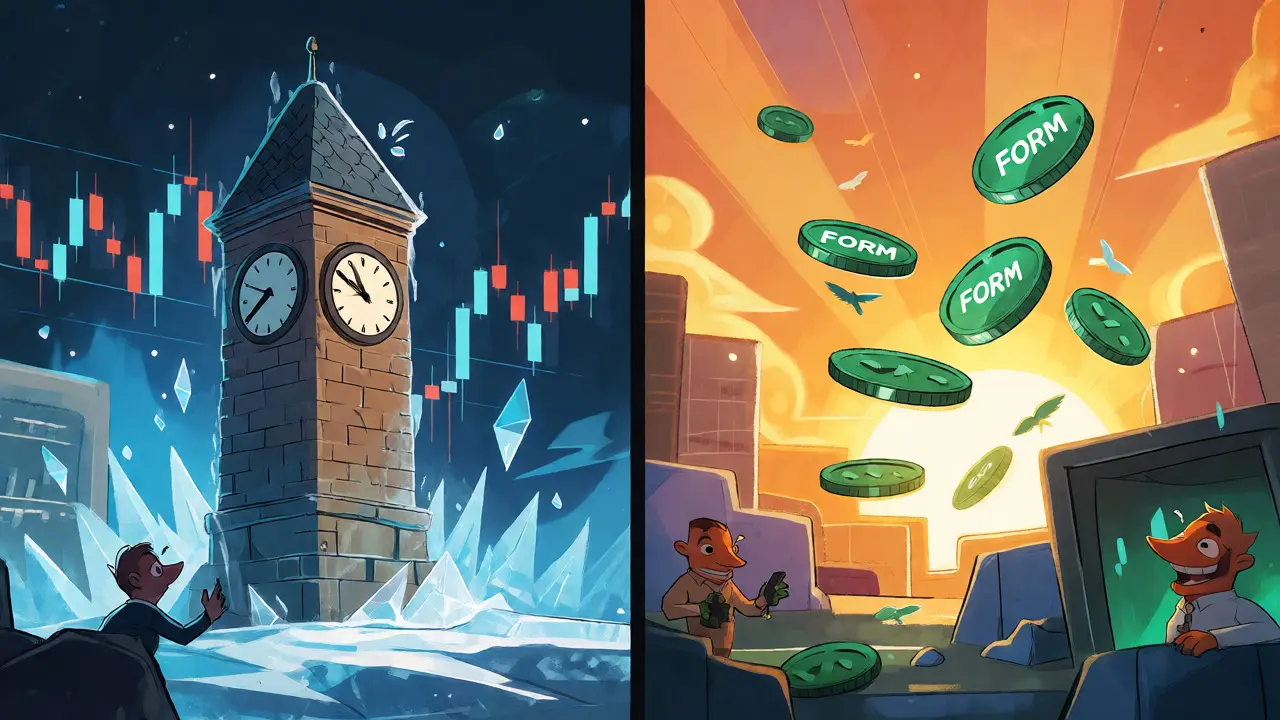
Was It Really an Airdrop?
Let's clear up the terminology. In the crypto world, an airdrop typically refers to the free distribution of tokens to wallet addresses, often as a reward for loyalty or to decentralize ownership. The BinaryX event did not fit this definition strictly. It was a mandatory token migration.
Why does this distinction matter? Because if you expected your balance to double or triple due to a promotional airdrop, you likely felt shortchanged. The 1:1 ratio means there was no immediate financial gain purely from the swap itself. Any profit or loss depended entirely on how the market valued the new FORM token compared to the old BNX price prior to the halt.
At the time of the swap, BNX was trading around $1.20. Market analysts had varied predictions for 2025, with some projecting a rise to $2.36 average annualized price. However, these forecasts were based on the old token's momentum. Once the swap occurred, the historical data for BNX became irrelevant for trading purposes, and the new FORM token had to establish its own market sentiment from scratch.

Market Sentiment and Technical Context
Leading up to the swap, the market mood for BinaryX was cautious. The Fear & Greed Index sat at 44, indicating a state of "Fear." Technical indicators showed bearish trends, with the 14-day Relative Strength Index (RSI) hitting 17.40, suggesting the asset was oversold. Despite this, the 50-day simple moving average remained higher than the current price, hinting at potential volatility.
Volatility was recorded at 27.39%, meaning traders should have expected sharp swings once the new token launched. For long-term holders, the key question wasn't just about the ticker change, but whether the new "Four" branding brought genuine utility improvements to the underlying blockchain infrastructure. Without specific details on the new roadmap released immediately post-swap, many investors adopted a wait-and-see approach.
What Should Holders Do Now?
If you still hold BNX in a personal wallet today, you need to check if the claim mechanism remains active. Most centralized exchanges handled this automatically, but decentralized wallets require user action. Ensure you have updated your wallet software to recognize the FORM contract address. Sending BNX to a deprecated address after the network sunset could result in lost funds.
- Check Exchange Support: Verify if your specific exchange still supports legacy BNX claims.
- Update Wallets: Add the FORM token contract to your MetaMask or Trust Wallet manually if it doesn't appear automatically.
- Review Roadmap: Look for official announcements from the "Four" team regarding future partnerships or game integrations.
The transition from BinaryX to Four represents a common lifecycle stage for older altcoins: rebranding to shed negative baggage or pivot strategy. Whether this move revitalizes the community or leads to further dilution depends on execution in the months following March 2025.
Did BinaryX give out free tokens during the swap?
No, the event was a 1:1 token swap, not a traditional airdrop. Existing BNX holders received an equal amount of FORM tokens without any additional bonus or free distribution.
Can I still trade BNX on Binance?
No, BNX trading pairs were removed from Binance on March 18, 2025. Only the new FORM token is currently traded on the platform.
Is BinaryX related to the real estate platform Binaryx?
No, they are separate entities. The crypto project BinaryX (now Four) focuses on Web3 gaming, while the other Binaryx is a real estate investment platform.
What happens to my BNX if I didn't swap it?
If held on a supported exchange, it was likely converted automatically. If in a private wallet, you may need to use a specific claim tool provided by the project team, though timelines for this vary.
Why did BinaryX change its name to Four?
The rebranding aims to signal a new strategic direction beyond the initial GameFi focus, though specific long-term benefits depend on the new team's execution.