By 2025, play-to-earn (P2E) NFT games have moved past the hype cycle. No longer are they just get-rich-quick schemes with pixelated avatars. Today, they’re real games - with deep mechanics, AAA graphics, and economies that actually work. If you're looking to play something fun and actually earn from it, you need to know which platforms have survived the crash and come out stronger.
Axie Infinity: Still the King, But Not for Everyone
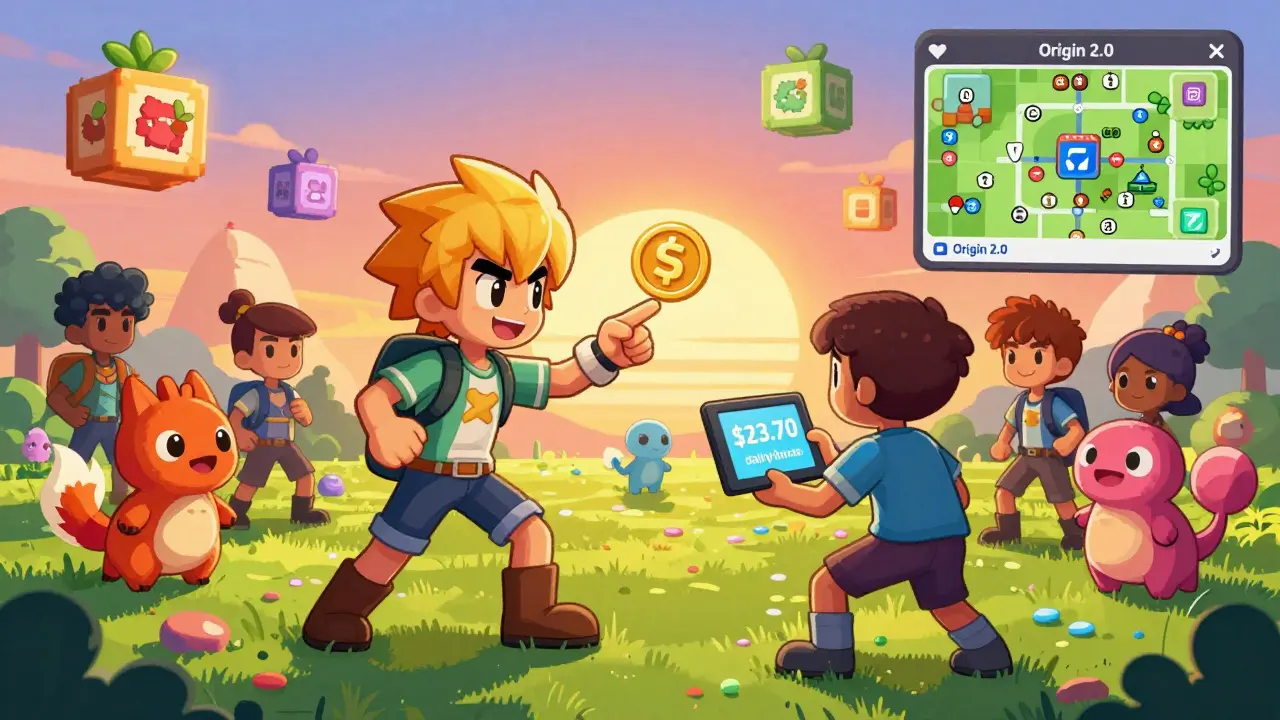
Axie Infinity remains the most played P2E game in the world, with over 1.2 million daily active users as of October 2025. It’s not just popular - it’s a cultural phenomenon. Players battle, breed, and trade digital pets called Axies, earning Smooth Love Potion (SLP) and AXS tokens along the way. But here’s the catch: you can’t just jump in for free anymore. To compete at a decent level, you need at least three Axies. And those cost between $150 and $200. That’s not a small amount. For many, it’s a dealbreaker.
That said, the game has improved dramatically. The Origin 2.0 update, released in October 2025, added land-based resource management and real-time strategy elements. It turned Axie from a turn-based battler into something closer to a hybrid RTS. Daily earnings for top players now average $23.70, according to Chainplay.gg’s earnings report. But 68% of players on Reddit say they struggle to stay profitable after the initial investment. If you’re serious about playing and have the upfront cash, Axie is still the most stable option. If not? Look elsewhere.
The Sandbox: Build, Rent, Earn
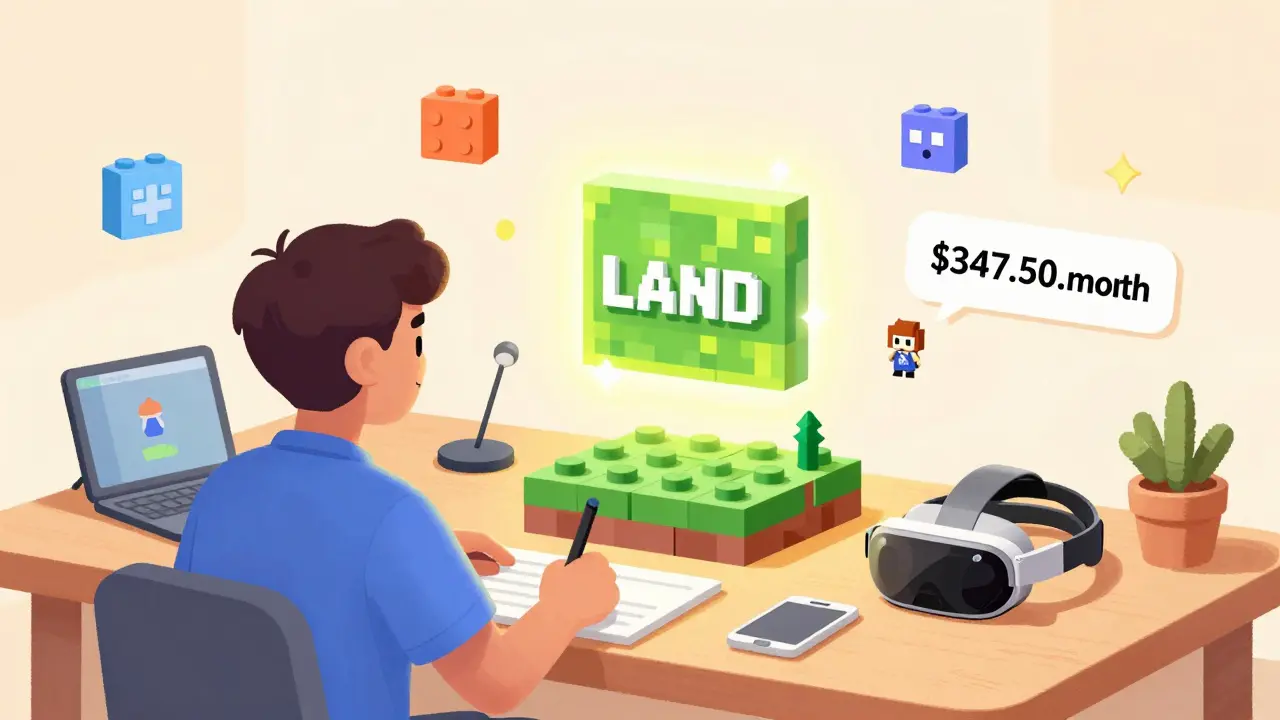
If you’d rather create than compete, The Sandbox is your game. Owned by Animoca Brands since 2023, it lets you design 3D worlds using VoxEdit, then rent or sell them as NFTs. Unlike other P2E games, your earnings here don’t come from fighting monsters - they come from your creativity. A single LAND parcel can generate $347.50 per month if rented out or used for a mini-game, according to their September 2025 creator report.
The Sandbox supports Windows, macOS, iOS, Android, and even VR headsets like Meta Quest 3. Its Game Maker 3.0 update, released in September 2025, added AI-assisted tools that cut development time by 63%. That means even beginners can build a simple game in under two hours. But don’t expect deep gameplay. Most players who stick with it are creators, not gamers. Casual players often say it feels like a digital LEGO set with no real objectives. Still, if you’ve ever wanted to own a piece of a virtual world and profit from it, this is the closest thing to reality.
Illuvium: The AAA Game That Actually Looks Like a Real Game
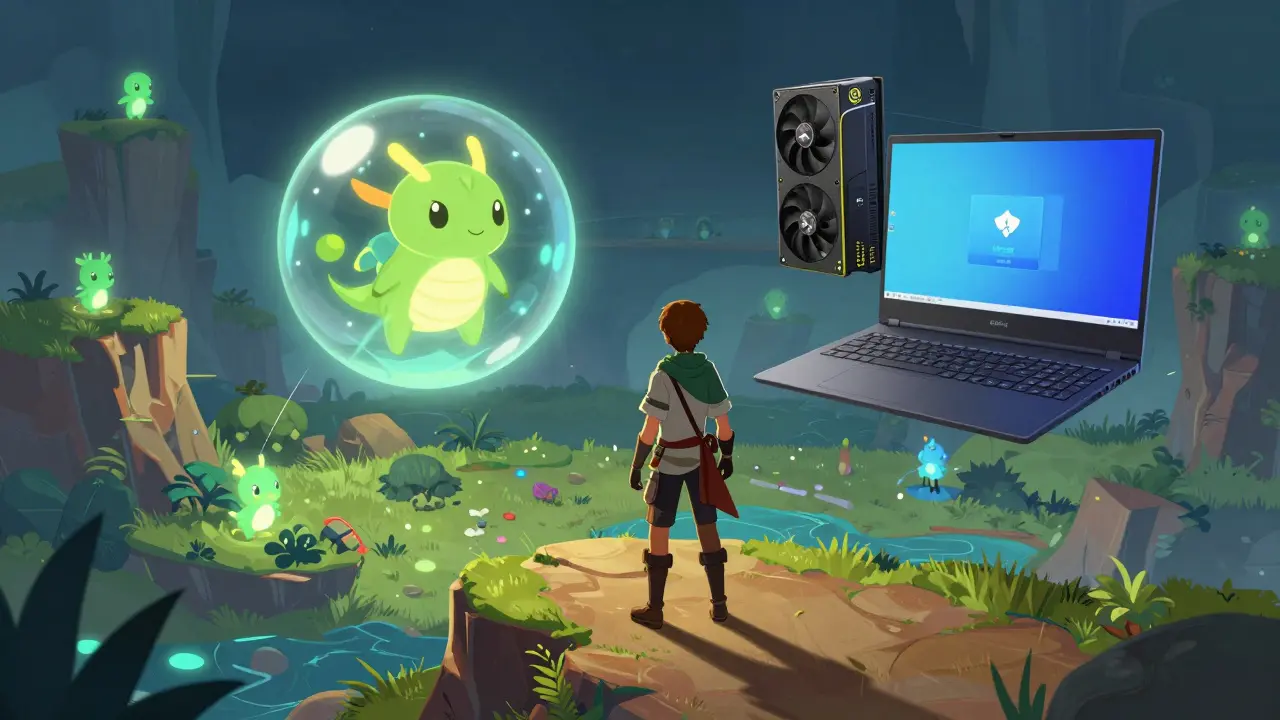
Illuvium is what happens when blockchain gaming stops trying to be a crypto project and starts trying to be a video game. Developed by Kieran and Aaron Warwick, it’s a fully decentralized, open-world RPG with cinematic visuals, voice acting, and a combat system that rivals mainstream titles like Diablo or Genshin Impact. It runs on Unity with Vulkan rendering, and you need an NVIDIA RTX 3060 or AMD RX 6700 XT just to hit 60 FPS at 1080p. That’s not a phone game. That’s a PC game.
IGN gave it a 4.7/5 in August 2025, calling it “the first blockchain game that doesn’t feel like a crypto experiment.” You capture creatures called Illuvials, battle in arenas, and earn ILV tokens. Unlike Axie, Illuvium has no pay-to-win barrier - you can start with zero NFTs and earn your first creature through gameplay. The catch? It’s still in early access. The full open world isn’t live yet. But the Q4 2025 roadmap includes cross-chain support for Ethereum, Polygon, and Arbitrum, which means your assets will be usable across multiple networks. If you want a game you can play for years, not months, Illuvium is the future.
Splinterlands: The Only Free-to-Play P2E Game That Actually Works
Here’s the truth: most people don’t want to spend $200 on a game. Splinterlands is the exception. It’s a browser-based digital card game that requires no upfront cost. You can play for free, earn cards, and start competing in tournaments right away. No wallet? No problem. You can even play without owning NFTs - your cards are stored on the blockchain, but you don’t need to buy them to start.
With 12,000 transactions per minute during peak hours, Splinterlands is one of the most active P2E platforms. Daily earnings average $12.40, according to DappRadar’s October 2025 report. That’s not Axie-level money, but it’s real, consistent income. The game has a deep meta, with over 300 unique cards and complex synergy combos. Players on Steam rate it 4.3/5, praising its strategic depth. But there’s a downside: late-game progression leans into pay-to-win. Top-tier cards are expensive. Still, if you’re new to P2E, Splinterlands is the safest place to start. You can lose $0 and still learn everything.
Gods Unchained: No Paywall, Just Cards
Gods Unchained is Splinterlands’ older sibling - a free-to-play digital card game built on Ethereum. It’s been around since 2019 and still runs like clockwork. Unlike Axie or The Sandbox, you don’t need to buy anything. Every player gets a starter deck. You earn new cards by playing, and you can sell them on the marketplace. It’s pure skill-based play. No pay-to-win. No subscription fees.
But here’s the trade-off: you earn less. Average daily earnings are $8.20 - only 35% of what Axie players make. The game is more niche, with a smaller community and fewer tournaments. Still, it’s one of the most transparent systems out there. The developer team publishes weekly balance patches and runs 24/7 live chat support that resolves 89% of issues in under two hours. If you like collectible card games and want to earn without spending, Gods Unchained is the cleanest option on the market.
Why Most P2E Games Still Fail
Not all P2E games are created equal. The ones that survive have one thing in common: they prioritize gameplay over earnings. The ones that collapse? They were crypto projects pretending to be games. Look at Bomb Crypto. It won a blockchain game award in 2021. Now, it has 247,000 daily users - but 53% of players say the game pushes them to spend more on “legendary heroes.” That’s not fun. That’s pressure.
Decentraland is another example. It lets you walk around a VR world, buy virtual land, and attend events. Sounds cool, right? But 42% of users report lag, crashes, and poor performance during big events. It’s a social experiment, not a game.
According to MIT researcher Dr. Michael Zavada, 57% of P2E token economies are still vulnerable to hyperinflation. That means the tokens you earn today could be worthless in six months. The only platforms that have fixed this are the ones with dual-token systems - like Axie (SLP + AXS) and The Sandbox (SAND + LAND). One token is for spending. The other is for governance. That keeps the economy balanced.
What Should You Play in 2025?
Let’s cut through the noise. Here’s who should play what:
- If you have $200+ to spend and want the highest earnings: Play Axie Infinity.
- If you love building things and want to earn from your creativity: Play The Sandbox.
- If you want a real AAA game with graphics that look like a console title: Play Illuvium.
- If you want to play for free and earn slowly: Play Splinterlands or Gods Unchained.
- If you’re new and don’t know where to start: Try Splinterlands. You can’t lose money.
Forget the hype. The best P2E games in 2025 aren’t the ones promising the biggest payouts. They’re the ones you’ll still want to play six months from now. The ones with real mechanics, real communities, and real effort behind them. Play for fun. The earnings? That’s just the bonus.
Can you really make money from P2E games in 2025?
Yes, but not like in 2021. The days of earning $100 a day by playing 10 minutes are gone. Today, earnings are real but modest - $8 to $25 per day for active players. The key is consistency. Top earners play daily, participate in events, and understand the game’s economy. You won’t get rich, but you can cover your internet bill or buy a few more game assets. The real value isn’t in cashing out - it’s in owning digital items you actually use.
Do I need a crypto wallet to play P2E games?
Yes, but not always right away. Games like Splinterlands and Gods Unchained let you play for free without a wallet. But if you want to earn, sell, or trade NFTs, you’ll need one. MetaMask is the most common. Wallets like Trust Wallet or Coinbase Wallet also work. Setting one up takes five minutes. Just remember: never share your private key. Ever.
Are P2E games legal?
In most countries, yes. As of October 2025, 67 countries have clear rules for blockchain gaming. The EU’s MiCA regulations and the US’s Digital Asset Market Structure Act now define how these games operate. You can legally play, earn, and trade. But tax rules vary. In the US, earnings are treated as income. In New Zealand, they’re considered capital gains. Always check your local laws before cashing out.
What’s the best P2E game for beginners?
Splinterlands. It’s free to start, runs in your browser, and has one of the most supportive communities. You don’t need to buy anything. You can learn the rules, earn cards, and compete in tournaments without spending a cent. If you enjoy it, you can upgrade later. It’s the only P2E game where you can lose nothing and still win something.
Will these games still be around in 2026?
The top five - Axie Infinity, The Sandbox, Illuvium, Splinterlands, and Gods Unchained - are built to last. They have strong teams, real funding, and active player bases. Smaller games with no revenue or community are likely to fade. If a game doesn’t have at least 100,000 daily users and a clear roadmap for 2026, treat it as a short-term experiment. Longevity comes from gameplay, not token pumps.
Axie Infinity’s Origin 2.0 update was a game-changer. The land-based resource mechanics finally give players something to do beyond grinding battles. I’ve been playing since 2023 and honestly, the ROI has stabilized. You still need that initial $180 investment, but with daily quests, weekly tournaments, and the new land rental system, I’m netting $21/day. It’s not passive income, but it’s sustainable. The community’s also way more mature now-no more toxic hype traders. Just real players building stuff.
lol illuvium? more like illu-vium. why is everyone acting like this is a real game? it's just a crypto skin on a Diablo clone. 🤡
I spent $300 on Axie and now I'm crying into my ramen. This isn't gaming. It's a job with worse benefits. 😭
Splinterlands? lol. That’s for people who think ‘strategy’ means clicking the same card 20 times. 🙄
I started with Splinterlands last year and I’m so glad I did. No upfront cost, zero risk, and I’ve already earned enough to buy a new phone charger. The community is actually welcoming, and the card synergies? Mind-blowing. I never thought I’d get hooked on a digital card game, but here I am, grinding daily. If you’re scared to jump in, just play for a week. You’ll either love it or realize you’re not into it-and you didn’t lose a dime. That’s the beauty of it.
Let’s be real: The Sandbox isn’t a game. It’s a glorified asset flipper’s playground. People spend weeks building a tiny pixel house, then rent it for $300/month? That’s not creativity. That’s real estate speculation with better UI. And don’t get me started on AI-assisted building-now even amateurs can make ‘content’ without learning a single tool. This isn’t innovation. It’s automation of delusion. If you’re not a millionaire with a Meta Quest 3 and a 40-hour workweek to burn, you’re just funding someone else’s NFT fantasy.
Gods Unchained is the only one that matters. No paywall. No nonsense. Just cards. Period.
Been playing Splinterlands and Gods Unchained for over a year now. Both have solid economies, but I’ve noticed something interesting: the meta in Splinterlands evolves faster. Cards rotate every season, and the balance patches are actually listened to. Gods Unchained feels a bit stagnant. Also, Splinterlands has way more active tournaments-like 15+ daily. If you’re looking for competition and consistent small wins, Splinterlands wins. Gods Unchained is better if you want to chill and collect. Both are legit though. No crypto scams here.
Hey everyone, just wanted to say thanks for this thread. I’m 58 and had zero idea about NFTs until last month. My grandson got me into Splinterlands and now I’m hooked. I don’t even care about the earnings-I just love the strategy. It’s like bridge, but with dragons and fireballs. And the community? So kind. I asked a dumb question about card combos and someone spent 20 minutes explaining it with memes. That’s the real value here. Not the tokens. The people. If you’re new, don’t be scared. Just play. You’ve got this.
From India, here. I started with Splinterlands using my phone data, no wallet at first. After 3 weeks, I earned enough to buy a SIM card for my mom. That’s real. I’m not rich, but I’m not broke either. The game doesn’t ask for money-it asks for time. And I’ve got time. I play while waiting for chai, during lunch breaks, after work. I’ve made $80 this month. Not life-changing, but enough to feel proud. To everyone saying P2E is dead: you’re wrong. It’s just grown up. It’s not about getting rich. It’s about earning something you actually own. That’s power.
I’ve been following blockchain gaming since 2020, and I’ve seen dozens of projects collapse. The five mentioned here are the only ones with actual sustainable ecosystems. Axie’s dual-token model, The Sandbox’s LAND/SAND separation, Illuvium’s asset utility across chains-they’ve all solved the hyperinflation problem. Most others still use single-token systems that implode when player growth stalls. That’s why Bomb Crypto is dead and Illuvium is still in early access with a 500k waitlist. The difference is governance. The best P2E games now have DAOs that actually vote on balance changes. That’s not hype. That’s infrastructure.
USA only. All other countries are just crypto tourists. Get your own games.
Just wanted to reply to the person who said Splinterlands is for noobs. That’s exactly why it’s perfect. Most people think P2E is about winning big fast. But real wealth in gaming comes from learning systems, not grinding. Splinterlands teaches you card synergy, economy cycles, and risk management-all without spending a cent. I went from zero to $150/month just by studying the meta. Now I’m trying Illuvium. If you can’t handle Splinterlands, you’re not ready for anything else. Start low. Build up. Don’t gamble. Learn.