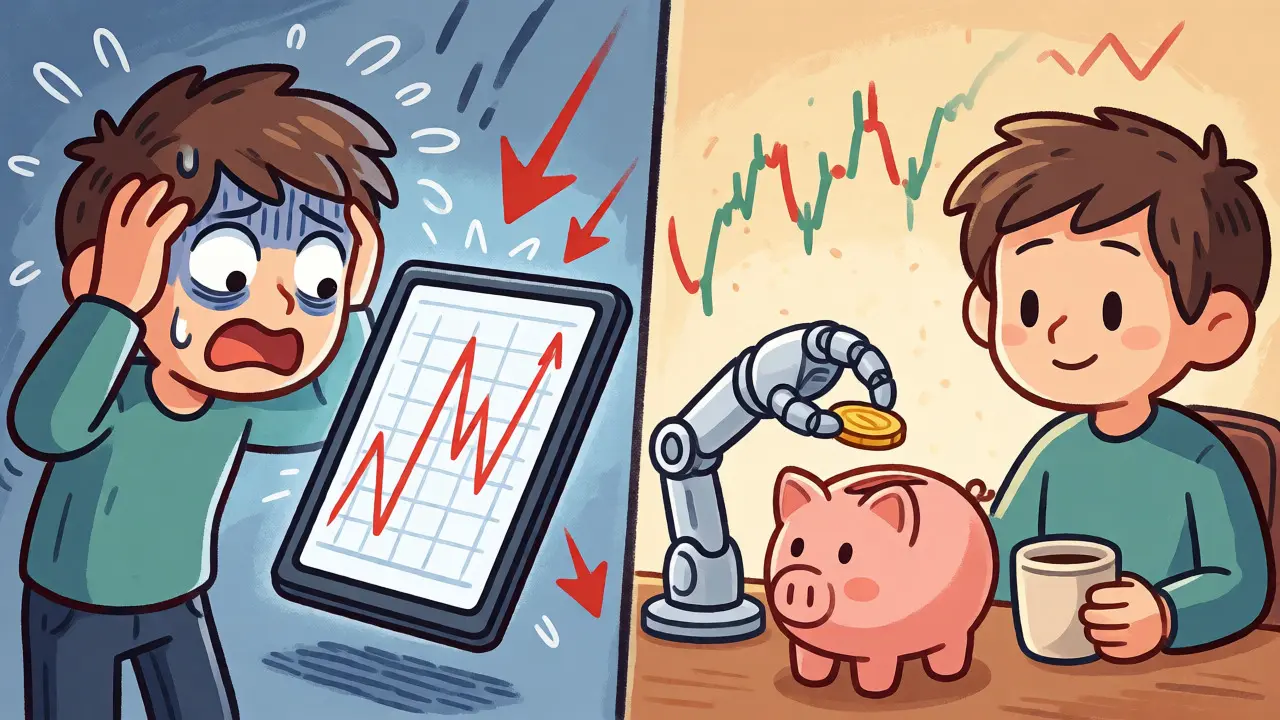
You’ve probably heard the advice a thousand times: "Just buy and hold." But let’s be honest-most of us fail at it. We stare at charts, panic when prices drop, and hesitate to buy when they spike. That hesitation costs money. Automated Dollar-Cost Averaging (DCA) tools exist to fix this exact behavioral problem. They take the emotion out of investing by automatically buying assets at set intervals, regardless of price.
This isn’t just about convenience; it’s about discipline. Whether you’re accumulating Bitcoin on weekends or building a retirement portfolio with ETFs, automation ensures you stick to the plan. But not all tools are created equal. Some are simple one-click features on your exchange; others are complex bots that average down during crashes. Here is how to navigate the landscape of automated DCA in 2026.
The Core Concept: Why Automate?
Dollar-cost averaging is an old idea. It dates back to mutual fund marketing in the mid-20th century. The logic is simple: instead of guessing the bottom, you spread your risk. If you invest $100 every week, you buy more units when prices are low and fewer when they are high. This smooths out your entry price over time.
Automation takes this further. Manual DCA requires you to log in, click buy, and hope you don’t forget. Automated systems do it for you. A study by Vanguard found that while lump-sum investing often yields higher returns in rising markets, DCA reduces regret and downside risk. For most retail investors, avoiding the stress of timing the market is worth the slight potential return sacrifice. Automation guarantees consistency, which is the hardest part of investing to maintain.
Category 1: Robo-Advisors for Traditional Finance
If you are investing in stocks and ETFs, you likely don’t need a bot. You need a robo-advisor. These platforms handle DCA as part of a broader wealth-building service. They connect to your bank account, pull funds on schedule, and allocate them across diversified portfolios.
Betterment and Wealthfront are the leaders here. Betterment charges 0.25% annually and allows recurring deposits as low as $10. Wealthfront offers similar services with tax-loss harvesting included. Their strength lies in simplicity. You answer a questionnaire, set a monthly contribution, and walk away. They rebalance your portfolio automatically if allocations drift, ensuring you stay aligned with your risk tolerance.
Traditional brokers like Fidelity and Schwab also offer automatic investment plans. These are cheaper (often zero commission) but require you to pick specific funds. Robo-advisors are better for beginners who want a "set it and forget it" experience without managing individual stock picks.
Category 2: Exchange-Native Recurring Buys
For crypto beginners, the easiest path is using the built-in features of major exchanges. You don’t need third-party software or API keys. Just set up a subscription within the app.
Coinbase offers "Recurring Buys," allowing you to purchase Bitcoin, Ethereum, or other supported assets daily, weekly, or monthly. Binance Auto-Invest goes deeper, supporting over 300 assets and offering flexible plans where you can contribute from your spot wallet. Kraken and Crypto.com have similar features.
The pros? Zero additional fees beyond standard trading spreads. No security risks from sharing API keys. The cons? Limited customization. You can’t easily say, "Buy only if Bitcoin drops 5%." You buy at the scheduled time, period. For long-term accumulation of blue-chip cryptos, this is usually sufficient.

Category 3: Advanced Crypto Trading Bots
This is where things get interesting-and complicated. Third-party platforms like 3Commas, Pionex, and Cryptohopper offer DCA bots that do more than just buy on a timer.
These bots use "Safety Orders." Imagine you start a DCA strategy for BTC/USDT. If the price drops 1%, the bot buys again. If it drops another 2.5%, it buys again. This averages down your entry price aggressively. When the price recovers slightly, the bot sells for profit. This strategy works brilliantly in sideways or volatile markets but can drain your capital quickly in a sustained crash if you don’t set stop-losses.
Pionex stands out because it’s an exchange with built-in bots. You don’t manage API keys; the bots run directly on their matching engine. Fees are low (0.05% per trade), and there’s no subscription cost. 3Commas is more powerful but pricier, with subscriptions ranging from $14 to $50+ per month. It connects to multiple exchanges via API, letting you run dozens of strategies simultaneously.
Category 4: DeFi Smart Contract Protocols
Decentralized Finance (DeFi) has introduced on-chain DCA. Platforms like Mean Finance use smart contracts to execute recurring swaps directly on blockchains like Ethereum or Polygon.
Why use this? Self-custody. Your funds aren’t held by a centralized company. The smart contract holds your tokens and executes trades at defined intervals. Mean Finance, for example, batches user transactions to save on gas fees. This is ideal for users who distrust centralized exchanges or want to automate swaps between stablecoins and volatile assets without leaving the blockchain ecosystem. However, you must pay network gas fees, which can make small, frequent DCA purchases expensive unless batched efficiently.
Comparing the Options
Choosing the right tool depends on your goals, budget, and technical comfort. Here is a breakdown of the key differences.
| Feature | Robo-Advisors (Betterment) | Exchange Native (Coinbase/Binance) | Crypto Bots (3Commas/Pionex) | DeFi Protocols (Mean Finance) |
|---|---|---|---|---|
| Complexity | Very Low | Low | High | Medium |
| Cost Structure | 0.25% - 0.40% AUM fee | Trading fees only (~0.5%) | $15-$100/mo + Trading fees | Gas fees + Protocol fee |
| Customization | Portfolio-level only | Time-based only | Price triggers, safety orders | Smart contract parameters |
| Custody | Custodial (Broker) | Custodial (Exchange) | Non-Custodial (API Keys) | Self-Custody (Smart Contract) |
| Best For | Retirement/Stocks | Beginner Crypto Investors | Active Traders/Yield Seekers | DeFi Enthusiasts |
Risks and Pitfalls to Avoid
Automation is powerful, but it’s not magic. In fact, bad automation can amplify losses. During the 2022 crypto bear market, many users saw their accounts drained because their DCA bots kept buying falling knives. If you configure a bot to buy every time the price drops 1%, and the asset falls 80%, you will exhaust your capital long before the bottom.
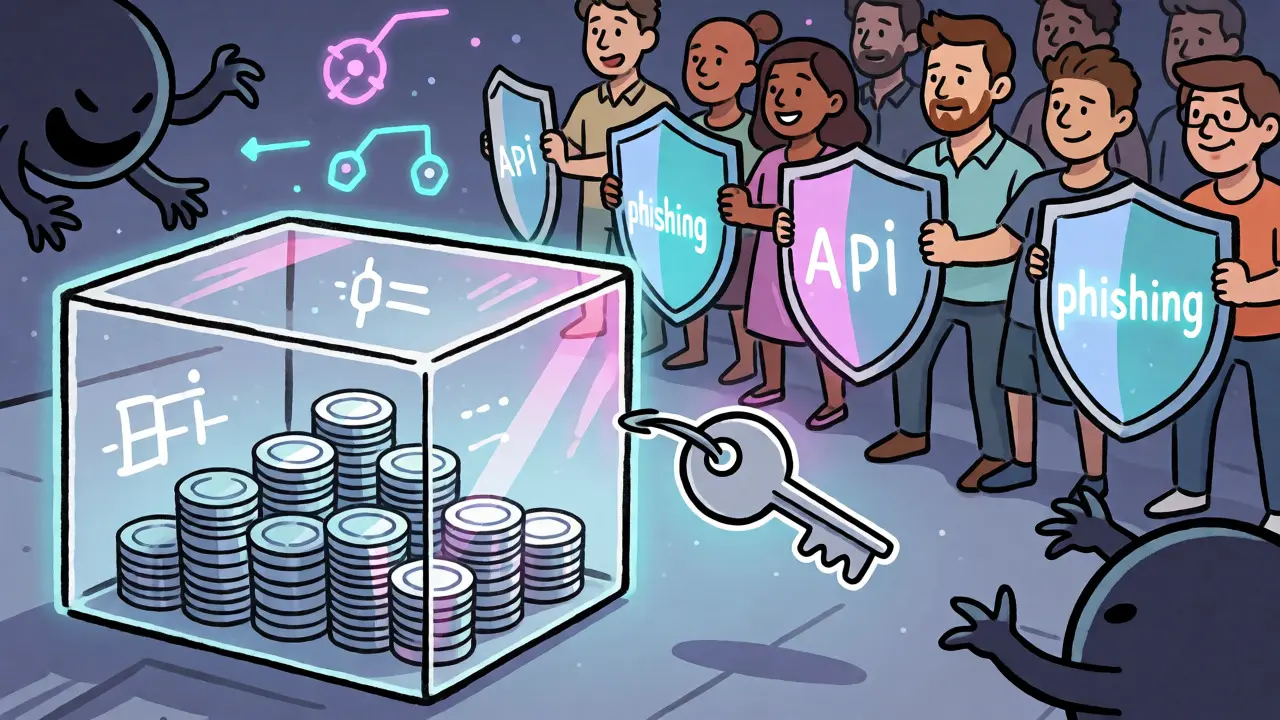
Security is another critical factor. Third-party bots require API keys. While these keys should only allow trading (no withdrawals), mistakes happen. Phishing attacks and platform breaches have occurred. Always enable two-factor authentication on your exchange and use IP whitelisting if available. Never give withdrawal permissions to a bot.
Finally, remember the academic reality. Vanguard’s research shows that lump-sum investing beats DCA about 66% of the time in bull markets. If you have a large sum of cash today, waiting to drip-feed it into the market might cost you gains. Use DCA for regular income contributions, not necessarily for deploying a windfall.
Getting Started: A Practical Checklist
Ready to automate? Follow these steps to avoid common beginner errors.
- Define your goal: Are you saving for retirement (use a robo-advisor) or trading altcoins (use a bot)?
- Start small: Test a new bot with $50-$100 for a month before committing significant capital.
- Check liquidity: Only run DCA bots on high-volume pairs like BTC/USDT or ETH/USDT. Illiquid coins have wide spreads that eat profits.
- Set hard limits: Configure maximum position sizes and stop-losses to prevent runaway losses.
- Monitor regularly: Even automated systems need oversight. Check your bot’s performance weekly to ensure it’s behaving as expected.
Frequently Asked Questions
Is automated DCA better than manual buying?
It depends on your psychology. If you struggle with emotional trading, automation is superior because it enforces discipline. Mathematically, lump-sum investing often yields higher returns in rising markets, but DCA reduces regret and volatility exposure.
Do I need to pay monthly fees for DCA bots?
Not always. Exchange-native features (like Coinbase Recurring Buys) are free. Pionex includes bots for free with trading fees. However, advanced platforms like 3Commas or Cryptohopper charge subscription fees ranging from $15 to $100+ per month for premium features.
What happens if the market crashes while my bot is running?
Your bot will continue to buy, lowering your average entry price. This is beneficial if the market recovers. However, if the asset keeps falling indefinitely, you may run out of allocated capital. Always set a maximum number of safety orders or a total budget cap.
Are DeFi DCA protocols safe?
They eliminate counterparty risk associated with centralized exchanges but introduce smart contract risk. Ensure the protocol has been audited by reputable firms like CertiK or Quantstamp. Bugs in code can lead to loss of funds.
Can I use automated DCA for stocks and crypto together?
Yes, but usually through different platforms. Robo-advisors handle stocks/ETFs, while crypto exchanges or bots handle digital assets. Few integrated platforms currently offer seamless cross-asset DCA automation in a single interface.