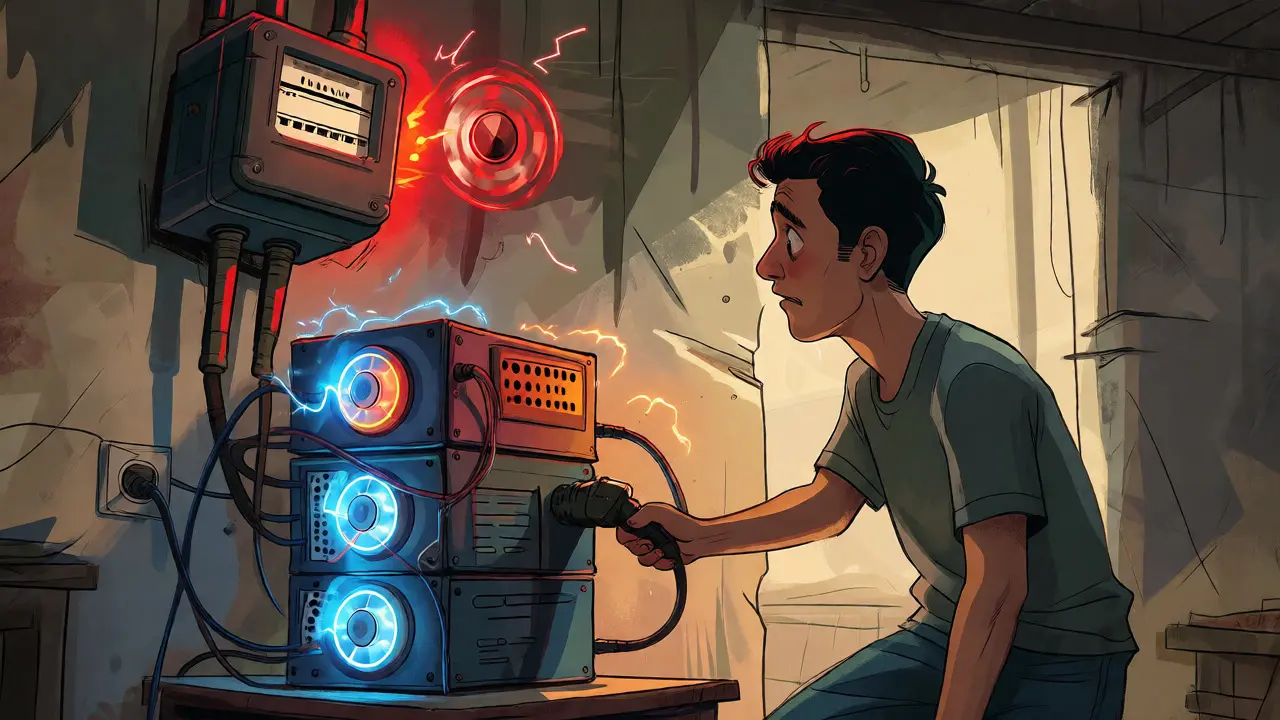
Imagine shutting down a rig that was quietly paying your rent because you were afraid of going to jail for turning it on. That’s the reality for thousands of Algerians since July 2025. The government didn’t just regulate cryptocurrency mining; they criminalized it entirely under Law No. 25-10. While many headlines focused on financial stability, the quiet driver behind this strict crackdown was something far more physical: electricity. Algeria’s grid is struggling, and the state decided that Bitcoin miners were using power needed by households and factories.
This isn’t just another regulatory hiccup. It’s one of the most aggressive bans in the world, extending beyond trading to include holding assets and even promoting them online. If you’re tracking how nations balance tech innovation with infrastructure limits, Algeria offers a stark case study. Here’s what actually happened, why energy played such a huge role, and what it means for the region.
The Legal Hammer: Law No. 25-10 Explained
On July 24, 2025, the Official Journal published Law No. 25-10. This wasn’t a suggestion; it was a hard line drawn by President Abdelmadjid Tebboune’s administration. The law defines crypto-assets broadly as "property, income, funds or financial assets," leaving no wiggle room. Whether you’re buying Bitcoin, selling Ethereum, or just keeping some Dogecoin in a wallet, you are technically breaking the law.
The penalties are severe. First-time offenders face prison sentences ranging from two months to one year. Fines hit between 200,000 and 1,000,000 Algerian dinars (roughly $1,540 to $7,700 USD). Repeat offenders? Those fines double, jumping up to 2,000,000 DZD. But here’s the kicker: the law doesn’t distinguish between a massive industrial farm and a student running a single GPU at home. Both are illegal. Authorities can seize equipment without much distinction, meaning your gaming PC could be confiscated if it looks like it’s working too hard.
What makes this unique is the inclusion of "promotion." Influencers, content creators, and educators who talk about blockchain technology risk falling into a gray area that has led to self-censorship. Universities have reportedly pulled back on certain blockchain discussions, fearing that teaching the mechanics might look like promotion. It’s a chilling effect that goes far beyond simple transaction bans.
Why Energy Was the Real Trigger
Let’s be honest: financial stability arguments are standard for any central bank. But Algeria had a specific, urgent problem: its electricity grid. The national provider, SONELGAZ, operates at 70% capacity normally but hits 95-100% during summer peaks when air conditioning usage spikes.
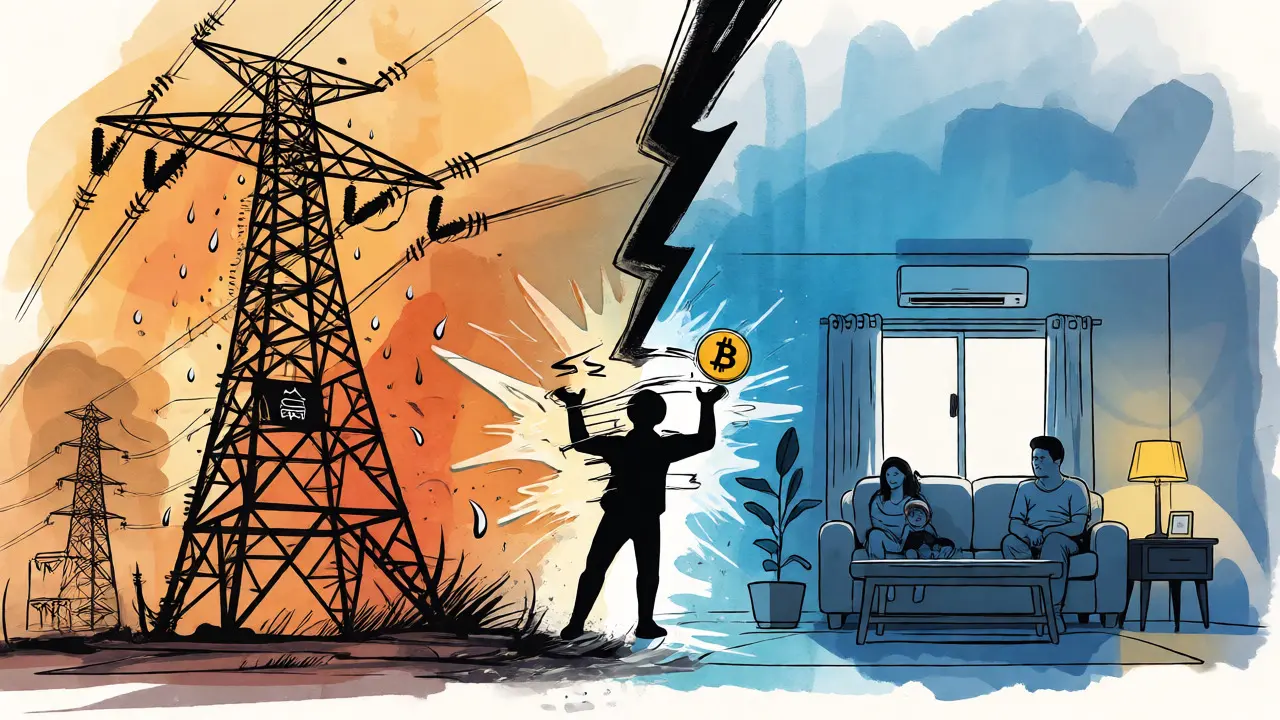
Cryptocurrency mining, particularly Proof-of-Work systems like Bitcoin, is incredibly energy-intensive. The Algerian Central Bank Governor, Salah Eddine Taleb, highlighted that mining one Bitcoin consumes about 1,500 kWh. To put that in perspective, that’s enough electricity to power 30 average Algerian households for a month. When you multiply that by hundreds of unauthorized rigs popping up in basements and warehouses, the strain becomes visible.
| Metric | Algeria Context | Global Average | Impact |
|---|---|---|---|
| Residential Electricity Rate | $0.035 per kWh | $0.14 per kWh | Mining was artificially cheap, encouraging overuse. |
| Grid Capacity Utilization (Peak) | 95-100% | Varies (often <80%) | No buffer for extra load from miners. |
| Unauthorized Mining Load (2024) | 15-20 MW | N/A | Represented ~1.5% of national capacity during critical hours. |
The subsidy system made things worse. Because residential electricity is heavily subsidized at roughly $0.035 per kWh-far below the global average of $0.14-mining operations had a massive economic incentive to set up shop. They were essentially getting free fuel while the rest of the country dealt with brownouts. SONELGAZ detected these anomalies through abnormal power usage patterns, often spotting facilities consuming 30-50% more than similar-sized neighbors. This data provided the probable cause for inspections, leading to widespread seizures.
Enforcement: From Industrial Zones to Dorm Rooms
How do you enforce a ban on invisible digital assets? Algeria allocated 1.2 billion DZD ($9.2 million) in the 2025 budget specifically for regulatory enforcement. This money funded specialized cyber units within the National Gendarmerie. These teams weren’t just looking for large warehouses; they were trained to detect the subtle hum of mining rigs in residential areas.
Real-world stories paint a clearer picture than legal text. On Reddit’s r/Algeria, a user named 'DZCryptoMiner' shared their experience shutting down a 12-rig operation that generated $350 monthly. The fear of equipment seizure and potential jail time outweighed the profit. In Oran, authorities confiscated seven mining rigs from a university student, a case reported by local outlet El Watan. These aren’t isolated incidents; they signal a shift from passive monitoring to active policing.
Another major blow to the underground market was the ban on Virtual Private Networks (VPNs). Previously, many Algerians used VPNs to access international exchanges and bypass local restrictions. By prohibiting VPNs alongside crypto activities, the government closed the main loophole. You couldn’t just hide your traffic anymore; the tool itself became suspect. This comprehensive approach suggests the state wanted total control, not just regulation.
The Regional Outlier: Algeria vs. Its Neighbors
Algeria stands alone in North Africa. While countries like the United Arab Emirates, Bahrain, and Saudi Arabia are racing to attract crypto businesses with clear regulatory frameworks, Algeria chose prohibition. The UAE’s Virtual Assets Regulatory Authority processed 157 license applications by Q2 2025, facilitating billions in transactions. Meanwhile, Algeria ranked 112th out of 154 countries in the Global Crypto Adoption Index 2025, dropping from 87th in 2023.
Compare this to Tunisia, which permits mining under specific licensing, or Egypt, which prohibits banking interactions but doesn’t criminalize individual holding. Even Morocco, known for its restrictive stance, hasn’t gone as far as criminalizing passive possession with prison time. Algeria’s move aligns more closely with China’s 2021 ban, though China still encourages blockchain development. In the MENA region, seven out of twelve countries now have clear regulatory frameworks. Algeria is fighting against the tide.
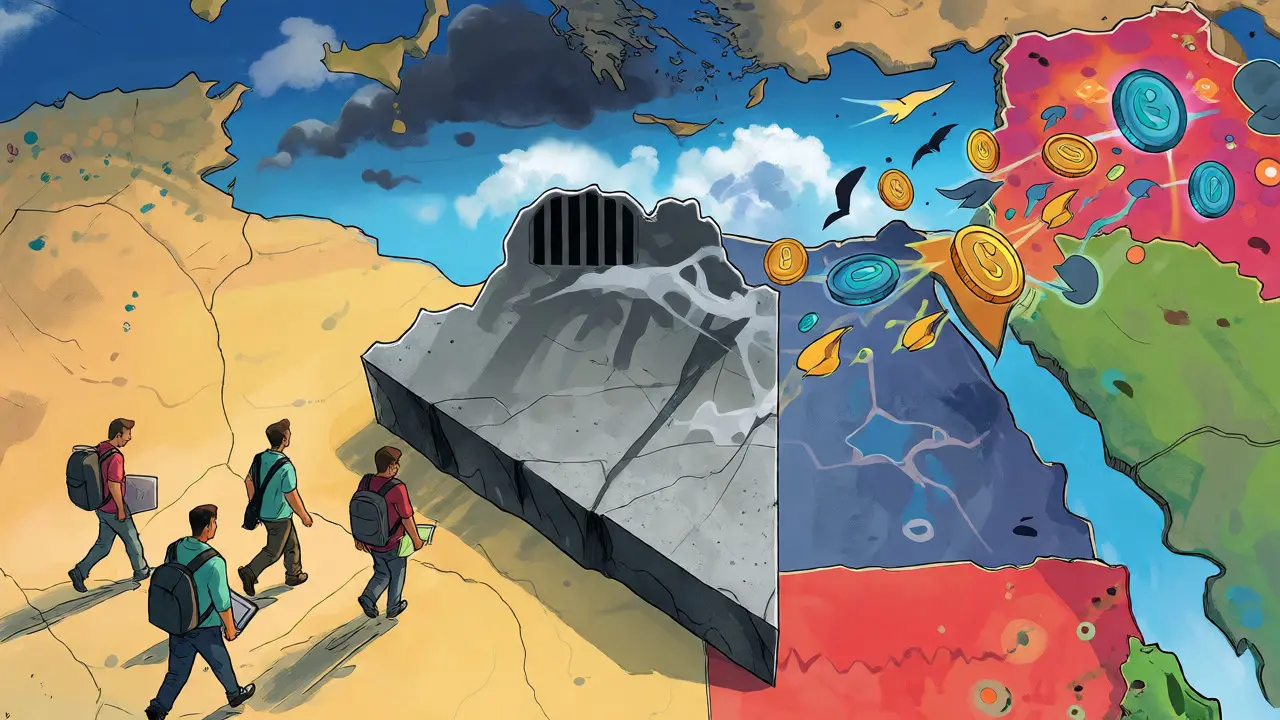
This isolation has consequences. The African Blockchain Association documented a "crypto brain drain," with 37% of Algerian blockchain developers relocating to Tunisia and Morocco between 2023 and 2025. Talent leaves where opportunity dies. If you’re a developer wanting to build Web3 apps, staying in Algeria means working in a legal vacuum, constantly worried that your next update might trigger an inspection.
Missed Opportunities and Expert Criticism
Was the ban necessary? Many experts argue it was a blunt instrument for a nuanced problem. Dr. Leila Bencharif, a Professor of Financial Technology at Algiers University, pointed out a glaring oversight: renewable energy. Algeria has identified 22GW of solar energy potential in its 2024 National Renewable Energy Strategy. Instead of banning mining, the government could have mandated that miners use excess solar capacity during peak production times, effectively acting as a battery for the grid.
The IMF’s July 2025 Financial Sector Assessment echoed this sentiment. They acknowledged the energy concerns were valid but suggested that regulating mining operations would have balanced conservation with innovation better than an outright ban. Data supports this: countries with explicit legal frameworks see a 30% increase in crypto-related investments and a 40% rise in new startups compared to those with bans. Algeria forfeited this growth for short-term grid relief.
Social media sentiment reflects this frustration. A Socialbakers analysis of 1,200 posts found that only 28% supported the ban, mostly traditional finance workers who view crypto as speculative fraud. The majority, 67%, complained about the lack of distinction between energy-hungry Proof-of-Work mining and lighter Proof-of-Stake systems. Critics argue that banning all crypto because of mining inefficiencies is like banning all cars because of gas consumption, ignoring electric alternatives.
What Comes Next?
Is there hope for reversal? History suggests yes, but slowly. The Global Crypto Alliance predicts that 68% of crypto bans implemented between 2020 and 2025 are partially or fully reversed within three years due to economic pressure. However, Algeria’s specific energy constraints make it different. Unlike bans driven purely by monetary policy fears, Algeria’s grid issues are physical and immediate.
That said, the government is showing signs of redirecting innovation. Law No. 25-12, passed shortly after the crypto ban, governs traditional mining activities, suggesting a preference for tangible resources over digital ones. Yet, research teams at Algiers University are preparing white papers proposing regulated mining frameworks using excess solar capacity. If the grid stabilizes with renewable integration, we might see a softer stance emerge post-2027.
For now, if you’re in Algeria, the rule is simple: keep your GPUs idle and your wallets empty. The era of casual crypto participation is over, replaced by a landscape where every kilowatt-hour is scrutinized. It’s a harsh lesson in how infrastructure limitations can override technological ambition.
Is owning cryptocurrency illegal in Algeria?
Yes. Under Law No. 25-10, simply holding cryptocurrency is prohibited. The law criminalizes the purchase, sale, use, and holding of virtual currencies, treating them as illegal property rather than unregulated assets.
Why did Algeria ban crypto mining specifically?
The primary reason was energy security. Cryptocurrency mining consumes vast amounts of electricity, straining Algeria's grid which already faces high demand during summer months. The government aimed to preserve power for households and essential industries.
What are the penalties for violating the crypto ban?
Offenders face prison sentences of two months to one year and fines between 200,000 and 1,000,000 Algerian dinars. Repeat offenders face doubled fines up to 2,000,000 DZD and potential equipment seizure.
Can I use a VPN to trade crypto in Algeria?
No. The legislation explicitly banned the use of Virtual Private Networks (VPNs) to close loopholes that allowed users to access international exchanges and bypass local restrictions.
Are there exceptions for small-scale miners?
No. The law does not distinguish between industrial-scale operations and individual home setups. Any activity related to the production or distribution of virtual currencies is prohibited, regardless of scale.